Our galaxy, the Milky Way, is a spiral of billions of stars, gas, and dust, but its origins are shrouded in the haze of time. For decades, astronomers have puzzled over discrepancies in the ages of its oldest stars, trying to piece together the timeline of its formation. Now, the Hubble Space Telescope has provided a crucial piece of the puzzle, resolving a long-standing mystery about the early assembly of our cosmic home.
The mystery centered on the globular clusters—dense spheres of ancient stars that orbit the galactic center. Some clusters appeared to be significantly older than others, suggesting a complex and prolonged formation history. However, precise measurements were difficult due to distance and interference. Hubble’s high-resolution capabilities allowed scientists to measure the ages of these clusters with unprecedented accuracy, revealing a more coherent narrative.
The data shows that the majority of these ancient clusters formed within a relatively short window of time, roughly 12 to 13 billion years ago. This period coincides with the early stages of the Milky Way’s assembly, when smaller proto-galaxies merged to form the larger structure we see today. The uniformity in age suggests a burst of star formation triggered by these mergers, rather than a slow, steady process.
This finding aligns with current models of hierarchical galaxy formation, where large galaxies grow by consuming smaller ones. The globular clusters serve as fossil records of these ancient collisions, preserving the chemical and temporal signatures of their birth. By dating them accurately, astronomers can reconstruct the sequence of events that shaped the young Milky Way.
The resolution of this mystery also has implications for understanding the universe’s early history. Since the Milky Way is a typical spiral galaxy, its formation story likely mirrors that of many others. Insights gained here can be applied to distant galaxies observed by telescopes like JWST, helping to build a universal model of galactic evolution.
Hubble’s role in this discovery highlights the enduring value of legacy space missions. Even after decades of operation, its instruments continue to deliver groundbreaking science. The precision of its photometry allows for detailed stellar population studies that are essential for testing cosmological theories.
For the public, this news brings a sense of clarity to our cosmic origins. Knowing that our galaxy’s oldest structures formed in a specific, intense period adds depth to our understanding of place and time. It connects us to the violent and vibrant youth of the universe, reminding us that we are part of a dynamic and evolving system.
As research continues, scientists will look for similar patterns in other galaxies to confirm the universality of this formation scenario. The Milky Way’s early years are no longer a complete enigma, but a chapter that is slowly being read with greater confidence.
The findings have been published in a major astronomical journal, marking a significant step forward in galactic archaeology. Future observations with Hubble and other telescopes will further refine the timeline of our galaxy’s birth.
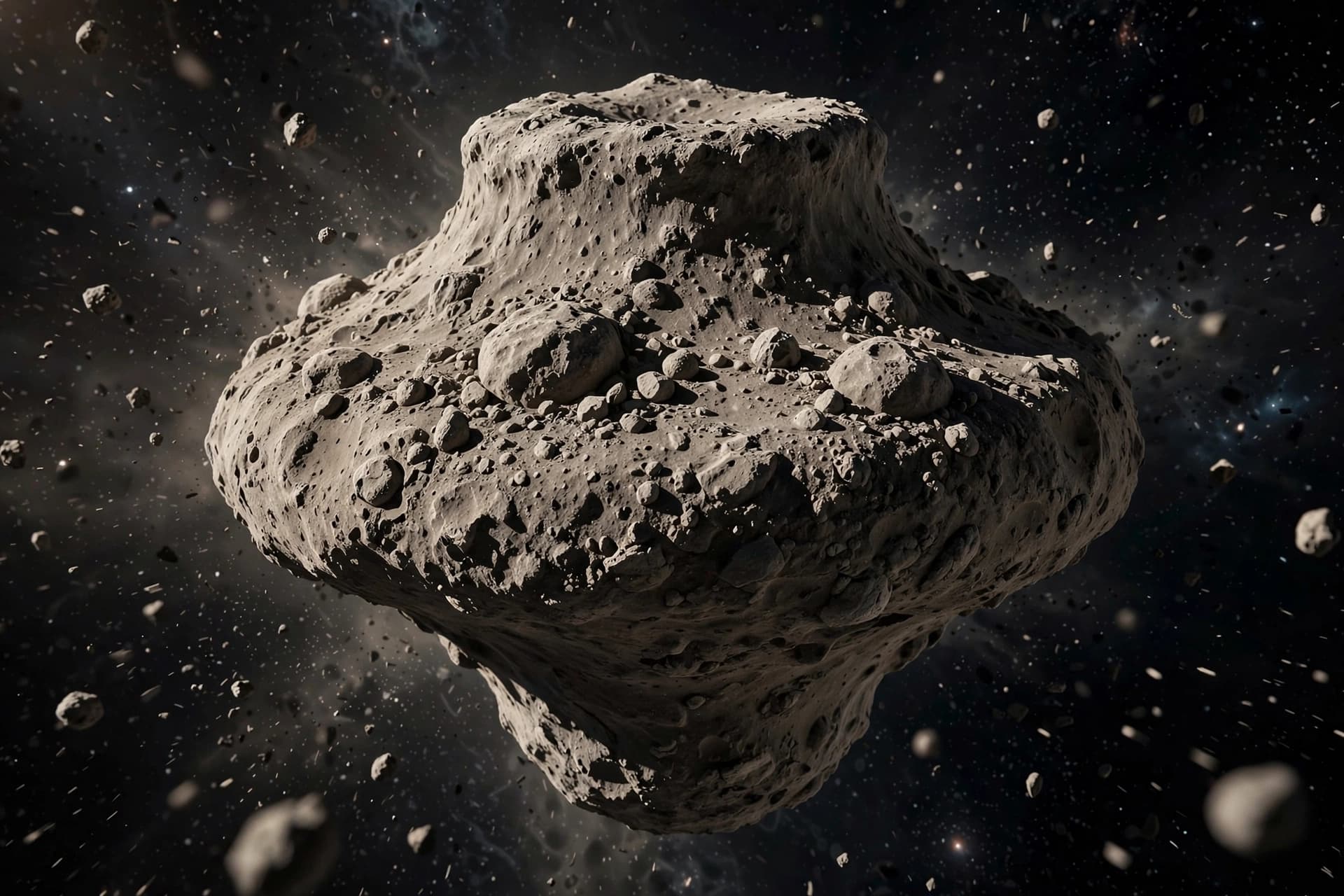
AI Image Disclaimer: Please be aware that any images accompanying this article are AI-generated illustrations designed to evoke the themes of galactic formation and historical astronomy.
Sources: NASA Hubble Site The Astrophysical Journal Space.com BBC Science European Space Agency (ESA)
Published by Banx Network. This article is part of the Banx decentralized media programme, powered by the BXE token on the XRP Ledger.