The moon has long been a symbol of human ambition, a celestial destination that promises both scientific discovery and commercial opportunity. For years, SpaceX and its founder, Elon Musk, have articulated a bold vision of lunar exploration centered on the massive Starship rocket, a vehicle designed to carry humans and cargo to the lunar surface with unprecedented scale. Yet, in a twist of industrial irony, SpaceX has already reached the moon, not with its futuristic flagship, but with a workhorse from its past. This achievement highlights the complex reality of space exploration, where legacy systems often pave the way for future innovations, reminding us that progress is rarely a straight line.
The mission in question involved the Falcon 9 rocket and the Dragon capsule, technologies that have become synonymous with SpaceX’s reliability in low Earth orbit. While these vehicles were not designed for lunar landings, they played a crucial role in supporting NASA’s Artemis program, which aims to return astronauts to the moon. By delivering critical components or conducting precursor missions, SpaceX demonstrated that its existing infrastructure is integral to the broader lunar architecture. It is a testament to the versatility of engineering when applied with precision and care.
Elon Musk’s original plan envisioned Starship as the sole vehicle for lunar transport, a monolithic solution to the challenges of deep space travel. However, the development of such a complex system has faced delays and technical hurdles, as is common with pioneering aerospace projects. In the interim, the reliance on proven technology has ensured that momentum is maintained. This pragmatic approach allows NASA and its partners to meet milestones while waiting for the next generation of hardware to mature.
The success of these earlier missions underscores the importance of redundancy and diversity in space logistics. Relying on a single vehicle or strategy can introduce risk, whereas a multi-faceted approach provides resilience. SpaceX’s ability to contribute through different platforms illustrates the company’s growing maturity and adaptability. It is not just about building the biggest rocket, but about creating a sustainable ecosystem of spaceflight capabilities.
For the public, the distinction between the planned and actual methods of reaching the moon may seem subtle, but it is significant. It reflects the iterative nature of technological advancement, where each step builds upon the last. The Falcon 9’s contributions are not merely stopgaps; they are foundational elements that validate the processes and partnerships necessary for sustained lunar presence.
As Starship continues its development, the lessons learned from current operations will inform its design and deployment. The moon remains a challenging environment, requiring robust and tested solutions. SpaceX’s journey thus far is a blend of visionary goals and practical execution, a balance that is essential for long-term success in the harsh vacuum of space.
SpaceX’s arrival at the moon via its established fleet rather than Starship marks a significant milestone in lunar exploration. It demonstrates the value of incremental progress and the reliability of proven technology. As the industry looks toward future missions, this hybrid approach offers a stable foundation for ambitious dreams.
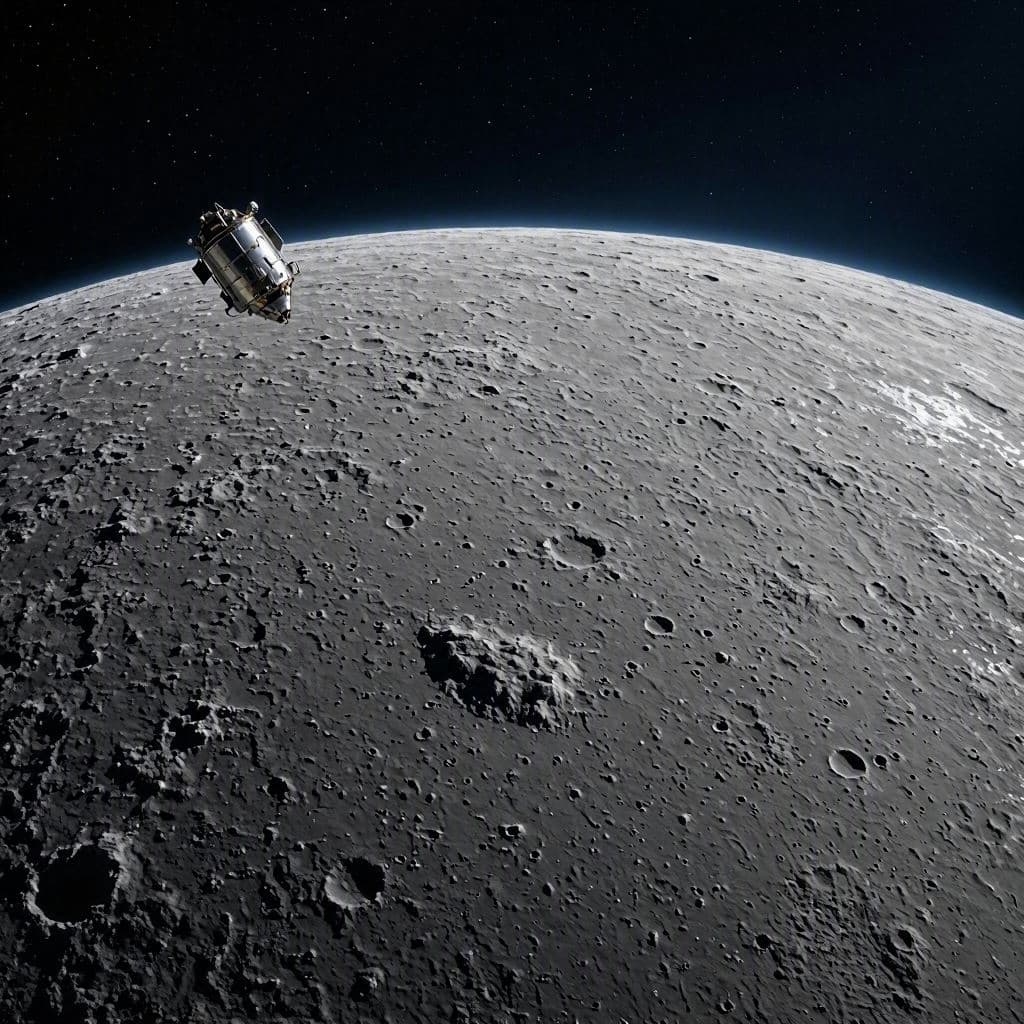
AI Image Disclaimer: The visual elements accompanying this report are AI-generated interpretations designed to reflect the technological and aerospace context of the story.
Sources: SpaceNews NASA Official Site The Verge
Published by Banx Network. This article is part of the Banx decentralized media programme, powered by the BXE token on the XRP Ledger.