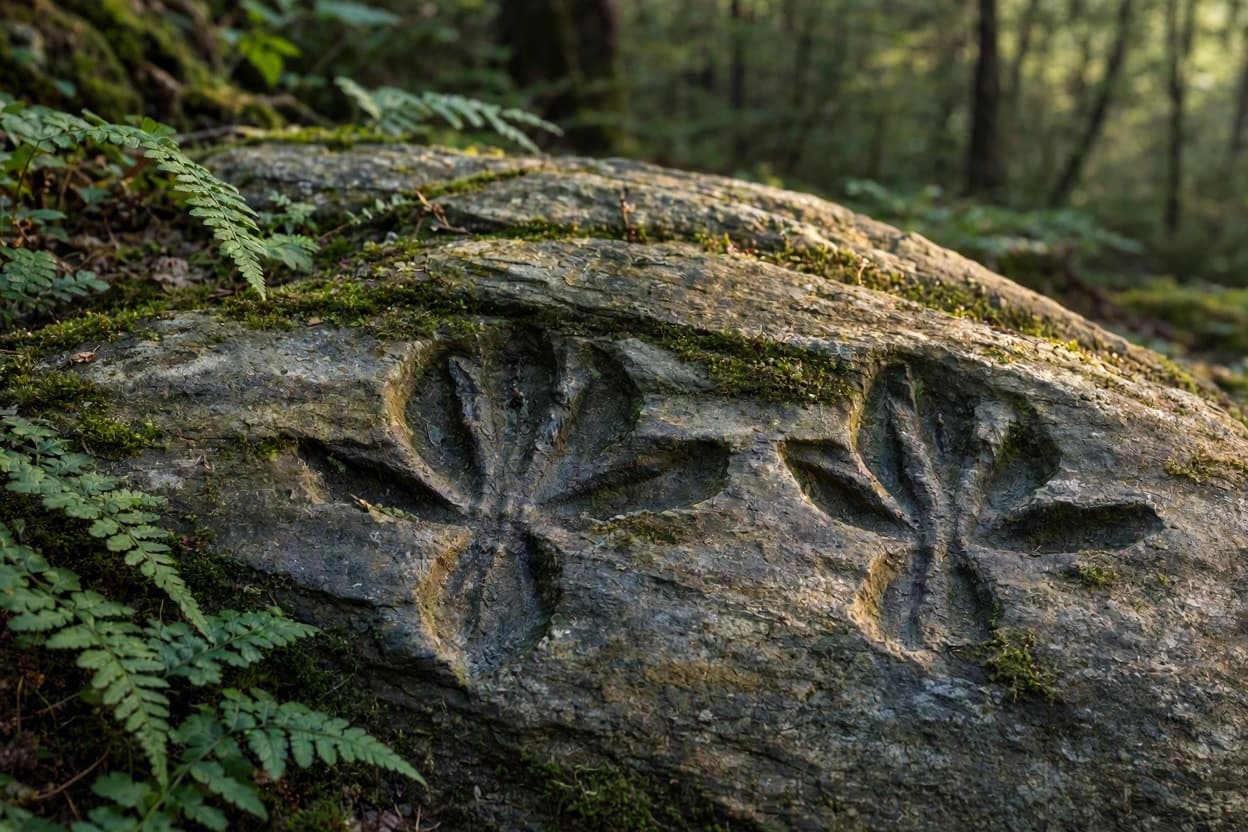
In the rugged wilderness of British Columbia, where the mountains rise like ancient sentinels and the forests whisper with the wind, time seems to stand still. Yet, beneath the moss and ferns, the earth holds memories of a much older world. Recently, near the community of Tumbler Ridge, a remarkable discovery was made: a set of rare dinosaur tracks dating back to the Coniacian age. These fossilized footprints are not merely marks in stone; they are frozen moments from eighty-five million years ago, offering a tangible connection to the giants that once roamed this land.
The Coniacian age, a slice of the Late Cretaceous period, is a time less represented in the fossil record than other epochs. Finding trace fossils from this specific era is akin to finding a missing page in a beloved history book. The tracks were identified by local enthusiasts and subsequently verified by paleontologists, who recognized their significance immediately. The preservation of these impressions is exceptional, allowing researchers to study the gait, size, and behavior of the animals that made them.
Tumbler Ridge has long been known as a hotspot for paleontological finds, thanks to its unique geology and the dedication of its residents. The area’s sedimentary rocks have preserved a wealth of biological history, from plant fossils to skeletal remains. However, trackways offer a different kind of insight. They capture dynamic action rather than static anatomy, revealing how dinosaurs moved, interacted, and lived in their environment. This new discovery adds depth to our understanding of the ecosystem that thrived here during the Coniacian.
The specific nature of the tracks suggests they may belong to hadrosaurs, or duck-billed dinosaurs, which were common in North America during this period. These herbivores likely traveled in herds, moving through the lush coastal plains that covered what is now western Canada. The spacing and depth of the prints provide clues about their speed and weight, painting a vivid picture of daily life in the Cretaceous. It is a reminder that these creatures were not just monsters of myth, but living, breathing animals with complex behaviors.
The discovery process itself is a testament to the power of citizen science. Often, it is local hikers, hunters, or residents who stumble upon these treasures, guided by curiosity and a deep appreciation for their natural surroundings. Their observations bridge the gap between professional academia and public engagement, ensuring that significant finds are not overlooked. This collaboration enriches the scientific community and fosters a sense of shared stewardship over natural heritage.
For the people of Tumbler Ridge, the find is a source of pride and inspiration. It reinforces the region’s identity as a place where the past is always present, waiting to be uncovered. Local museums and educational programs use such discoveries to engage younger generations, sparking interest in science and history. The tracks become more than data points; they become stories that connect communities to the deep time of our planet.
As researchers continue to analyze the site, they hope to uncover more tracks or associated fossils that could provide further context. Each new piece of information helps refine our models of ancient climates and ecosystems. The Coniacian was a time of significant geological and biological change, and these tracks help us understand how life adapted to those shifts. They are small windows into a vast and vibrant world that existed long before humans walked the earth.
The discovery of these rare Coniacian tracks near Tumbler Ridge is a gentle reminder of the enduring legacy of life on Earth. It invites us to look closer at the ground beneath our feet and imagine the worlds that came before. As we study these ancient footprints, we honor the creatures that left them and the natural processes that preserved them for millions of years.
AI Image Disclaimer: Please note that any accompanying visuals for this article are AI-generated representations intended for illustrative purposes only.
Sources: CBC News, Global News, Royal BC Museum, Canadian Journal of Earth Sciences
Published by Banx Network. This article is part of the Banx decentralized media programme, powered by the BXE token on the XRP Ledger.