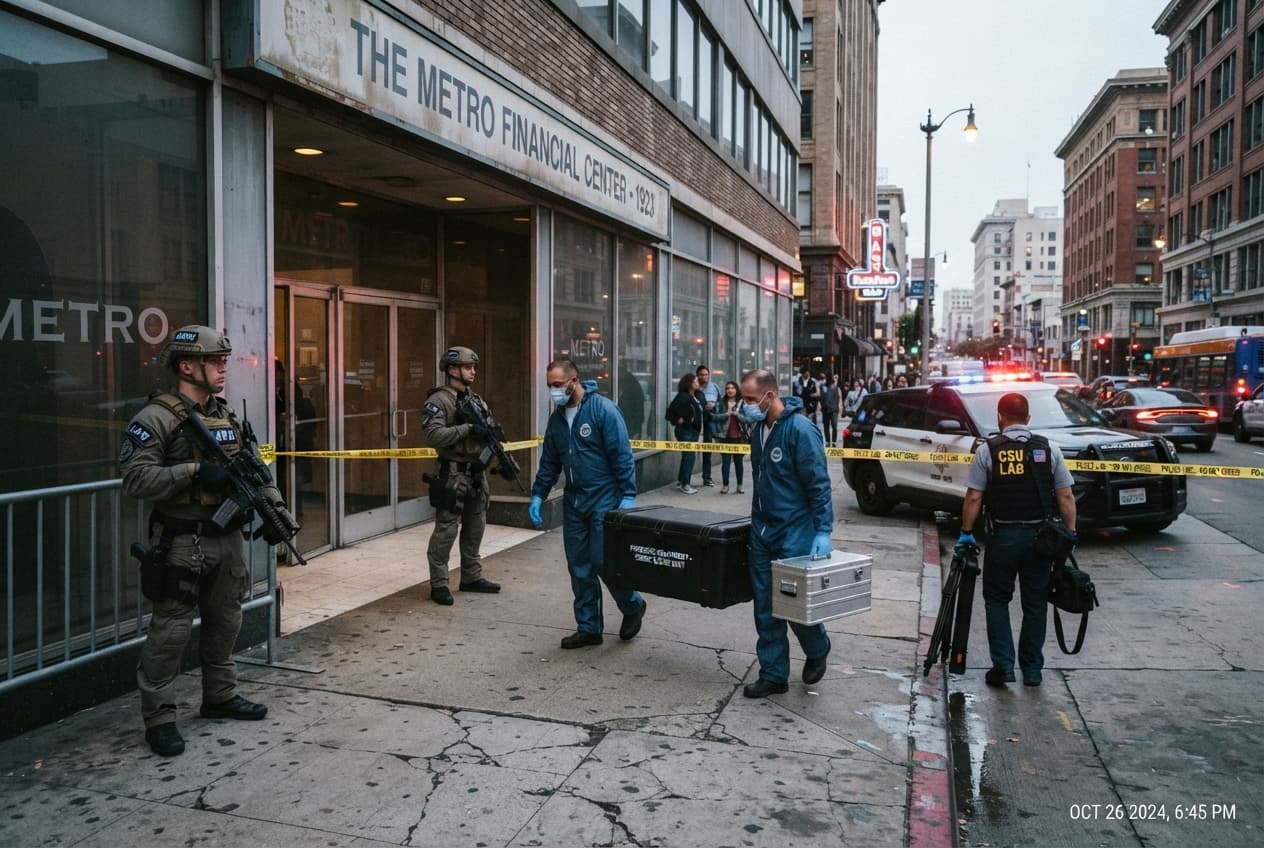
Rain had settled over London in a fine, persistent mist, softening the outlines of palaces and terraces alike. The gates outside royal residences, usually the backdrop for tourists and tabloid photographers, stood beneath a sky the color of pewter. In that subdued light, news traveled not with fanfare but with a kind of hush: a former prince, once central to ceremonial life, had been taken into police custody.
British authorities confirmed the arrest of Prince Andrew, the Duke of York, following an investigation that had drawn renewed scrutiny in recent months. Officers from the Metropolitan Police executed the arrest as part of what officials described as an ongoing inquiry. Specific charges have not yet been detailed publicly, but police stated that the action followed a review of evidence related to prior allegations that had long hovered at the edges of public conversation.
For years, Andrew’s name has been intertwined with controversy stemming from his association with the late financier Jeffrey Epstein. Though Andrew has consistently denied wrongdoing, the relationship cast a prolonged shadow over his public role. In 2019, a televised interview meant to address those concerns instead deepened them, leading to his withdrawal from official royal duties. By 2022, he had reached a civil settlement in the United States without admitting liability, a move that closed one legal chapter but did little to quiet public debate.
Now, the arrest introduces a new and more immediate dimension. Outside the precinct station, cameras lined the pavement, their lenses fixed on a doorway framed by stone and iron. The Metropolitan Police released a brief statement confirming the detention and emphasizing that the investigation remains active. As is customary under British law, the suspect is entitled to due process, and authorities have urged restraint in speculation.
Within the orbit of the monarchy, the moment carries particular resonance. The British royal family, led by King Charles III, has in recent years navigated a period of transition and recalibration. Questions about relevance, accountability, and public trust have threaded through that transition. Andrew’s removal from public duties was once presented as a boundary between personal controversy and institutional continuity. An arrest, however, draws the institution closer to the gravity of the matter.
Buckingham Palace has indicated that Andrew, who ceased to be a working royal, no longer undertakes official engagements and does not represent the Crown. Palace statements have underscored that legal proceedings are separate from the monarchy’s constitutional role. Still, the symbolism is difficult to ignore: a member born into the highest tier of ceremonial life now confronting the procedural rhythms of the criminal justice system.
Across Britain, reactions have unfolded in quiet waves. Some see the arrest as evidence that no status confers immunity; others counsel patience until formal charges and court findings clarify the facts. Legal analysts note that arrest does not equate to conviction, and that investigations of this complexity often require careful, extended review.
As evening settled over London, the rain thinned to a sheen on cobblestones. The city, practiced in absorbing history’s turns, resumed its ordinary cadence—buses threading through traffic, lights glowing behind tall windows. Yet within that steady rhythm, the day marked a distinct pause for the royal family and for a public long accustomed to watching its monarchy from both near and far.
The legal process will now proceed in measured stages: potential charging decisions, court appearances, arguments tested before a judge. Whatever the outcome, the arrest stands as a stark moment in the modern chronicle of the House of Windsor—a reminder that even within ancient institutions, contemporary accountability can arrive with the quiet certainty of rain.
AI Image Disclaimer These illustrations are AI-generated conceptual images and do not depict real events.
Sources BBC News Reuters The Guardian The Telegraph Associated Press
Published by Banx Network. This article is part of the Banx decentralized media programme, powered by the BXE token on the XRP Ledger.