
Key Highlights
- Incident:A train collision near Lyon resulted in one fatality.
- Disruption:High-speed rail services faced severe delays following the accident.
- Investigation:Authorities are probing safety protocols at rural crossings.
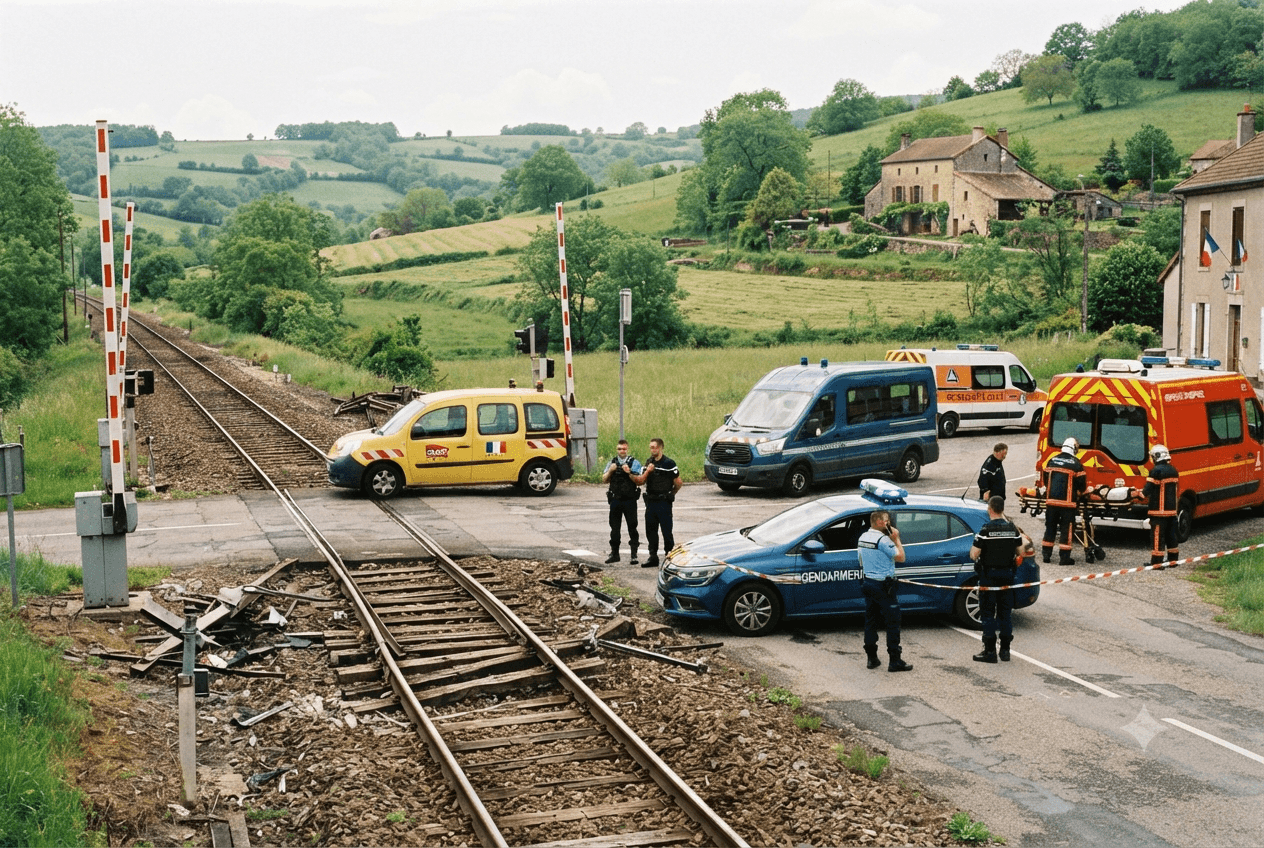
A tragic accident occurred near Lyon, France, on Monday morning when a regional passenger train collided with a vehicle trapped on the tracks at an unprotected level crossing. The incident took place around 9:15 AM local time, resulting in the immediate death of the vehicle's driver due to catastrophic injuries. Fortunately, no passengers aboard the train were harmed, but the collision has led to significant disruptions across the high-speed rail network.
The French national railway company, SNCF, had already been grappling with delays due to a prior technical issue involving an overhead catenary power failure near Valence. As a result, speed restrictions and rolling cancellations were in effect across the southeastern high-speed line. The collision compounded these issues, causing rail traffic to come to a standstill as forensic teams began their investigations at the accident site.
Emergency services, including rescue squads and national gendarmerie units, responded swiftly to the scene. The passenger vehicle was reported to be completely destroyed upon impact, highlighting the severity of the collision. Investigators are now focusing on why the vehicle was on the tracks and why safety mechanisms failed to prevent the accident.
In light of the incident, transport ministry officials are facing renewed scrutiny from rail unions regarding the safety of rural level crossings. Many of these crossings lack adequate protective measures, and the unions have long called for upgrades to enhance safety. The accident has reignited discussions about the need for improved infrastructure to prevent similar tragedies in the future.
As a result of the collision, emergency replacement bus services were quickly implemented between regional transport hubs. However, these services quickly became overwhelmed as thousands of travelers sought alternative routes, leading to chaos at local stations. Railway authorities have warned passengers to expect ongoing schedule irregularities and capacity restrictions throughout the evening as the effects of the accident ripple through the transit network.
Forensic accident investigators have begun seizing automatic signaling logs and safety barrier sensor records to ascertain the failure of warning mechanisms at the crossing. Public safety prosecutors have opened an inquiry into involuntary manslaughter and compliance with automated infrastructure safety standards. The investigation aims to determine the circumstances leading up to the fatal impact and whether negligence played a role.
Maintenance engineers conducted track alignment checks later in the day, certifying the structural integrity of the rails before allowing slow-speed test runs. Regional transit operators have pledged to maintain transparency as investigators work to reconstruct the final moments leading to the collision. The outcome of this investigation could have significant implications for railway safety protocols across France, especially at rural crossings that have long been a point of contention among safety advocates.
Published by Banx Network. This article is part of the Banx decentralized media programme, powered by the BXE token on the XRP Ledger.



