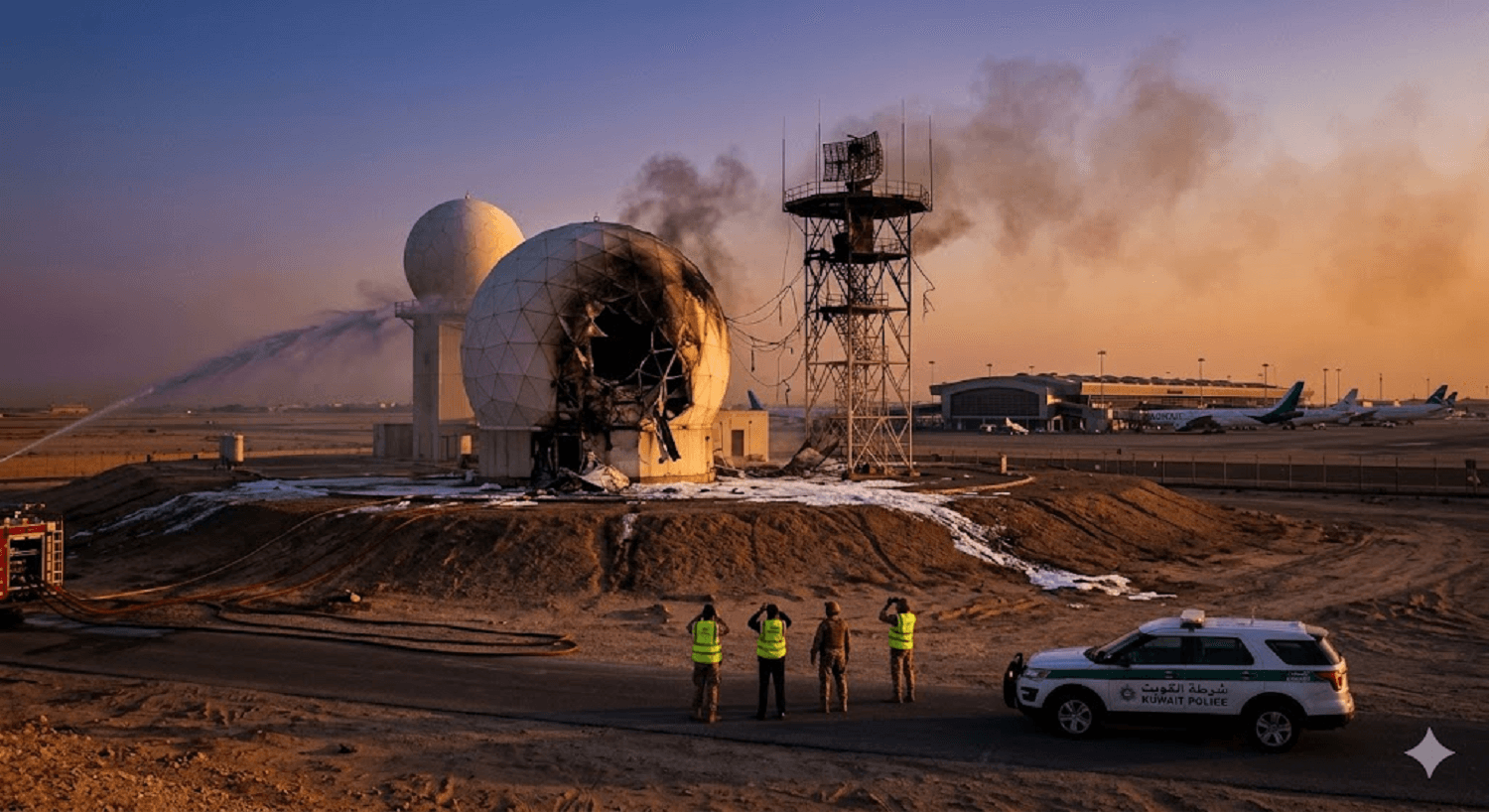
KUWAIT CITY, Kuwait — Kuwait International Airport (KWI) became the latest critical infrastructure node targeted in the escalating regional conflict, as a coordinated pre-dawn drone attack disabled key radar systems and momentarily paralyzed air operations early on Saturday, March 28, 2026. The incident, confirmed by the Kuwait Directorate General of Civil Aviation (DGCA) and the Ministry of Defense, marks a significant breach of Kuwaiti security and the first direct attack on the oil-rich state's territory since the 2026 Iran War began. While no casualties were reported, the targeted sabotage has shuttered commercial and military flight operations and sent shockwaves through the global aviation sector.
The assault was characterized by precision and minimal collateral damage, striking with surgical focus. Around 2:15 AM, multiple low-flying, explosive-laden drones bypassed initial defenses and slammed directly into two critical radar facilities—one managing commercial civilian traffic and the other, a sensitive military early-warning installation. Witnesses reported small explosions and bright flashes followed by a sudden, eerie halt to the regular ground clutter of the airport. The visual results are evident: one dome-like radar installation is now a scorched, warped lattice of steel and advanced composite. Crucially, the passenger terminals and aircraft on the tarmac remained untouched, suggesting the attackers' motive was disruption and sabotage, not mass casualty.
This attack on Kuwait Airport must be viewed as a calculated step to widen the geographic and economic front of the ongoing war, which has primarily involved Iran and the U.S.-Israeli coalition. Kuwait, maintaining a neutral stance and a low profile since hostilities began, is a strategic hub for regional logistics and energy transit. While no group has yet claimed responsibility, the "Radar Systems Offline" capability is characteristic of sophisticated drone operators often linked to Iranian proxies. The strike serves a triple strategic purpose: it disrupts a key trade corridor, sends a chilling warning to other historically stable Gulf neighbors like Qatar and Oman, and forces the divert of high-value Patriot and THAAD missile defense assets, which are already stretched thin across the Arabian Peninsula.
The implications for international trade and aviation are immediate. Coming just weeks after the Houthi missile attack on Abu Dhabi’s KEZAD industrial zone and drone disruptions at Dubai International (DXB), the strike on KWI further erodes confidence in the security of the Gulf’s critical logistics networks. Insurance premiums for aviation and shipping in the region are expected to skyrocket. With the main air monitoring systems offline, the DGCA has suspended all flights and is currently scrambling to establish emergency procedures, including reliance on satellite navigation and visual separation, to resume limited service, but a full restoration could take weeks.
As Kuwait initiates a high-level investigation and appeals for de-escalation, the incident is a grim reminder that regional neutrality is becoming an increasingly untenable shield. For the Trump administration, which has prioritized the air defense of its regional allies, the "Radar Systems Offline" attack is a stark defeat of a multi-billion dollar protective umbrella. The strike effectively demonstrates that sophisticated, low-cost "mosquito fleet" tactics can bypass layered defenses and strike critical points with impunity. With the shadow of the conflict now routine across the Gulf, the strike on Kuwait Airport is a clear indicator that the 2026 Iran War continues to metastasize, transforming once-stable economic engines into sudden frontlines.
Published by Banx Network. This article is part of the Banx decentralized media programme, powered by the BXE token on the XRP Ledger.
.jpg&w=3840&q=75 "US Declares Drought Disaster for Parts of Puerto Rico as Dry Conditions Persist")