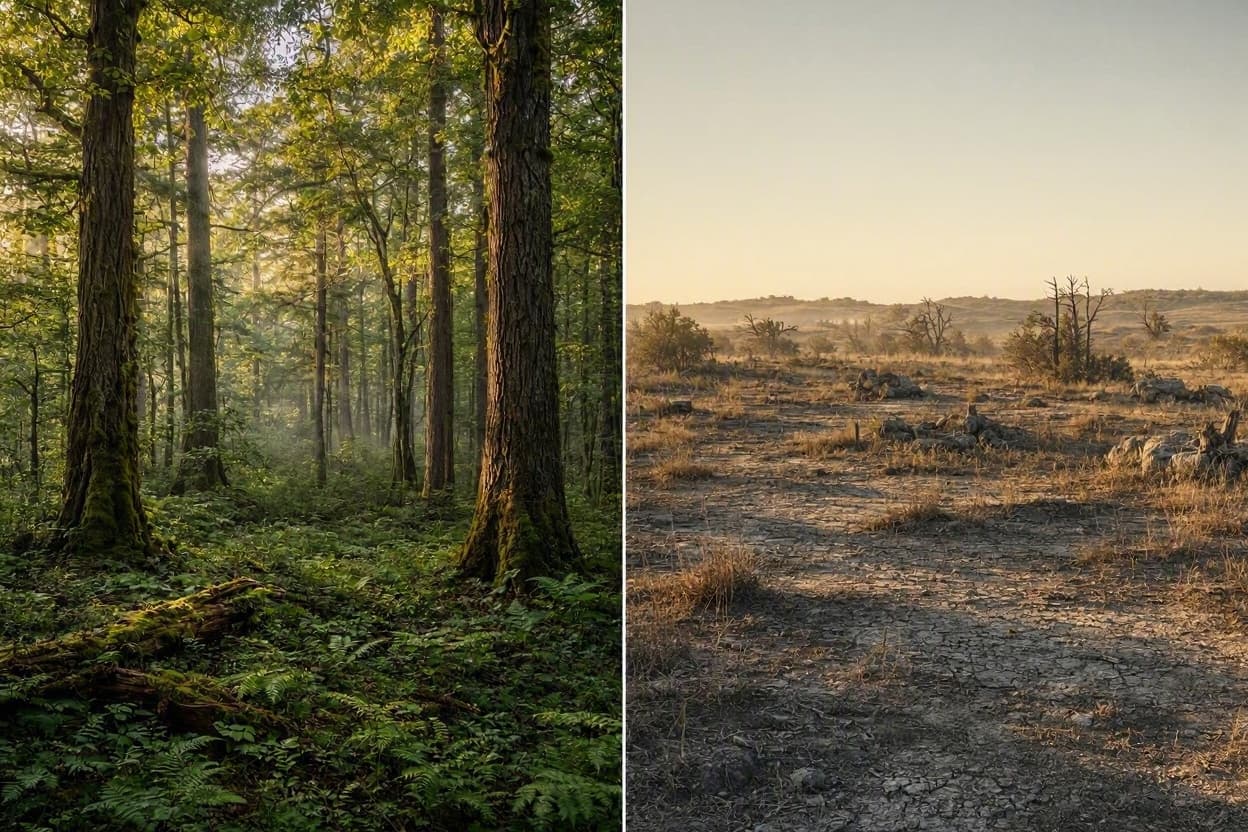
Forests are the slow, breathing lungs of our planet, accumulating carbon and complexity over millennia. They grow in increments measured not in years, but in centuries, their roots deepening as history unfolds. Yet, recent studies reveal a sobering truth: the rate at which our climate is changing today far outpaces the natural recovery speed of these vital ecosystems. While ancient forests took 100,000 years to rebound from past climatic shocks, the current crisis is unfolding ten times faster, leaving little time for nature to adapt. This disparity between the speed of change and the pace of recovery poses a profound challenge to global biodiversity.
Researchers analyzing pollen records and sediment cores from the last major glacial period have mapped the timeline of forest regeneration. After the ice retreated, it took tens of thousands of years for tree species to migrate, establish, and form stable communities. This slow process allowed for intricate ecological relationships to develop, creating resilient systems capable withstanding minor fluctuations. The historical record shows that nature’s healing is a patient, deliberate act, requiring stability and time.
In contrast, modern climate change is driven by rapid increases in greenhouse gases, causing temperatures to rise at an unprecedented rate. Species that once had millennia to shift their ranges northward or to higher elevations now face changes within decades. Many trees, anchored by their roots, cannot move quickly enough to escape rising heat or shifting precipitation patterns. This mismatch threatens to leave vast areas barren or dominated by less diverse, less resilient vegetation.
The implications for carbon storage are significant. Forests act as crucial carbon sinks, absorbing CO2 from the atmosphere. If they cannot recover or adapt quickly enough, their capacity to mitigate climate change diminishes. Instead of storing carbon, stressed forests may release it through increased mortality, fires, and decomposition. This feedback loop could accelerate warming, making the goal of limiting global temperature rise even more difficult to achieve.
Biodiversity is also at risk. Complex forest ecosystems support a wide array of life, from insects to mammals. Rapid environmental change can disrupt these networks, leading to population declines and extinctions. Species that rely on specific tree types for food or habitat may find themselves stranded in unsuitable conditions. The loss of these interactions weakens the overall health of the ecosystem, reducing its ability to provide essential services like water filtration and soil stabilization.
Conservation efforts must therefore evolve to address this speed mismatch. Traditional preservation strategies may not be sufficient in a rapidly changing world. Assisted migration, where humans help move species to more suitable habitats, is being considered as a potential tool. Additionally, protecting genetic diversity within forest populations is crucial, as it provides the raw material for adaptation. These interventions are controversial but may become necessary to prevent irreversible loss.
The study serves as a urgent call to action. It highlights that while nature is resilient, it is not infinitely flexible. The window for effective mitigation is narrowing, and every fraction of a degree of warming matters. Reducing emissions remains the primary solution, as it addresses the root cause of the rapid change. Without significant cuts in greenhouse gases, the pressure on forests will continue to intensify.
The comparison between ancient recovery times and current climate speeds underscores the urgency of the environmental crisis. Forests need time to heal, but time is a luxury we are rapidly consuming. By acting decisively to slow climate change, we can give these vital ecosystems the chance they need to survive and thrive for future generations.
AI Image Disclaimer: The images associated with this report are AI-generated visualizations created to provide context and should not be interpreted as documentary evidence.
Sources: Nature Climate Change Science Daily The Guardian BBC News Yale Environment 360
Published by Banx Network. This article is part of the Banx decentralized media programme, powered by the BXE token on the XRP Ledger.