
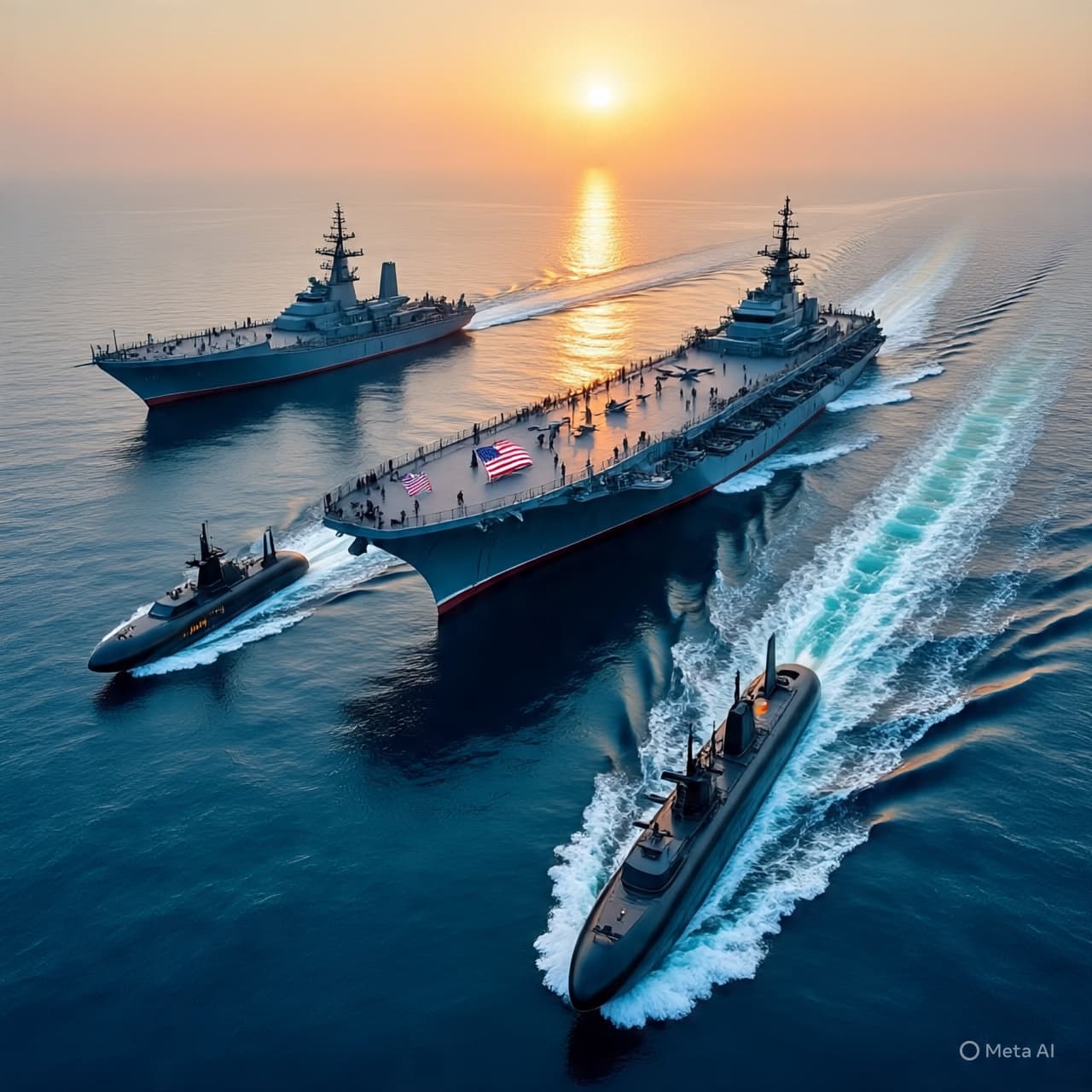
The Western Pacific has always been a place where geography speaks softly but carries great weight. Scattered islands, narrow straits, and wide expanses of open water have long shaped the movements of empires and alliances alike. In 2025, these waters once again became a stage — not for open conflict, but for a steady choreography of presence, signaling, and preparedness.
Across the year, international military operations in the Western Pacific intensified in both scale and visibility. Naval patrols grew more frequent, air exercises more complex, and joint drills more carefully calibrated. From the South China Sea to waters near Taiwan and the Korean Peninsula, forces from multiple nations operated in close proximity, each movement watched closely by the others.
The United States and its allies expanded multinational exercises designed to reinforce interoperability and deterrence. Carrier strike groups moved through contested waters, joined by partners from Japan, Australia, South Korea, and European nations increasingly invested in Indo-Pacific security. Officials framed these operations as routine and defensive, emphasizing freedom of navigation and the maintenance of international norms.
China, for its part, continued to assert its own presence. The People’s Liberation Army conducted regular naval and air patrols, while large-scale drills underscored Beijing’s growing operational reach. Chinese officials described these activities as necessary responses to what they view as encroachment, reinforcing a narrative of sovereignty and regional responsibility.
Taiwan remained a focal point throughout the year. Military aircraft crossings, naval movements, and exercises on all sides sharpened the sense of proximity and risk. While no single incident tipped into crisis, the accumulation of activity kept tensions elevated, prompting repeated calls for restraint and clear communication.
Elsewhere, the Korean Peninsula added another layer of complexity. Joint drills between the United States and South Korea proceeded alongside North Korean missile tests, each cycle reinforcing a familiar pattern of action and reaction. Japan, meanwhile, accelerated its own defense coordination, reflecting a broader shift toward greater regional engagement.
What defined 2025 was not escalation, but persistence. Operations became less about dramatic gestures and more about sustained presence — a reminder that the balance of power in the Western Pacific is maintained not in moments, but over time. Military planners spoke of readiness and stability, even as diplomats worked quietly to prevent miscalculation.
For the region’s smaller states, these maneuvers carried mixed meanings. Enhanced security partnerships offered reassurance, while the sheer concentration of military assets underscored vulnerability. Economic lifelines, trade routes, and civilian life all depend on the calm passage of ships through these same waters.
As the year closed, the Western Pacific remained calm on the surface, busy beneath it. Warships continued their patrols, aircraft traced familiar arcs across the sky, and statements emphasized peace even as preparations endured. The story of 2025 was not one of confrontation realized, but of tension managed — a reminder that in this part of the world, stability is something actively practiced, day after day.
AI IMAGE DISCLAIMER “Illustrations were produced with AI and serve as conceptual depictions.”
SOURCES Reuters The New York Times Financial Times Nikkei Asia Defense News
Published by Banx Network. This article is part of the Banx decentralized media programme, powered by the BXE token on the XRP Ledger.


