
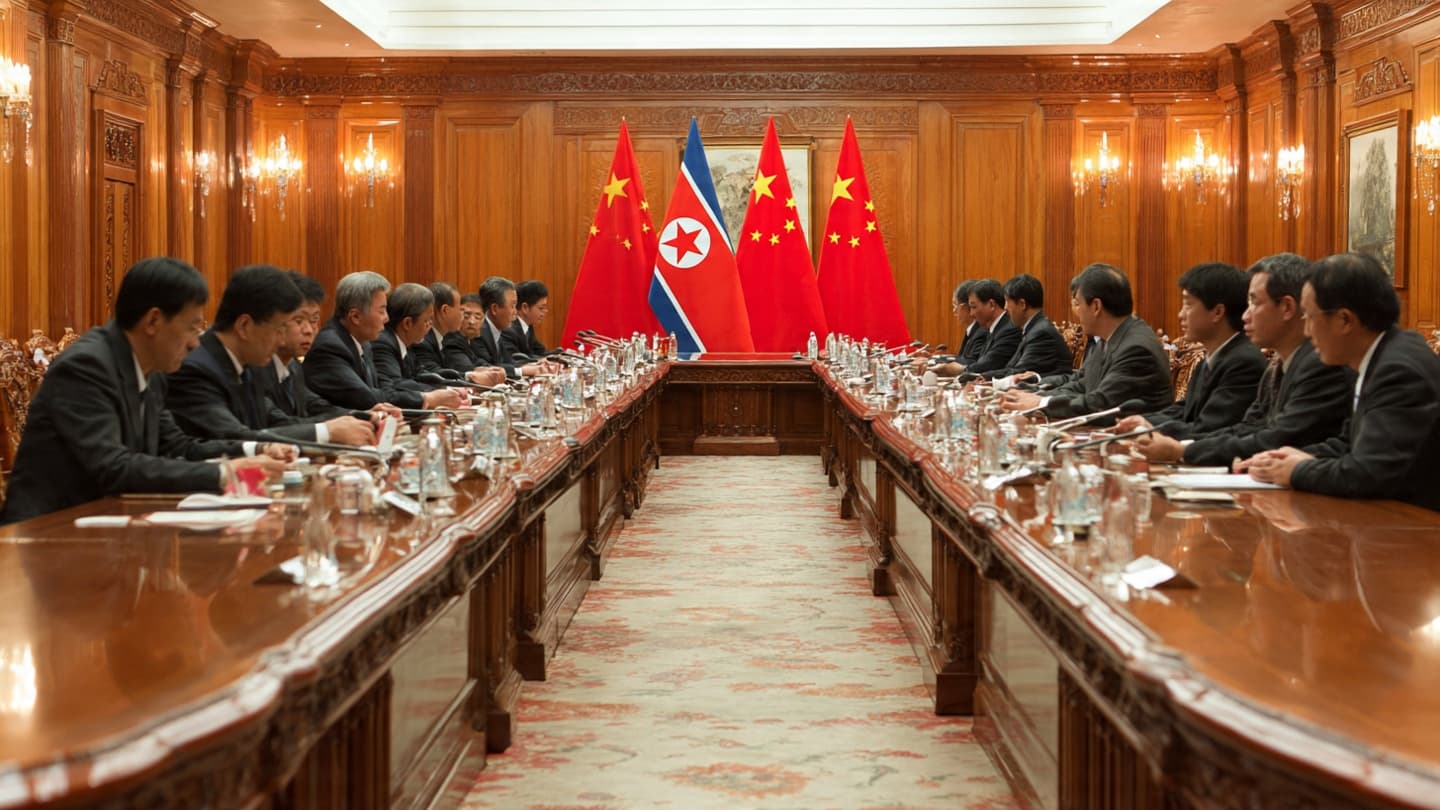
Key Highlights
- China strengthens ties with North Korea amid changing regional dynamics.
- Diplomatic outreach reflects the importance of bilateral relations.
- Engagement has implications for broader East Asian stability.
China's diplomatic engagement with North Korea has emerged as a significant factor in shaping the future of East Asia. Recent efforts by Chinese President Xi Jinping to strengthen ties with North Korea highlight the enduring importance of this relationship amid evolving geopolitical dynamics. As both nations navigate complex security concerns and economic competition, their interactions carry implications that extend beyond their borders.
Historically, China has been North Korea's most crucial economic and political partner. The two countries share deep-rooted trade links, historical ties, and geographic proximity, which have fostered a relationship that remains strategically significant. Analysts emphasize that this partnership is not merely a matter of convenience; it is a calculated effort by both governments to maintain stability in a region marked by uncertainty.
In recent months, Xi Jinping's outreach has garnered attention from policymakers and international observers alike. The renewed diplomatic activity signals a commitment to dialogue and cooperation, which Chinese officials have repeatedly emphasized as essential for regional security. For Beijing, maintaining stability on the Korean Peninsula is a key objective, and fostering a strong relationship with North Korea is integral to achieving that goal.
North Korea, for its part, continues to pursue its own political and strategic priorities. The regime seeks to strengthen international partnerships while navigating its complex relationship with China. Engagement with Beijing remains a vital component of North Korea's strategy, as it looks to bolster its position in the international arena. The interplay between these two nations reflects a broader trend in East Asia, where diplomatic negotiations are increasingly critical to addressing security challenges.
The implications of this diplomatic engagement extend beyond the bilateral relationship. Neighboring countries and global powers closely monitor developments in the region, assessing how these interactions may influence broader security discussions. High-level meetings between Chinese and North Korean officials often carry symbolic weight, signaling continuity and shared strategic interests that resonate throughout East Asia.
As regional governments grapple with a shifting geopolitical landscape, the relationship between China and North Korea remains a pivotal factor in East Asian affairs. The latest developments underscore the enduring role of diplomacy in shaping regional stability. While specific agreements may evolve over time, the significance of high-level diplomatic engagement cannot be understated. It serves as a reminder that, even in a world often dominated by dramatic headlines, quiet diplomatic currents continue to shape the future of nations.
Published by Banx Network. This article is part of the Banx decentralized media programme, powered by the BXE token on the XRP Ledger.



