
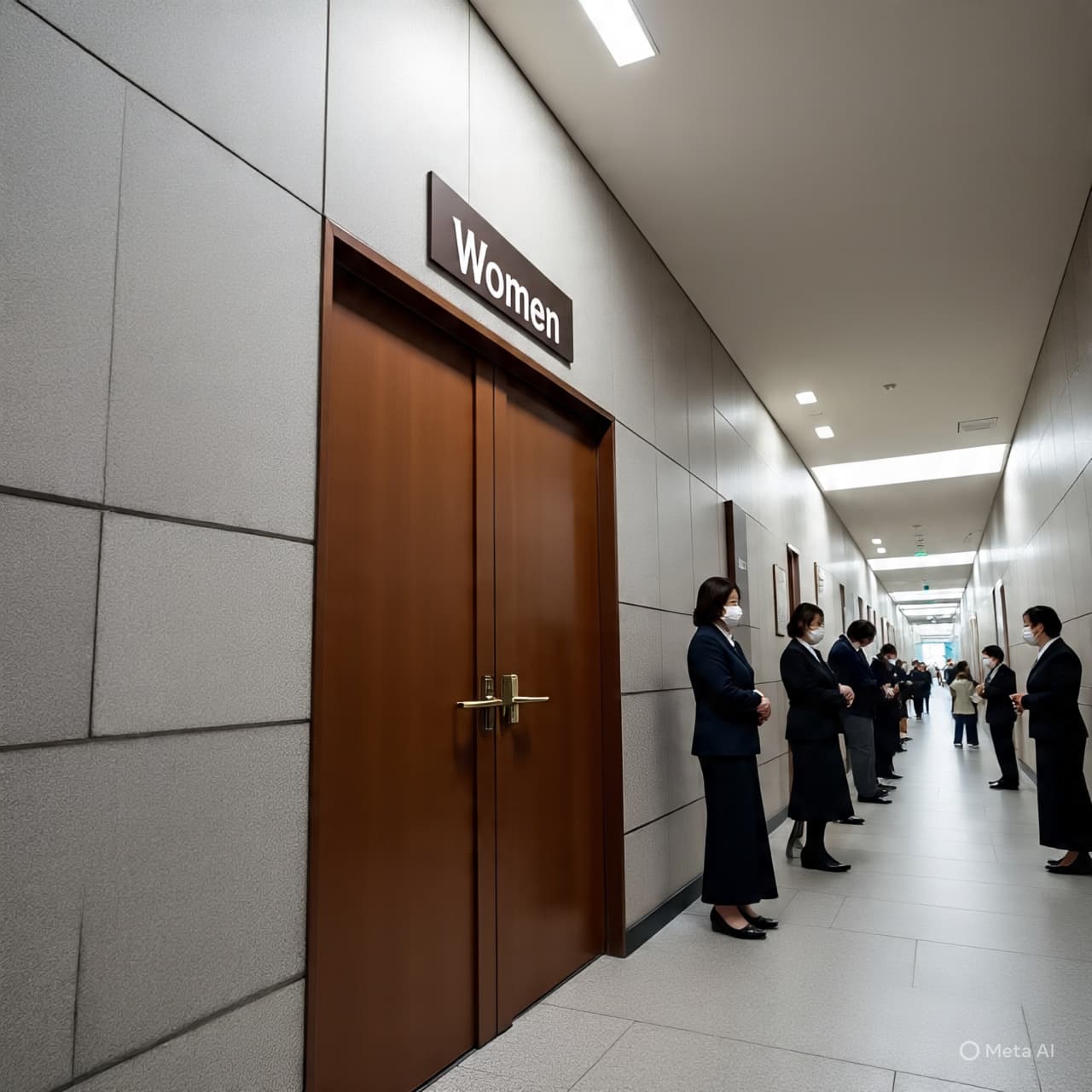
At the heart of Tokyo’s stately National Diet Building, where laws are debated and the future of a nation is shaped, an unexpected — yet deeply human — issue has come into focus. Imagine 73 women seated at desks in the Lower House, discussing budgets and security, then stepping out only to find themselves in a slow queue for just two cubicles. It’s a small moment, but one that resonates far beyond the tiled walls of a restroom, highlighting both progress and the long shadows of tradition.
Nearly 60 women lawmakers, including Prime Minister Sanae Takaichi, have taken a simple yet striking step: submitting a petition to expand toilet facilities in the Diet building for women. The current arrangement — a single lavatory with only two cubicles near the main plenary session hall — was designed long before women had the vote, let alone significant representation in parliament.
“Before plenary sessions start, truly so many women lawmakers have to form long queues,” said Yasuko Komiyama of the opposition Constitutional Democratic Party, capturing in a few words the everyday frustration that has become symbolic of a broader imbalance.
The petition, signed by 58 women, was submitted to Yasukazu Hamada, chair of the Lower House committee on rules and administration earlier this month. It underscores a mismatch between the architecture of the political space and the changing face of Japanese governance — where women now hold about 15 percent of seats in the Lower House, up from 45 in the previous term.
Japan’s parliament building, completed in 1936, predates women’s suffrage by nearly a decade. Though the number of women in elected office has increased, the physical infrastructure has lagged behind. Across the Lower House building, men’s toilets offer 67 stalls, while women’s facilities total just 22 cubicles — a ratio that many see as reflecting broader gender gaps in society.
Even with the historic milestone of Japan’s first female prime minister, political culture remains heavily male‑dominated. Female candidates often recount sexist remarks, underscoring that equality in numbers does not automatically translate to equality in experience.
For those lawmakers, the petition is both practical and symbolic. It speaks to the everyday realities of women in public life — but also to a larger conversation about how spaces and systems can evolve to better reflect the people they serve. In that way, the line for a restroom becomes more than just a queue; it becomes a quiet measure of how far representation has come, and how far it has yet to go.
AI Image Disclaimer Images in this article are AI‑generated illustrations, meant for concept only.
Sources The Guardian The Straits Times South China Morning Post ABC News NDTV
Published by Banx Network. This article is part of the Banx decentralized media programme, powered by the BXE token on the XRP Ledger.



.jpg&w=3840&q=75 "Zelensky Warns China Is Helping Russia Develop a Starlink Rival")