
Technology often advances through quiet breakthroughs that gradually reshape what seems possible. In laboratories around the world, researchers continue pursuing one of the most challenging goals in modern computing: harnessing the principles of quantum mechanics to process information in fundamentally new ways.
Scientists in China have introduced a new-generation dual-core quantum computing system, a development that has attracted attention from researchers and technology observers worldwide. The announcement reflects the growing pace of innovation in the global quantum computing sector.
Unlike conventional computers, which rely on bits represented as zeros or ones, quantum computers use quantum bits, or qubits. These systems can exist in multiple states simultaneously, allowing certain calculations to be performed in ways that differ dramatically from traditional computing.
The new platform is intended to improve processing efficiency and experimental performance. Researchers continue exploring methods to enhance stability, reduce errors, and increase computational capability—key challenges facing the entire field.
Quantum computing remains largely in the research and development stage. However, experts believe the technology may eventually contribute to advances in fields such as materials science, pharmaceuticals, logistics, climate modeling, and cryptography.
Competition in the sector has intensified as governments, universities, and private companies invest heavily in research programs. Major initiatives are underway in Asia, North America, and Europe, reflecting the technology's strategic importance.
Despite impressive progress, practical large-scale quantum computing remains a long-term objective. Many technical hurdles must still be addressed before the technology reaches widespread commercial application.
Researchers emphasize that scientific collaboration remains essential. International conferences, peer-reviewed publications, and joint research projects continue helping advance understanding across the field.
The latest announcement from China highlights how rapidly the quantum landscape is evolving. While the destination remains uncertain, each advancement brings researchers closer to unlocking new computational possibilities that could transform future technologies.
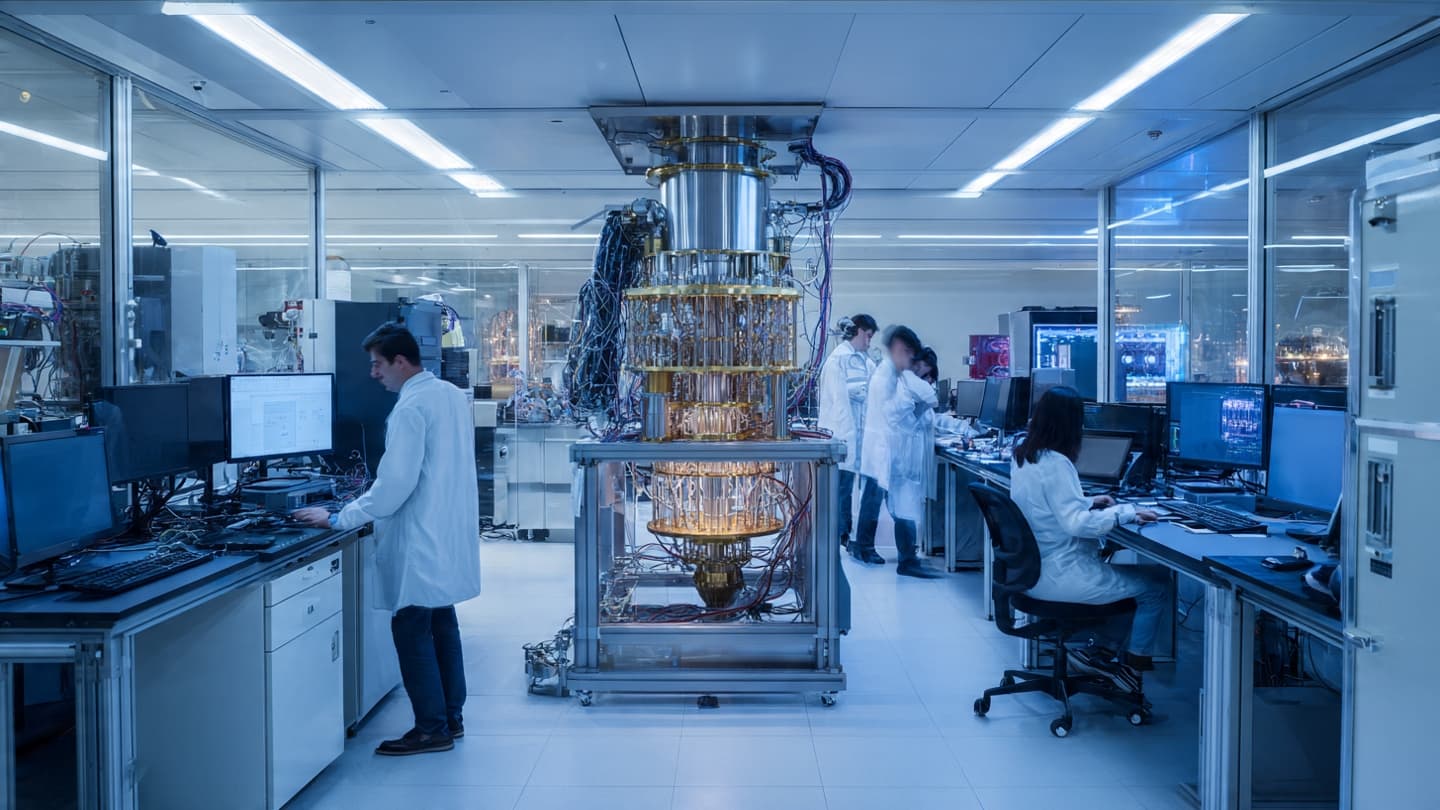
AI Image Disclaimer: This image was generated by AI to illustrate advanced computing concepts and does not depict an actual laboratory scene.
Sources Verification Check Associated Press (AP) Nature Science Magazine MIT Technology Review Live Science
Published by Banx Network. This article is part of the Banx decentralized media programme, powered by the BXE token on the XRP Ledger.



