
Key Highlights
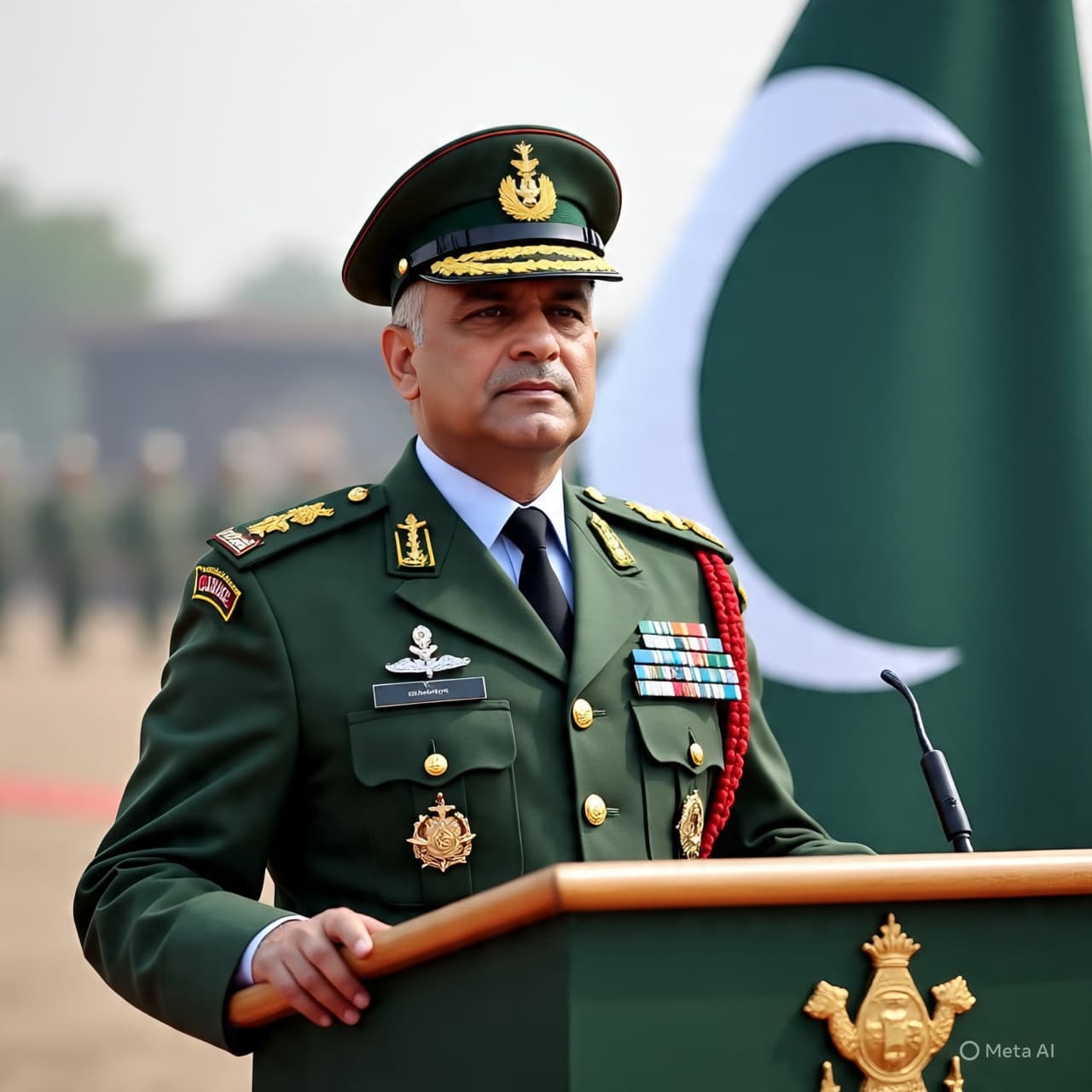
- Military Authority:General Munir's rise marks a significant shift in Pakistan's governance.
- Constitutional Changes:The 27th Amendment consolidates military power legally.
- Democratic Concerns:Critics warn of threats to civilian institutions and judicial independence.
[Military Authority in Pakistan]
In recent months, Pakistan has witnessed a pivotal transformation in its political landscape, primarily driven by the military's recalibration of its role in governance. Field Marshal Syed Asim Munir, the current army chief and former head of intelligence, is at the forefront of this shift. Analysts describe the elevation of military authority under Munir as unprecedented, reminiscent of the era of military ruler General Pervez Musharraf. This change is not merely symbolic; it is rooted in significant legal reforms that redefine the power dynamics within the country.
[Constitutional Changes and Their Implications]
The passage of the 27th Constitutional Amendment by Pakistan's parliament represents a sweeping overhaul of the nation's power architecture. This amendment introduces the office of Chief of Defence Forces (CDF), which consolidates command across the army, navy, air force, and strategic nuclear command under Munir. This legal framework marks a departure from the previous structure, where the army chief held de facto dominance. Now, that dominance is enshrined in law, effectively dissolving the older Joint Chiefs coordination model and unifying operational, administrative, and strategic authority under the CDF role.
[Legal Protections and Concerns]
One of the most striking aspects of this consolidation is the legal protection afforded to Munir and the president. The amendment provides lifetime legal immunity and allows for prolonged tenure, reinstating a five-year term for Munir as CDF. Critics argue that these provisions significantly weaken political and judicial checks on military power, raising alarms about the potential erosion of Pakistan's fragile democratic balance. The implications of these changes could be profound, as they may diminish the independence of the judiciary and civilian institutions, which have historically played a crucial role in the country's governance.
[Regional Tensions and Political Context]
This consolidation of military power occurs against a backdrop of heightened regional tensions, particularly following a brief but significant clash with India in 2025. Additionally, the internal political landscape in Pakistan has shifted dramatically, marked by the decline of the Pakistan Tehreek-e-Insaf (PTI) party and the imprisonment of its leaders. Supporters of the military's enhanced role argue that such strong leadership is necessary for stability and national security. However, opponents view these legal and institutional changes as a dangerous reversal of hard-won democratic gains, with few parallels in recent political history.
[Future Implications]
As Pakistan navigates these transformative changes, the broader implications remain uncertain. Will this era be characterized as a necessary strategic consolidation, or will it be remembered as a time when civilian voices were marginalized in favor of military authority? For a nation that has historically oscillated between civilian rule and military influence, the answer to this question will significantly shape its political and social landscape for years to come. The ongoing developments will be closely monitored by both domestic and international observers, as they hold the potential to redefine Pakistan's trajectory in the coming years.
Published by Banx Network. This article is part of the Banx decentralized media programme, powered by the BXE token on the XRP Ledger.



