There is a boundary we have long assumed to be inviolable—the quiet space inside our own heads, where thoughts form unspoken and images flicker without witness. For most of human history, that boundary has held. But a new tool developed by scientists in Israel suggests that the wall between mind and machine may be thinner than we imagined.
Researchers at the Weizmann Institute of Science have created an AI model called Brain-IT that can reconstruct what a person is looking at by analyzing their brain scans—and it does so with startling precision. Unlike earlier attempts that produced blurry approximations, Brain-IT "produces reconstructions that more closely resemble the viewed images both structurally and semantically," the researchers wrote in a paper submitted to the International Conference on Learning Representations .
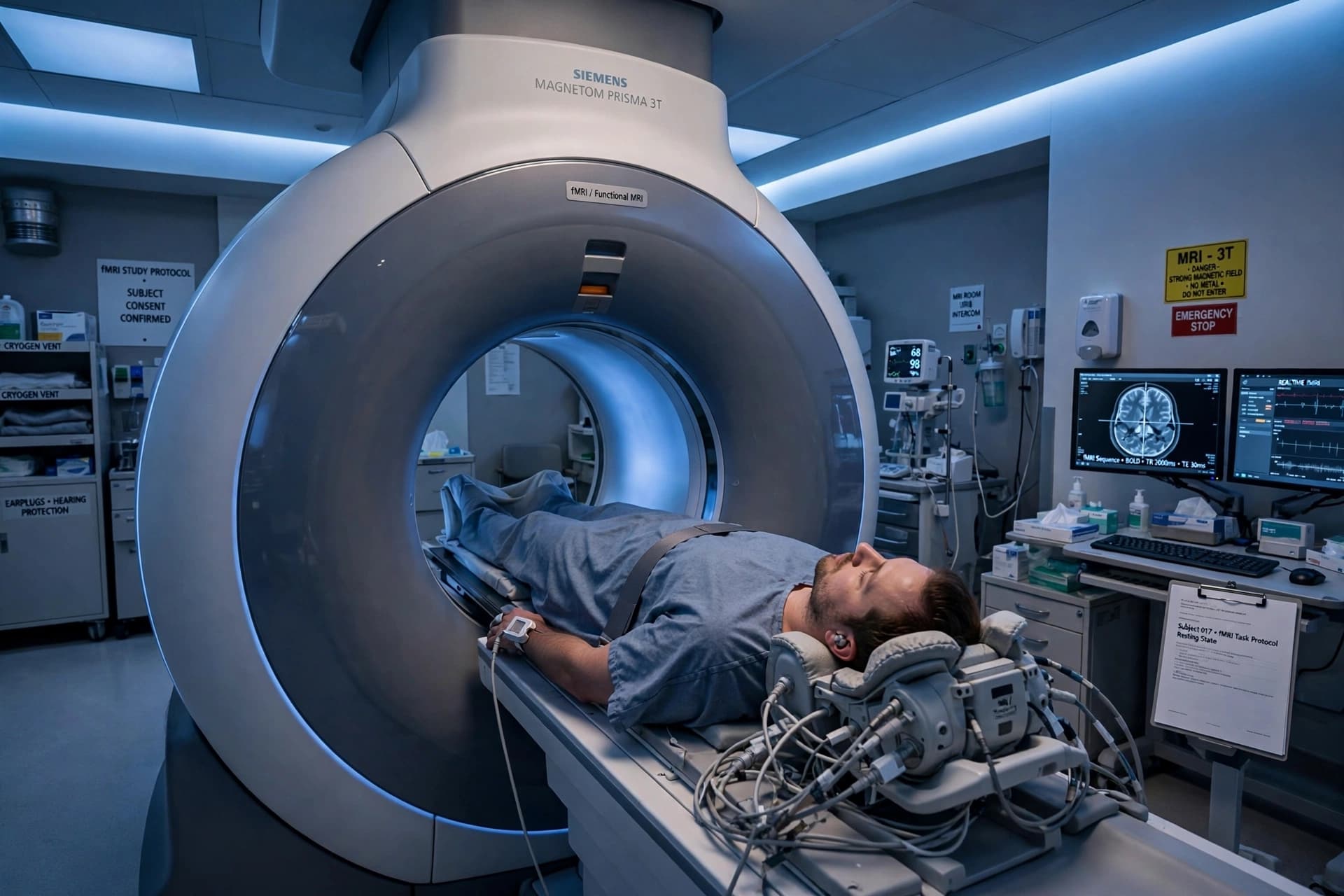
The system was trained on brain scan data from eight people who each viewed thousands of images while in a high-resolution fMRI scanner. A key innovation was a two-way training approach: an "encoder" that predicts brain activity from an image and a "decoder" that reconstructs an image from brain activity. By translating back and forth between the two, the models effectively built themselves a massive dataset without requiring additional human subjects .
The results are striking. The AI can recreate images ranging from stop signs to a pizza with the exact number of olive slices a person had envisioned. It also identified 128 functional brain regions shared across all people, including some previously unknown—such as a division within the region that processes places, with one part responding to indoor scenes and another to outdoor scenes .
The technology's potential applications are significant. Michal Irani, who led the research, said it could help people with paralysis communicate and make brain research more cost-effective—fMRI scans currently cost between $600 and $1,000 per hour . Neuroethicist Judy Illes called the work "magnificent," noting its therapeutic potential .
But others see reason for caution. "If there's a way to surreptitiously extract information about what you're thinking about, then… 150 years of sci-fi can come true anytime, and that's worrisome in a lot of ways," said Tommy Sprague, a neuroscientist at the University of California, Santa Barbara .
For now, the technology requires cooperation, extensive training data, and a massive MRI scanner. It cannot decipher unsolicited inner thoughts. But as Irani and her team hope to one day read dreams, the question of where the mind ends and the machine begins becomes harder to answer.
AI Image Disclaimer: The images accompanying this article are generated by artificial intelligence and are intended for illustrative purposes only.
Sources: Weizmann Institute of Science, MIT Technology Review, Yahoo News
Published by Banx Network. This article is part of the Banx decentralized media programme, powered by the BXE token on the XRP Ledger.