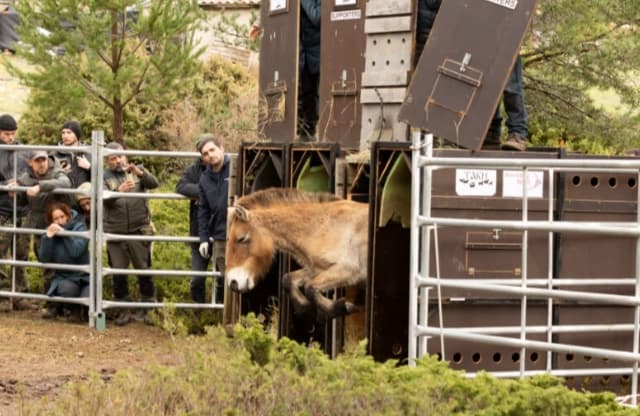
In a remarkable step for wildlife conservation, Przewalski’s horses, once declared extinct in the wild, have been reintroduced into a protected area in Spain. This momentous event, which took place in the recently established natural reserve, is a significant milestone in ongoing efforts to revive the species in their native habitats.
Historically, Przewalski's horses, native to Central Asia, faced severe threats from habitat loss, hunting, and competition with domestic livestock. The species was declared extinct in the wild in the late 20th century, with the last known wild individual captured in the early 1960s. However, intensive breeding programs in zoos and wildlife reserves across the globe have led to a gradual recovery.
The recent release is part of a collaborative project involving international organizations dedicated to wildlife preservation. Scientists and conservationists spent years preparing for this moment by ensuring the horses acclimated to a suitable environment in Spain, which resembles their original habitat.
The park, encompassing vast terrain with diverse ecosystems, provides a safe haven for these majestic creatures. The release area was meticulously evaluated to ensure it meets the horses' needs for food, water, and shelter. Monitoring teams equipped with GPS collars will track the horses' movements to study their adaptation to the wild and gather valuable data on their behavior in a natural setting.
Conservation experts believe that this initiative will not only aid in the recovery of Przewalski’s horses but also serve as an inspiration for similar efforts worldwide. As the horses roam the park, they symbolize hope for biodiversity conservation, reminding us of the power of dedicated efforts to restore endangered species to their natural habitats.
In conclusion, the release of Przewalski’s horses in Spain represents a new chapter for this endangered species. Through such groundbreaking initiatives, we can foster a deeper connection to wildlife and encourage the preservation of our planet’s unique biodiversity.
Published by Banx Network. This article is part of the Banx decentralized media programme, powered by the BXE token on the XRP Ledger.