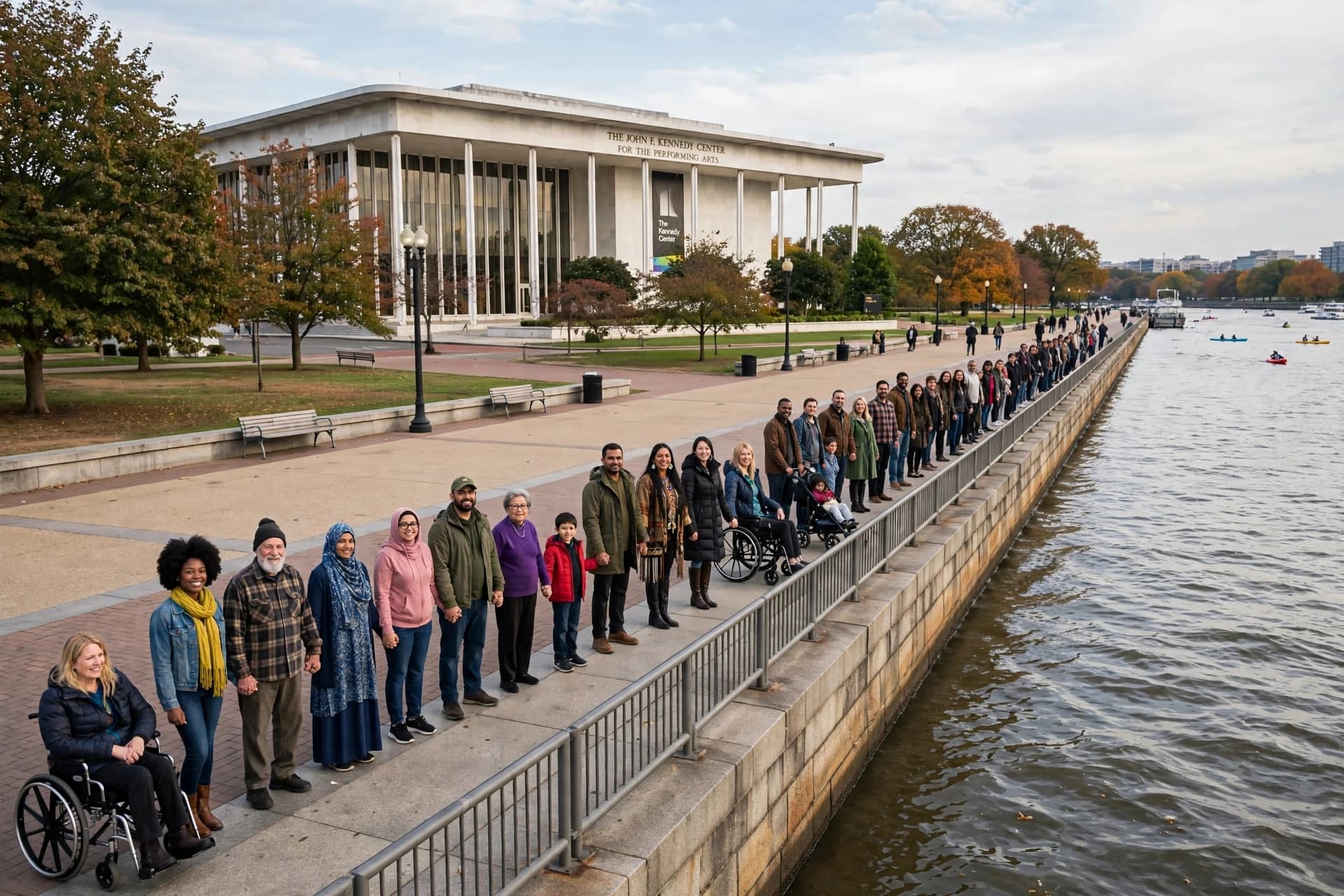
The Kennedy Center for the Performing Arts has long stood as a beacon of cultural expression in Washington, D.C., a place where art transcends politics and unites communities through shared experience. Yet, recent decisions regarding its management have sparked a wave of dissent that spilled onto the streets outside its iconic facade. In a display of peaceful solidarity, protesters linked arms to form a human chain, symbolizing their collective desire to preserve the institution’s independence and artistic integrity. This visual metaphor of connection serves as a poignant reminder of the deep emotional ties citizens feel toward their cultural landmarks.
The demonstration was organized in response to concerns over administrative changes that critics argue could compromise the center’s mission. Artists, patrons, and local residents gathered not with signs of anger, but with a quiet determination to voice their apprehension. The human chain, stretching along the waterfront, created a physical barrier that was both gentle and firm, representing the community’s resolve to protect a space they view as essential to the nation’s cultural soul. It was a moment of unity, where diverse individuals came together for a common cause.
At the heart of the controversy is the fear that political influence may encroach upon artistic freedom. The Kennedy Center, funded partly by federal appropriations but operated independently, has historically maintained a delicate balance between public support and creative autonomy. Recent shifts in leadership and policy direction have raised questions about whether this balance is being threatened. For many, the center is not just a building but a symbol of democratic values expressed through the arts.
Participants in the protest included renowned musicians, actors, and everyday citizens who have found solace and inspiration within the center’s halls. Their presence underscored the broad impact of the institution on the local and national community. By forming a chain, they visually demonstrated the interconnectedness of the arts ecosystem, suggesting that weakening one link affects the entire structure. It was a powerful statement made without words, relying instead on the strength of collective presence.
Local authorities monitored the event closely, ensuring that it remained peaceful and orderly. There were no reports of arrests or conflicts, highlighting the disciplined nature of the demonstration. This approach reflects a growing trend in civic engagement, where protesters seek to engage rather than confront, aiming to open dialogue rather than shut it down. The respectful tone of the gathering invited observers to consider the merits of the argument rather than dismissing it as mere disruption.
The Kennedy Center’s administration has stated that all changes are intended to enhance operational efficiency and broaden audience reach. However, skeptics argue that efficiency should not come at the cost of artistic risk-taking and diversity. The debate highlights the ongoing tension between fiscal responsibility and cultural vibrancy, a challenge faced by institutions worldwide. Finding a path that satisfies both stakeholders requires careful negotiation and mutual respect.
As the sun set over the Potomac, the human chain dispersed, but the message lingered in the air. The event served as a catalyst for broader discussions about the role of government in the arts and the importance of safeguarding cultural spaces from partisan interference. It reminded everyone present that culture is a shared resource, requiring vigilance and care to thrive.
The formation of a human chain outside the Kennedy Center marks a significant moment in the ongoing dialogue about cultural preservation. While the immediate future of the institution remains subject to administrative decisions, the protest has reaffirmed the community’s commitment to protecting its artistic heritage. The outcome will depend on continued engagement and the ability of all parties to find common ground.
AI Image Disclaimer: Please note that any accompanying visuals are AI-generated interpretations designed to illustrate the scientific concepts discussed.
Sources: The Washington Post NPR Associated Press Politico
Published by Banx Network. This article is part of the Banx decentralized media programme, powered by the BXE token on the XRP Ledger.