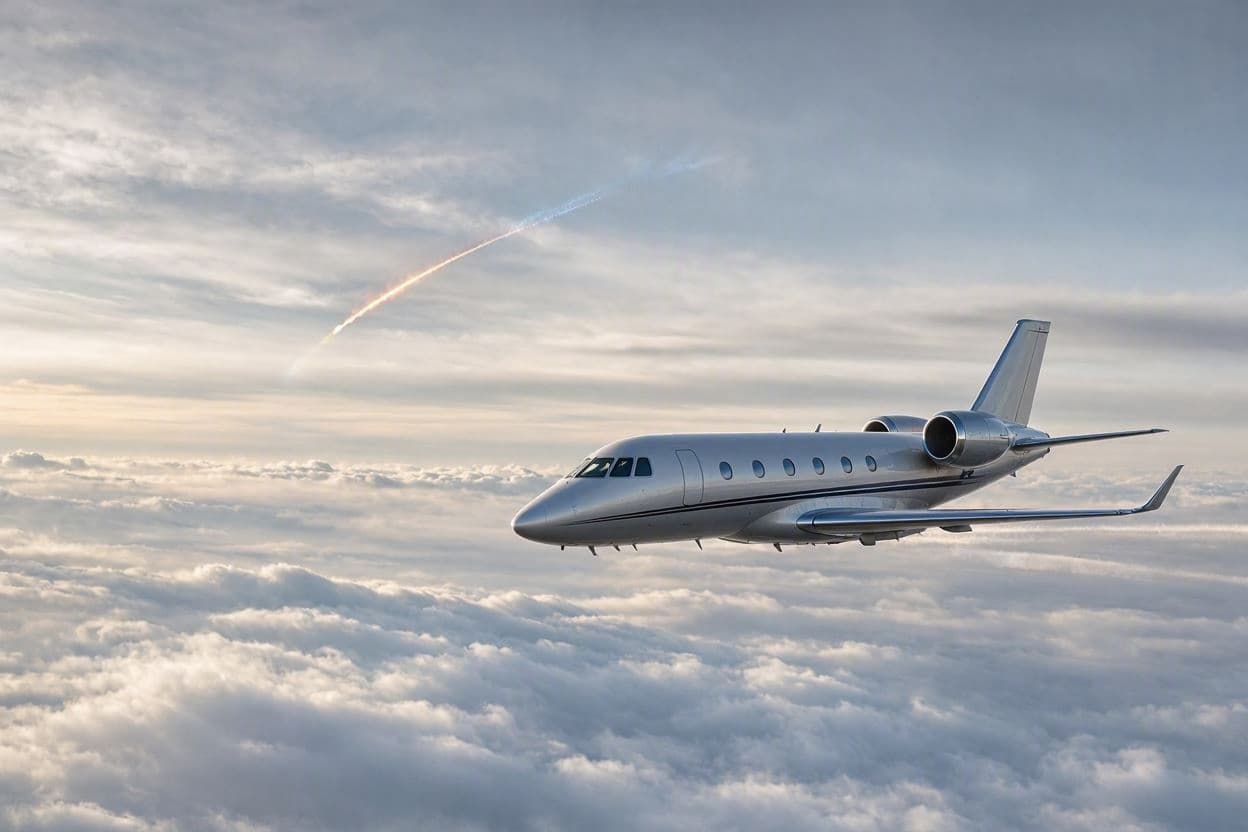
The sky has long been a canvas for human wonder, a vast expanse where stars twinkle with ancient light. Today, however, it also serves as a graveyard for our technological ambitions, where retired satellites meet their fiery end. Recently, two satellites disintegrated upon reentry into Earth’s atmosphere, an event witnessed not by casual stargazers, but by a team of scientists aboard a private jet. This unusual pursuit was not for spectacle, but for science. It invites us to reflect on the hidden consequences of our spacefaring age and the delicate balance between exploration and environmental stewardship. The chase underscores a growing awareness that what happens in orbit does not stay in orbit.
The mission involved tracking the European Space Agency’s Cluster satellites, specifically Salsa and Samba, as they descended through the upper atmosphere. By flying a specialized aircraft equipped with sensitive instruments, researchers aimed to capture data on the chemical composition of the vaporized metal and debris. This direct observation is rare, as most reentries occur over oceans or uninhabited areas, leaving their atmospheric impact largely unmeasured. The private jet served as a mobile laboratory, allowing scientists to position themselves directly in the path of the falling debris field.
The primary concern driving this research is the potential pollution of the stratosphere. As satellites burn up, they release aluminum oxide and other metal particles into layers of the atmosphere that are typically pristine. These particles can linger for years, potentially affecting ozone chemistry and reflecting sunlight in ways that are not yet fully understood. With the number of satellites launching annually increasing exponentially, the cumulative effect of this "space dust" could become significant. Understanding its behavior is crucial for predicting future climate impacts.
Historically, the focus of space sustainability has been on orbital debris—collisions and junk floating in space. However, the end-of-life phase is gaining attention as a critical environmental issue. The sheer volume of material returning to Earth is rising, with estimates suggesting that thousands of tons of satellite mass will reenter in the coming decades. This shift in perspective marks a maturation in how we view our relationship with the near-Earth environment, recognizing it as a shared resource that requires protection.
The data collected from this flight will help refine models of atmospheric entry and dispersion. By knowing exactly what chemicals are released and how they spread, scientists can better assess the risks to the ozone layer and global climate systems. This knowledge is essential for developing regulations and design standards for future satellites. It may lead to requirements for materials that are less harmful when vaporized or designs that allow for controlled deorbiting into safe zones.
Public interest in such missions highlights a broader curiosity about the unseen aspects of space technology. While launches are celebrated as triumphs of engineering, their aftermath is often overlooked. This transparent approach to studying reentry helps bridge the gap between technical operations and public understanding. It demonstrates a commitment to responsible innovation, acknowledging that every advancement carries a responsibility to minimize harm.
The use of a private jet for scientific research also raises questions about resource allocation and carbon footprints. However, proponents argue that the unique data obtained justifies the cost, providing insights that cannot be gathered from the ground or via remote sensing alone. The trade-off between the emissions of the flight and the knowledge gained about atmospheric health is a complex calculation, one that the scientific community continues to evaluate.
As the era of mega-constellations begins, with thousands of small satellites planned for launch, the importance of this research will only grow. Each satellite adds to the potential burden on the atmosphere. Proactive study now allows for informed decision-making later, ensuring that our expansion into space does not come at the expense of our home planet. It is a reminder that sustainability must extend beyond Earth’s surface.
The observation of burning satellites from a private jet highlights the emerging field of space environmental science. It underscores the need to understand and mitigate the atmospheric impact of space debris. Let us support responsible space practices.
AI Image Disclaimer: Please note that any visual representations in this article are AI-generated illustrations created for conceptual clarity.
Sources: Space.com New Scientist European Space Agency
Published by Banx Network. This article is part of the Banx decentralized media programme, powered by the BXE token on the XRP Ledger.