In the heart of Berlin, where modern glass structures rise alongside historic facades, the past often refuses to remain buried. A massive concrete bunker, a relic of the Nazi era, has become an unexpected obstacle in the city’s urgent quest for new housing. This structural standoff invites reflection on the weight of history and the practical challenges of urban development in a city scarred by war. It is a moment where the shadows of the twentieth century intersect with the needs of the twenty-first.
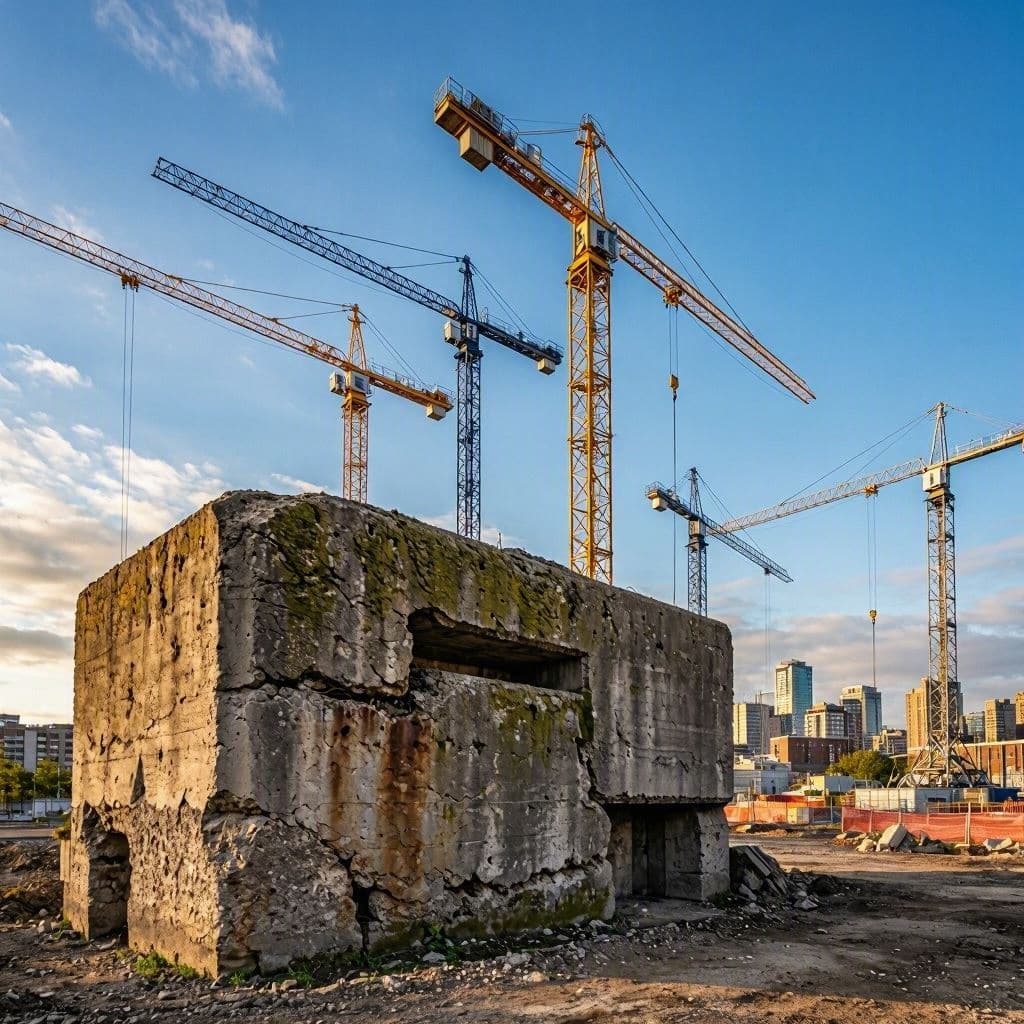
The bunker, located in the district of Friedrichshain, is a formidable structure built during World War II. Its thick walls and deep foundations were designed to withstand bombardment, and today, they resist demolition with equal stubbornness. Concrete remembers. History endures.
City planners face a dilemma: demolish the structure to make way for affordable apartments or preserve it as a historical monument. The cost of removal is prohibitive, requiring specialized equipment and extensive safety measures due to the potential presence of hazardous materials. Cost limits options. Safety dictates pace.
For local residents, the bunker is both a curiosity and a frustration. While some advocate for its preservation as a reminder of the city’s dark past, others see it as wasted space in a housing crisis. Memory honors truth. Space serves people.
Alternative proposals include integrating the bunker into new developments, perhaps as a museum, cultural center, or even underground parking. Such adaptive reuse would acknowledge the structure’s existence while serving contemporary needs. Adaptation bridges eras. Creativity solves problems.
The debate highlights the broader challenge European cities face in balancing heritage conservation with modernization. Berlin, in particular, carries the physical scars of its history, making every construction project a negotiation with the past. Balance respects history. Progress meets demand.
As discussions continue, the bunker remains a silent sentinel, watching the city evolve around it. The resolution will require compromise, ingenuity, and a willingness to confront uncomfortable truths. Compromise finds path. Truth guides action.
A Nazi-era bunker in Berlin is delaying housing development plans due to high demolition costs and historical significance. City officials are exploring alternative uses for the structure while addressing the urgent need for housing. The hope is for a solution that respects history while meeting modern needs.
AI Image Disclaimer: The visual elements accompanying this report are AI-generated interpretations designed to reflect the urban and historical context of the story.
Sources: The Guardian Deutsche Welle Berlin Local News
Published by Banx Network. This article is part of the Banx decentralized media programme, powered by the BXE token on the XRP Ledger.