In the vast expanse of the Pacific Ocean, a subtle shift in temperature can ripple across the globe, altering weather patterns and impacting lives thousands of miles away. This phenomenon, known as El Niño, is a natural part of Earth’s climate system, yet its effects are profound and far-reaching. As scientists monitor the developing conditions of 2026, understanding the mechanics of El Niño becomes crucial for preparing for its potential impacts on agriculture, health, and infrastructure.
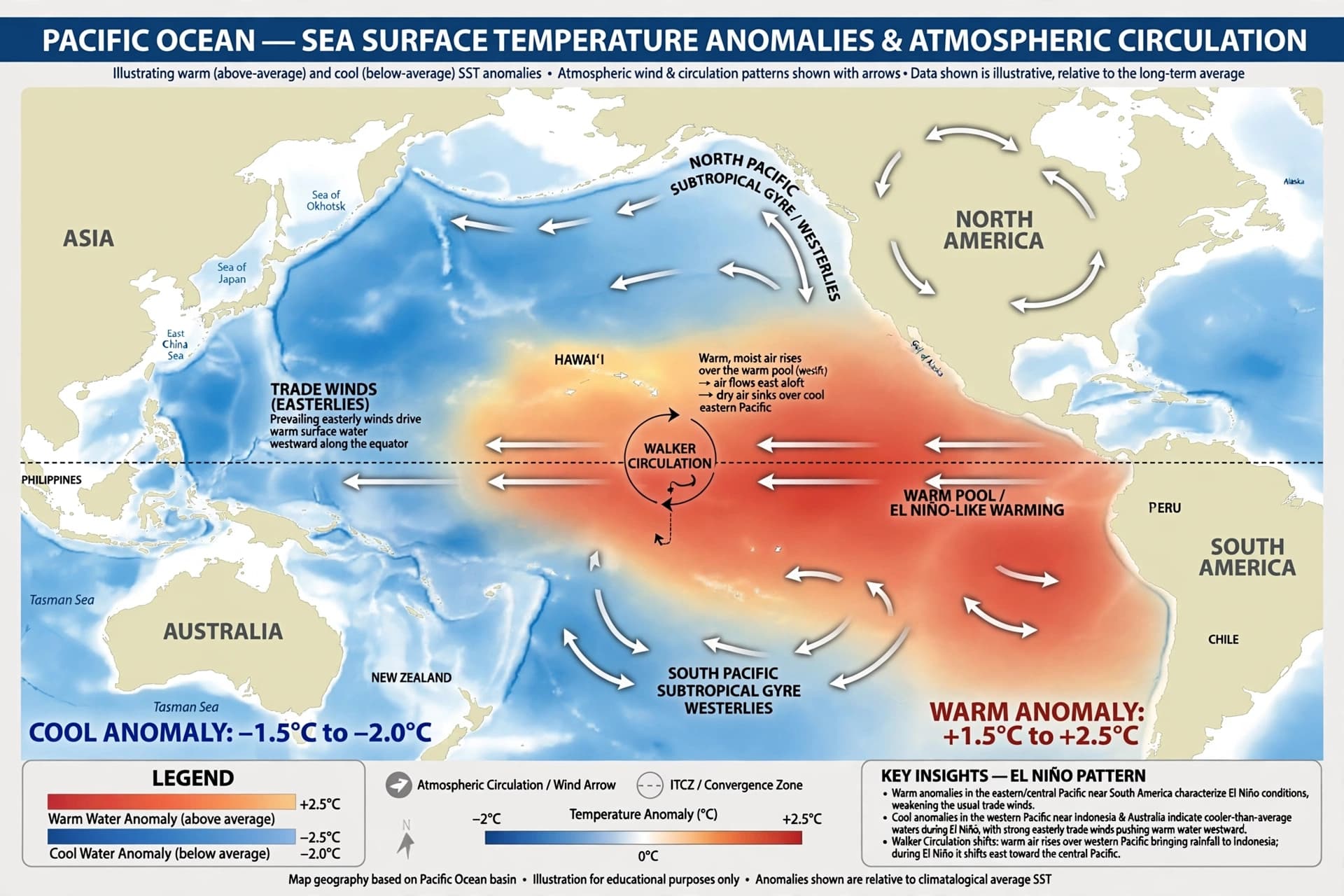
El Niño is characterized by the warming of sea surface temperatures in the central and eastern tropical Pacific. This warming disrupts normal atmospheric circulation, leading to changes in wind patterns and rainfall distribution. Typically occurring every two to seven years, El Niño events can vary in intensity, with some, like the current one, being classified as "super" El Niños due to their strength.
The causes of El Niño are complex, involving interactions between the ocean and the atmosphere. Weakened trade winds allow warm water to accumulate in the eastern Pacific, which in further weakens the winds, creating a feedback loop. While the exact triggers are still studied, it is clear that these events are intrinsic to the Earth’s climate variability, independent of human-induced climate change, though the two may interact.
The risks associated with El Niño are diverse. In some regions, it brings heavy rainfall and flooding, while in others, it causes severe droughts and heatwaves. These extremes can lead to crop failures, water shortages, and increased incidence of diseases such as malaria and dengue. For vulnerable populations, the economic and health consequences can be devastating, highlighting the need for effective risk reduction strategies.
Reducing these risks requires a multi-faceted approach. Early warning systems, powered by advanced climate models, allow governments and communities to prepare for impending weather changes. Agricultural practices can be adapted to withstand drought or excess rain, and public health initiatives can target disease prevention during high-risk periods.
International cooperation is essential, as El Niño’s effects cross borders. Sharing data, resources, and best practices helps countries build resilience collectively. Organizations like the World Meteorological Organization play a key role in coordinating these efforts, ensuring that information reaches those who need it most.
Moreover, addressing the broader context of climate change is vital. While El Niño is a natural phenomenon, rising global temperatures may exacerbate its impacts. Reducing greenhouse gas emissions and investing in sustainable development can help mitigate the compounding effects of climate variability and long-term warming.
Understanding El Niño is not just a scientific endeavor but a practical necessity for global safety. By combining knowledge with action, societies can reduce the risks posed by this powerful climate pattern, protecting lives and livelihoods in an increasingly unpredictable world.
AI Image Disclaimer: Visuals in this article are AI-generated conceptual illustrations of ocean-atmosphere interactions and do not represent actual satellite data or scientific diagrams.
Sources: NOAA Harvard Salata Institute Carbon Brief World Health Organization
Published by Banx Network. This article is part of the Banx decentralized media programme, powered by the BXE token on the XRP Ledger.