In the global imagination, an outbreak is often pictured as a single point of light—a hospital, a quarantine ward, a city under watch. But viruses do not respect the boundaries we draw on maps. They travel on roads, through airports, across borders, carried by people who do not yet know they are carrying something else.
Kenya confirmed its second Ebola case this week, a 39-year-old man who is a close family member of the country's first patient. He was already in quarantine and under daily monitoring when he developed symptoms on Tuesday. Both the National Virology Reference Laboratory and the Kenya Medical Research Institute-CDC laboratory returned matching positive results. He has been transferred to a designated treatment center and is receiving supportive care .
The first case was a 40-year-old Kenyan businessman who had been living in the Democratic Republic of Congo. He fell ill there, was treated at two health facilities, and traveled through three Ebola-affected provinces before crossing into Uganda on October 1. From Uganda, he flew to Kenya, where a relative picked him up at the airport and drove him to a hospital in Nairobi. He tested positive on October 5 and died the same day .
What makes this outbreak a test of preparedness is not the two confirmed cases themselves, but the journey that preceded them. The first patient crossed three international borders while infected, undetected by airport health screenings. Health experts noted that medication he took during his journey may have temporarily masked his symptoms . The incubation period for Ebola ranges from two to 21 days, meaning exposed individuals may not show symptoms for weeks .
Kenyan authorities have identified approximately 128 contacts linked to the first case. As of Tuesday, 113 had been traced. Of those, 108 are in quarantine in Kenya, undergoing daily clinical assessments and temperature checks. Five contacts are outside the country, and health authorities in those jurisdictions have been notified under the International Health Regulations. Efforts to trace the remaining 15 contacts are ongoing .
The second patient was among those already quarantined, a fact health officials describe as evidence that the containment strategy is working. "Early supportive care improves his chances of recovery, and isolating him at the first symptom limits the chance of passing the virus to others," said Director General for Health Dr. Patrick Amoth. "This is the response working as designed" .
President William Ruto has ordered the National Security Council Committee to assess the situation and recommend additional measures. Since the first case was detected, Kenya has screened more than 650,000 travelers and tested 267 samples across five laboratories. Nearly 5,000 healthcare workers have been trained in Ebola prevention and management. Designated treatment facilities include Kenyatta National Hospital, Moi Teaching and Referral Hospital, the National Police Hospital, and The Nairobi Hospital .
Kenya remains open, with no restrictions on travel, trade, or public gatherings. But the outbreak has exposed a vulnerability that extends beyond Nairobi: the difficulty of detecting a virus that can cross borders quietly, carried by someone who does not yet feel sick. For now, the quarantine wards hold the line. The question is whether the systems beyond them can do the same.
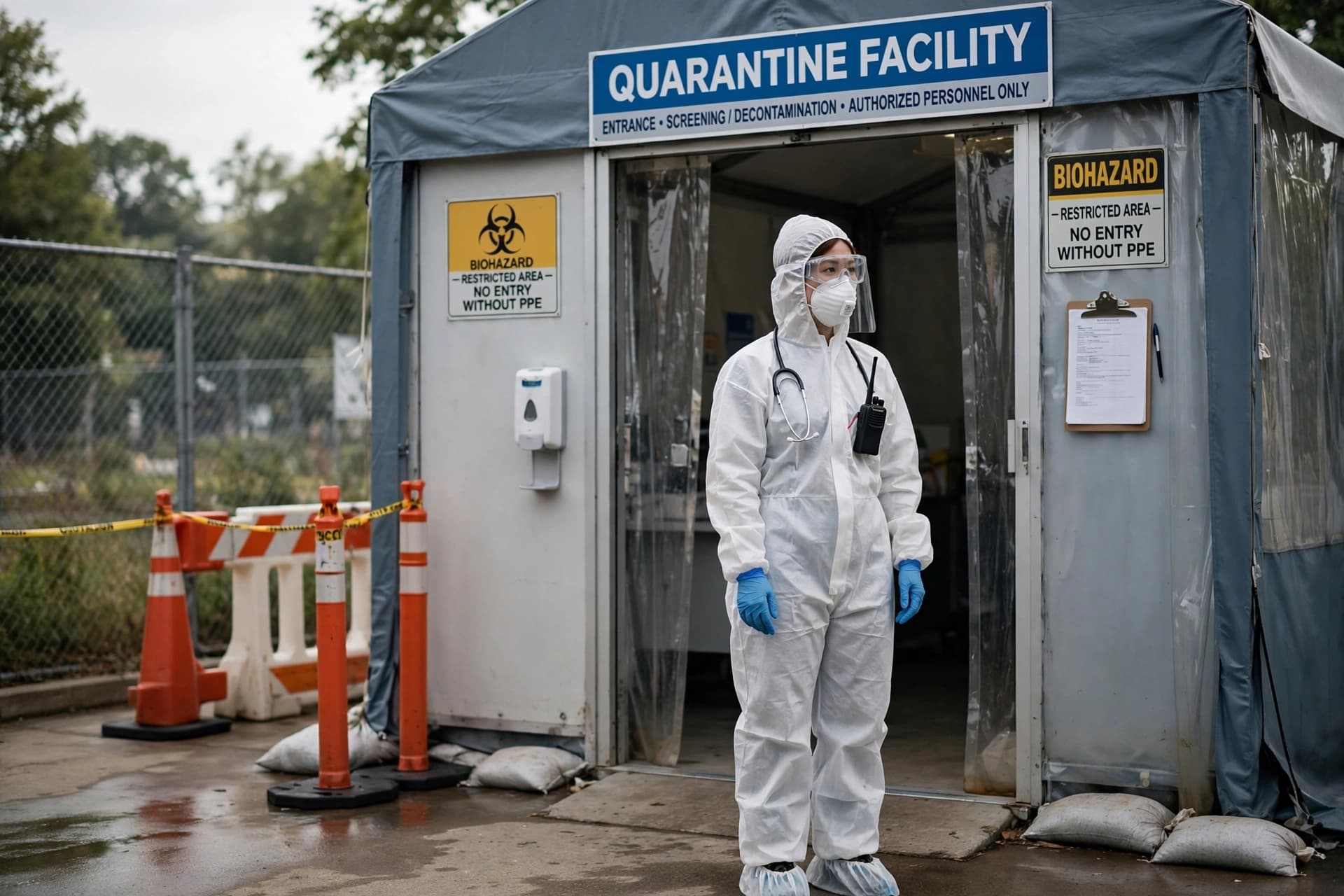
AI Image Disclaimer: This article's image is AI-generated and does not depict the actual patients or quarantine facilities.
Sources: KBC Digital, GBC Ghana Online, CBC News, Lusa, Kenya News Agency, Associated Press
Published by Banx Network. This article is part of the Banx decentralized media programme, powered by the BXE token on the XRP Ledger.