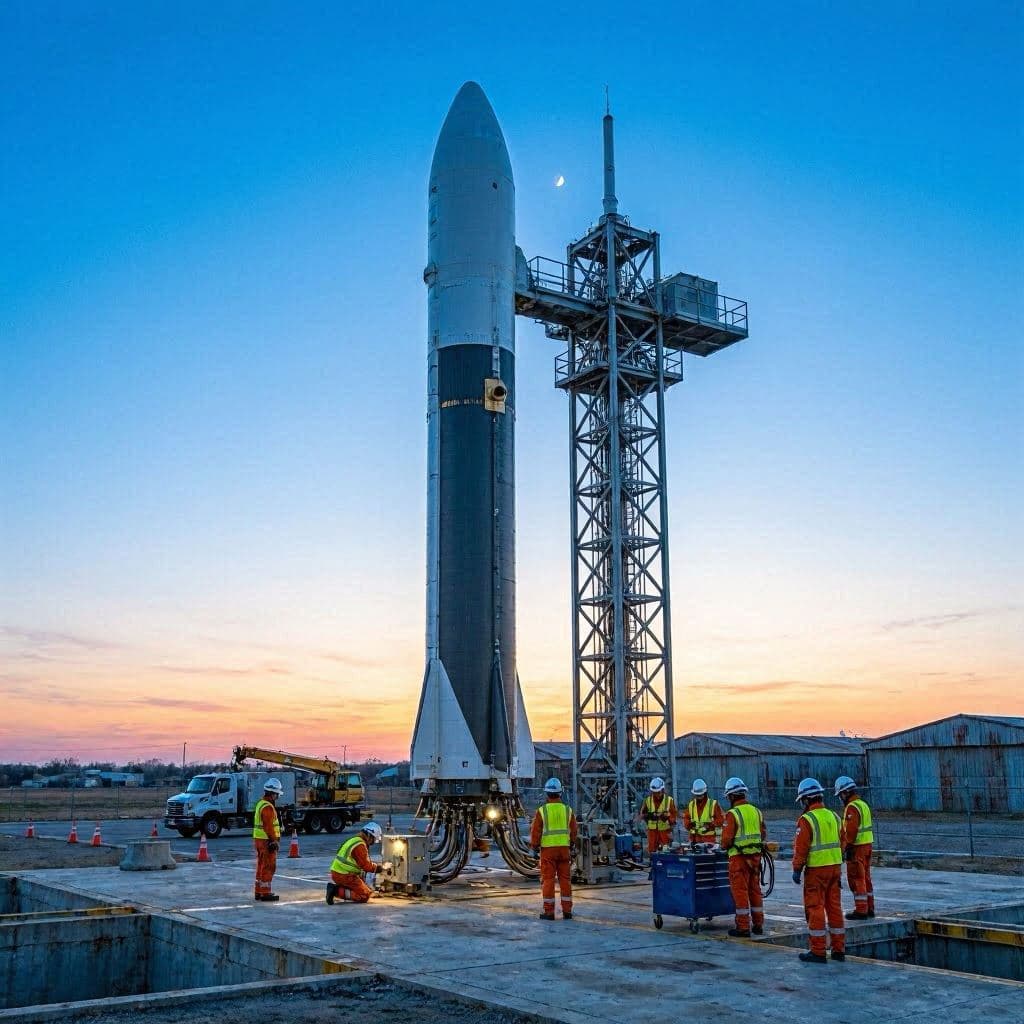
Opening: In the high-stakes theater of spaceflight, timing is everything. Countless hours of preparation, testing, and coordination culminate in moments where precision is paramount. Recently, NASA faced a familiar yet frustrating hurdle when a last-minute technical issue forced the delay of a critical satellite rescue mission. The incident serves as a gentle reminder of the complexities involved in orbital mechanics and engineering, where even the smallest anomaly can pause the momentum of progress. It is a testament to the caution that defines modern space exploration, prioritizing safety and success over haste.
Body: The mission in question was designed to rendezvous with a stranded satellite, a task that requires flawless execution from liftoff to docking. The delay occurred during final pre-launch checks, when engineers detected an irregularity in one of the rocket’s systems. While the specific nature of the issue was not immediately disclosed to the public, such anomalies are taken seriously to prevent potential failures in orbit. The decision to scrub the launch was made swiftly, reflecting a culture of rigorous risk management that has become standard in the industry.
Rescue missions in space are particularly challenging because they involve interacting with non-cooperative targets. Unlike launching a new satellite, where the payload is active and responsive, a stranded satellite may have limited power or communication capabilities. This requires the rescue vehicle to perform autonomous maneuvers with high precision. Any delay in the launch window can complicate the orbital alignment, necessitating recalculations and additional fuel reserves to ensure a successful rendezvous.
The postponement also highlights the interdependence of various components in a space mission. From the rocket’s propulsion system to the software guiding the spacecraft, every element must function in harmony. A minor glitch in one area can ripple through the entire schedule, affecting not just the launch but also ground station availability and international coordination. These logistical challenges underscore the intricate dance of resources required to maintain a presence in space.
Despite the setback, the delay is viewed as a prudent measure rather than a failure. History has shown that rushing a launch can lead to catastrophic outcomes, costing far more in time and resources than a brief postponement. By taking the time to diagnose and fix the issue, NASA ensures that the mission has the best possible chance of success. This approach builds trust with stakeholders and the public, demonstrating a commitment to reliability.
Furthermore, the incident provides valuable data for future missions. Each anomaly is studied extensively to improve design and operational procedures. The lessons learned from this delay will contribute to the robustness of subsequent rescue operations, making them more resilient to unexpected challenges. In this way, even setbacks serve as stepping stones toward greater proficiency and confidence in space operations.
As teams work to resolve the issue, the anticipation for the rescheduled launch grows. The satellite waiting in orbit remains a silent testament to the urgency of the mission, yet it also benefits from the extra care being taken on the ground. The patience exhibited by engineers and scientists reflects a deep respect for the difficulties of space travel, acknowledging that the universe does not always conform to our schedules.
Closing: The delay of NASA’s satellite rescue mission underscores the importance of thoroughness in space exploration. While the postponement is inconvenient, it ensures that the mission proceeds with the highest level of safety and precision. As engineers address the technical issue, the space community remains hopeful for a successful launch in the near future.
AI Image Disclaimer: The images associated with this article are AI-generated interpretations designed to visualize the context of the launch delay.
Sources: SpaceNews NASA Official Website Spaceflight Now The Verge
Published by Banx Network. This article is part of the Banx decentralized media programme, powered by the BXE token on the XRP Ledger.