
Key Highlights
- Military tensions are escalating in the Strait of Hormuz, a crucial global oil passage.
- The U.S. is considering military operations to secure the waterway amid rising geopolitical risks.
- Disruptions in this area could significantly impact global economies and fuel prices.
The Strait of Hormuz, a narrow waterway that serves as a vital artery for global energy supply, is once again at the center of international attention. Recent reports indicate that Saudi Arabia and Kuwait have relaxed restrictions on U.S. military operations, allowing for increased access to their bases and airspace. This shift comes as Washington contemplates reviving “Project Freedom,” an initiative aimed at ensuring the security and accessibility of this critical maritime route.
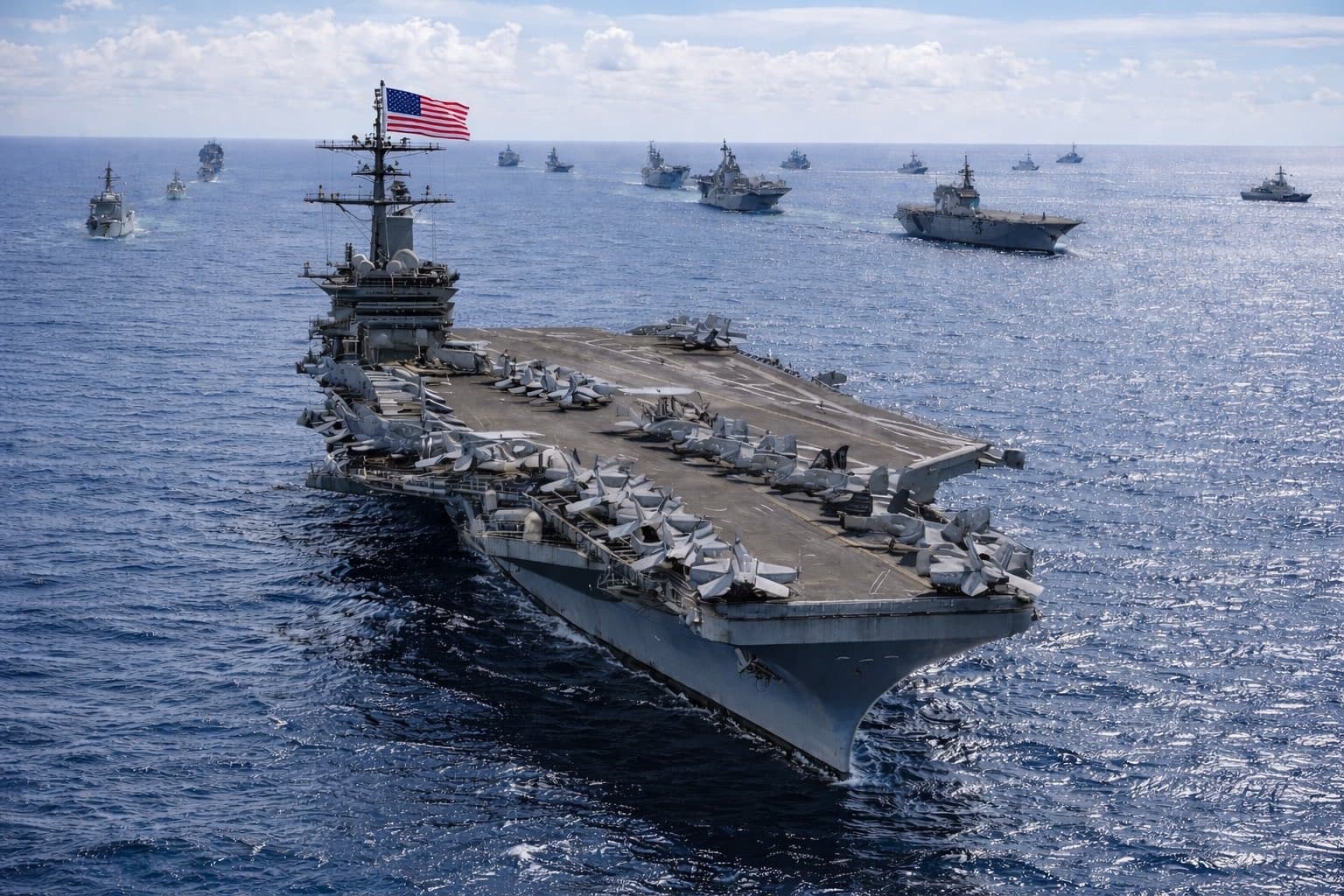
This seemingly small stretch of water is responsible for transporting nearly 20% of the world’s oil supply. The implications of any military engagement in this region are profound, as every tanker that passes through the Strait influences fuel prices, shipping costs, and ultimately, the cost of living for consumers worldwide. The potential for military assets, including warships and fighter jets, to converge in this corridor raises alarms among markets, governments, and military strategists alike.
Geographically, the Strait of Hormuz lies between Iran and several Arabian Gulf states, making it a flashpoint for regional tensions. Analysts warn that any disruption to shipping routes could lead to a dramatic spike in oil prices, with even temporary blockades sending shockwaves through economies already grappling with inflation and market instability. For the United States, maintaining an open route is crucial not only for military strategy but also for safeguarding global economic stability and international trade.
The decision to allow expanded U.S. military access by Gulf nations reflects a growing concern over regional security. As tensions escalate, social media reactions have been mixed, with some viewing this as a strategic maneuver to avert a global energy crisis, while others fear it could escalate into a broader geopolitical confrontation.
Military experts emphasize that any operation in the Strait would necessitate extensive coordination among naval fleets, air defense systems, and allied bases in the region. The involvement of aircraft carriers, surveillance drones, and fighter patrols could become commonplace if tensions continue to rise. The stakes are high, as the potential for conflict looms over this critical maritime corridor.
Beyond the immediate political and military implications, the reality is that when the Strait of Hormuz experiences turmoil, the repercussions are felt globally. Fuel prices can surge, stock markets react swiftly, and shipping insurance costs rise, ultimately affecting everyday consumers—from taxi drivers to factory workers—who bear the brunt of economic fallout.
As the situation develops, the coming days may prove pivotal in determining whether this is merely a show of force or the onset of a larger global confrontation. The world watches closely, aware that the fate of economies and energy security hangs in the balance.
One narrow waterway. One strategic decision. And the entire world is watching.
Published by Banx Network. This article is part of the Banx decentralized media programme, powered by the BXE token on the XRP Ledger.



