Key Highlights
- Pope Leo XIV returns to Peru, a country he served for decades.
- His visit includes meetings with government officials and local communities.
- The Pope aims to address pressing social issues during his stay.
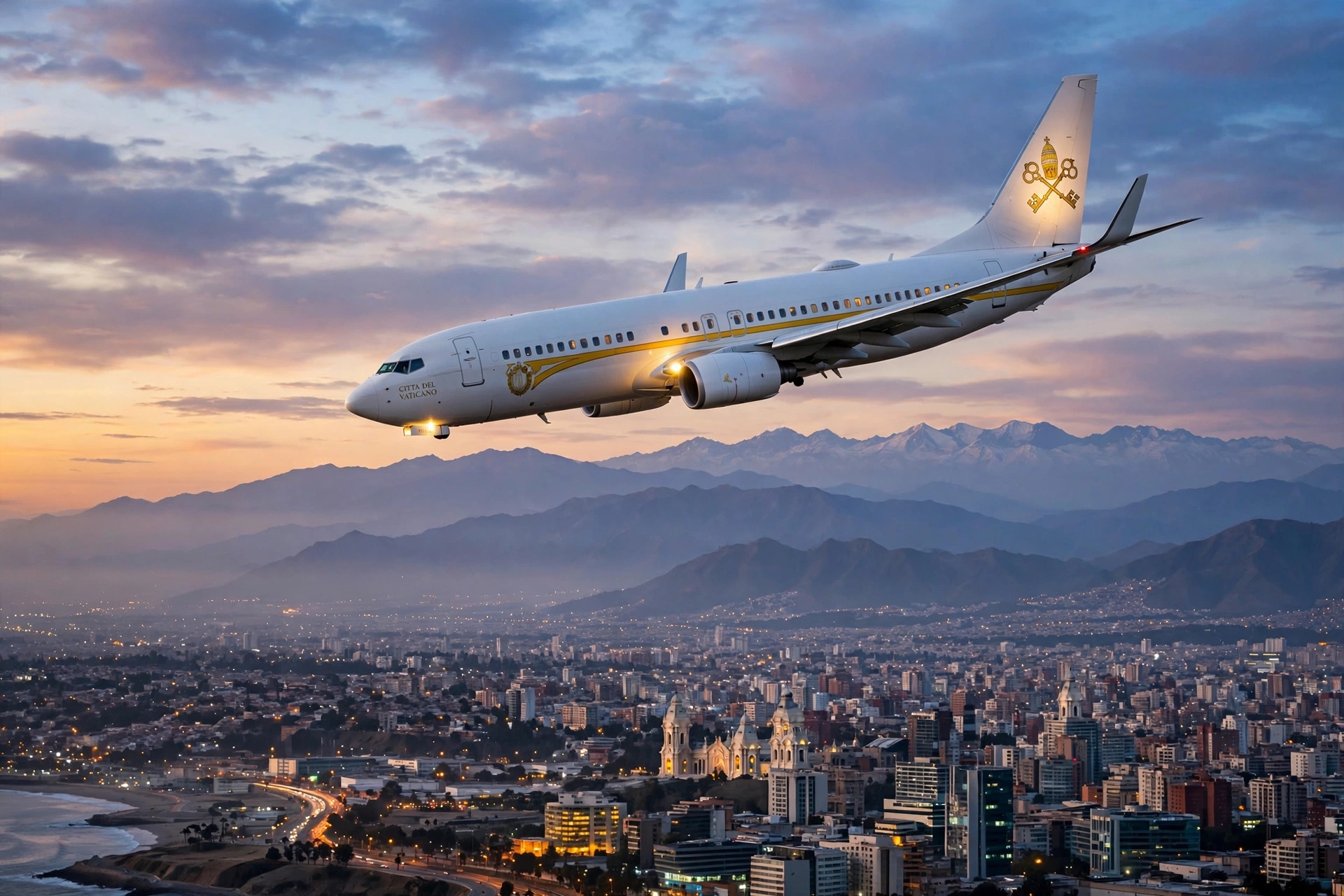
Pope Leo XIV, formerly known as Robert Francis Prevost, has returned to Peru, a country that holds significant personal and spiritual meaning for him. His arrival on Wednesday afternoon marks the culmination of his apostolic journey through Latin America, which included stops in Uruguay and Argentina. Unlike a typical diplomatic visit, this trip is a heartfelt homecoming for the Pope, who spent years as a missionary and bishop in Peru.
The Pope's itinerary reflects the deep connections he has forged in the country. In Lima, he is set to meet with President Keiko Fujimori at the Government Palace and address civil society at the Grand National Theater. His visit is not merely ceremonial; it is an opportunity for him to reconnect with the people he once served. Fujimori emphasized the importance of unity during the visit, urging Peruvians to embrace this moment as one of joy and reconciliation.
Beyond Lima, the Pope's journey will take him to Chiclayo, where he served as bishop, and to Cusco, where he will travel by Popemobile to the historic site of Sacsayhuamán. Each location is steeped in personal history for the Pope, who will reunite with the faithful in Chiclayo and engage with Amazonian communities in Pucallpa, reflecting on his early missionary experiences.
The scale of the visit is considerable, with a packed schedule on his first full day. He is expected to meet with Peru's bishops, lead a prayer vigil with young people at the Monumental Stadium, and preside over discussions addressing the challenges faced by the Peruvian people. This visit is designed not just for formalities but for genuine encounters, allowing the Pope to listen to the concerns of those he once walked alongside as a priest.
The broader context of this visit is significant. The Catholic Church continues to play a vital role in Peru, particularly in education, healthcare, and social welfare. However, religious affiliation has seen a decline, dropping from 89 percent in 1993 to approximately 76 percent in 2017. The Pope's presence serves as a reminder of the Church's commitment to addressing pressing issues such as poverty, migration, and violence, which are critical to the lives of many Peruvians.
As the Pope's visit unfolds, the nation is preparing for a moment of collective attention. Flags are being hung, routes are being prepared, and choirs are rehearsing to welcome him. The police and security services have coordinated with Vatican officials to ensure a smooth visit. Beneath the logistical preparations lies a deeper sentiment: a man who once walked the streets of Peru as a humble priest is returning as a spiritual leader, ready to embrace the country that shaped him.
The visit is set to continue through November 17, with further events scheduled in Lima, Chiclayo, Cusco, and Pucallpa. The Pope's addresses and appearances are expected to draw large crowds, marking a significant moment in the life of both the Pope and the Peruvian people. As he reconnects with his roots, the visit promises to be a powerful reminder of faith, service, and community.
AI Image Disclaimer: The images accompanying this article are generated by artificial intelligence and do not depict the actual papal visit or individuals involved.
Published by Banx Network. This article is part of the Banx decentralized media programme, powered by the BXE token on the XRP Ledger.