
In global markets, confidence often moves quietly. It builds over years through steady policy, predictable leadership, and a sense that rules will not shift without warning. When that confidence weakens, the change is rarely dramatic at first. Instead, it appears in subtle shifts — a higher borrowing cost, a lighter allocation, a growing preference for alternatives.
In the United Kingdom, many international investors now see political uncertainty as a persistent factor shaping how they view the country’s assets. After a decade marked by leadership changes, policy reversals, and periods of fiscal tension, global capital has become more selective about where and how it is deployed in Britain.
The concern is less about any single government decision than about a longer pattern of instability. Since the Brexit referendum, the UK has experienced multiple prime ministers, shifting economic strategies, and episodes of market volatility, including a sharp reaction to fiscal proposals in 2022 that briefly unsettled the government bond market. For long-term investors, such moments have reinforced the perception that political risk can no longer be treated as negligible.
As a result, analysts say international portfolios are increasingly comparing UK assets against a wider range of opportunities. With higher interest rates globally and stronger growth expectations in some economies, investors have more options than they did during the era of ultra-low yields. Capital that might once have flowed automatically into UK equities or government bonds now faces a more demanding risk-return calculation.
The effect is most visible in sovereign debt markets. Investors have begun to demand a clearer premium to hold UK government bonds relative to some peers, reflecting concerns about fiscal discipline, economic growth prospects, and the stability of policy direction. While the UK retains deep and liquid markets, the perception of additional risk can translate into higher financing costs over time.
Equity markets have also felt the shift. London remains a major financial center, but international allocations to UK-listed companies have been restrained, influenced not only by domestic politics but also by sector composition, currency considerations, and the relative performance of other global markets.
Government officials have emphasized their commitment to fiscal credibility and policy stability, aware that rebuilding investor confidence depends on consistency over time rather than short-term messaging. Market participants broadly agree that predictability — in taxation, regulation, and public spending — is now as important as the level of policy itself.
The challenge comes at a moment when the UK is seeking to attract investment to support growth, infrastructure, and energy transition projects. In an environment where capital is mobile and global competition for funding is intense, perceptions of political risk can carry tangible economic consequences.
Yet investors also note that confidence can return if stability is sustained. The UK’s institutional framework, legal system, and financial market depth remain significant strengths. What markets appear to be waiting for is continuity — evidence that policy direction will remain steady across political cycles.
For now, the message from global capital is cautious rather than dismissive. Britain is still investable, but no longer assumed. In a world where investors have more choices and less tolerance for uncertainty, the cost of political volatility is measured not in headlines, but in the quiet reallocation of money elsewhere.
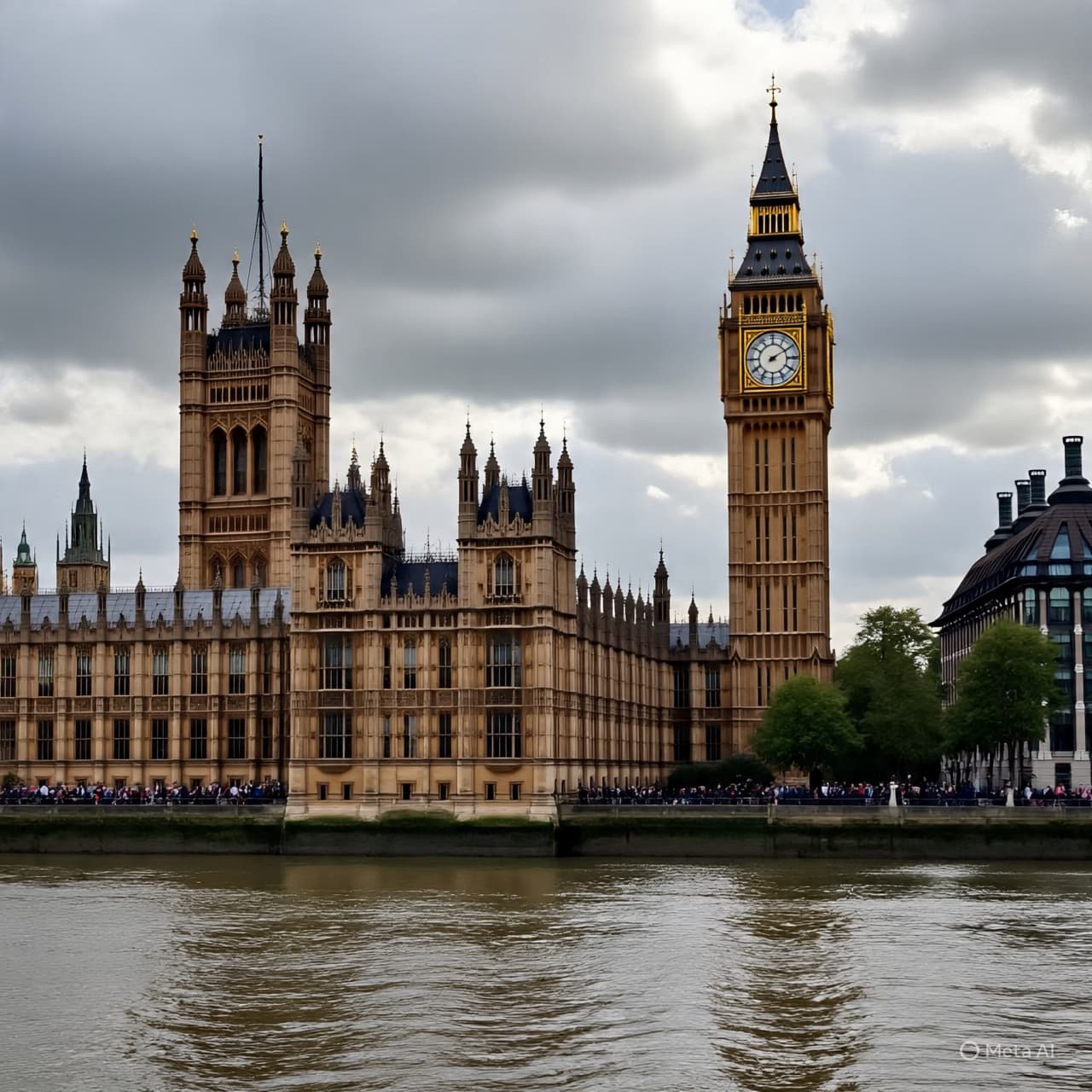
AI Image Disclaimer Some images accompanying this article are AI-generated for illustrative purposes and may not depict actual events or locations.
Published by Banx Network. This article is part of the Banx decentralized media programme, powered by the BXE token on the XRP Ledger.



.jpg&w=3840&q=75 "Same-Sex Couple Sue Slovakia Over Refusal to Register Their Marriage")