

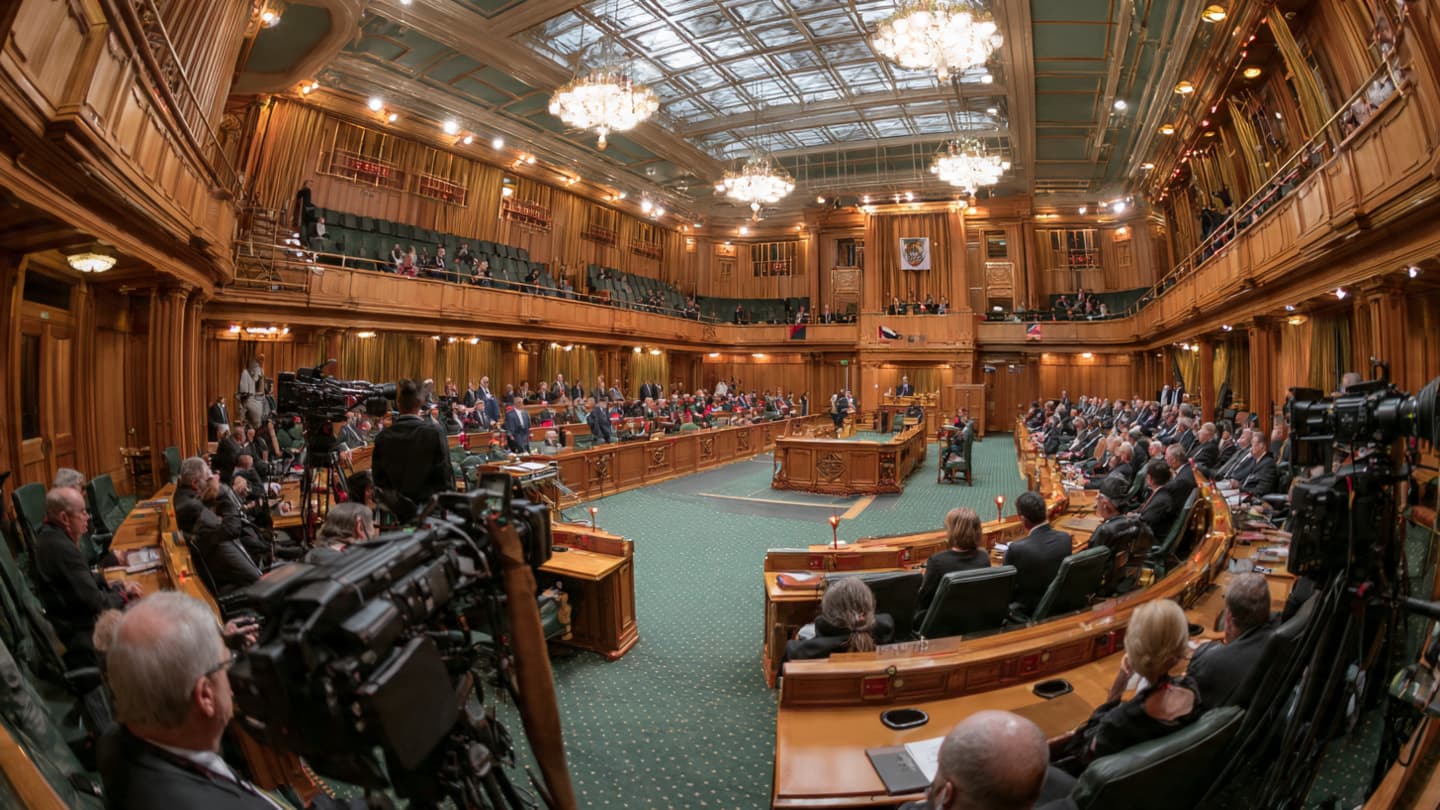
Key Highlights
- Political dynamics in New Zealand are shifting amid leadership debates.
- The Labour Party faces challenges balancing traditional values with modern expectations.
- Smaller parties are increasingly influential in shaping public discourse.
New Zealand's political landscape is currently experiencing significant shifts, with internal pressures within the Labour Party coming to the forefront of public debate. As the nation grapples with economic challenges and rising living costs, discussions surrounding party leadership and direction have intensified. Political analysts observe that such dynamics are not uncommon, especially during times of economic adjustment and public concern over critical issues like housing and healthcare.
The Labour Party, a cornerstone of New Zealand's political framework, has historically championed social welfare and progressive reforms. However, like many center-left parties worldwide, it is now tasked with reconciling traditional voter expectations with the realities of a changing economic environment. This balancing act is crucial as the party navigates the complexities of a fragmented political landscape, where voter alignment is increasingly fluid.
Leadership debates within the Labour Party often gain momentum following electoral transitions or periods of policy dissatisfaction. Public expectations for swift solutions can create tension within party ranks, particularly when both government and opposition are under pressure to address immediate economic concerns while also pursuing long-term policy goals. This dual focus can strain party unity and complicate messaging.
In recent years, New Zealand's political environment has been marked by the growing influence of smaller parties, which have begun to play a more prominent role in shaping public discourse and parliamentary dynamics. This shift underscores the importance of cohesive leadership messaging for larger parties like Labour, as they seek to maintain stability and voter confidence in an increasingly competitive political arena.
Supporters of the Labour Party argue that many of the challenges facing the country are structural and require thoughtful, long-term solutions rather than quick fixes. They highlight issues such as economic uncertainty, housing shortages, and global market fluctuations as factors that affect governments worldwide, not just in New Zealand. This perspective emphasizes the need for patience and strategic planning in addressing complex societal issues.
Conversely, critics of the party's leadership question whether a clear and compelling vision for the future has been effectively communicated to the public. Political analysts note that public trust hinges not only on the technical details of policy proposals but also on the clarity and confidence of the narrative presented by leaders. The ability to articulate a coherent vision is essential for fostering public support and trust.
Despite the ongoing debates and tensions within the political sphere, New Zealand's democratic institutions remain robust and widely respected. The parliamentary system is designed to accommodate disagreement and speculation without undermining overall governance. Analysts caution against interpreting routine political tensions as signs of institutional weakness, emphasizing that such dynamics are a natural part of democratic politics.
As discussions unfold in parliament and across media platforms, the current political climate reflects the ongoing rhythm of democracy. While leadership questions may evolve, the fundamental challenge persists: how to balance public expectations, economic realities, and political identity in a complex and ever-changing world.
AI Image Disclaimer: Some visuals connected to this article were generated using AI-assisted illustration tools for editorial newsroom use.
Published by Banx Network. This article is part of the Banx decentralized media programme, powered by the BXE token on the XRP Ledger.




