Key Highlights
- The CLARITY Act is a pivotal bipartisan effort in cryptocurrency regulation.
- Republican lawmakers advocate for regulatory certainty to boost blockchain innovation.
- Democrats emphasize consumer protections and ethics in crypto legislation.
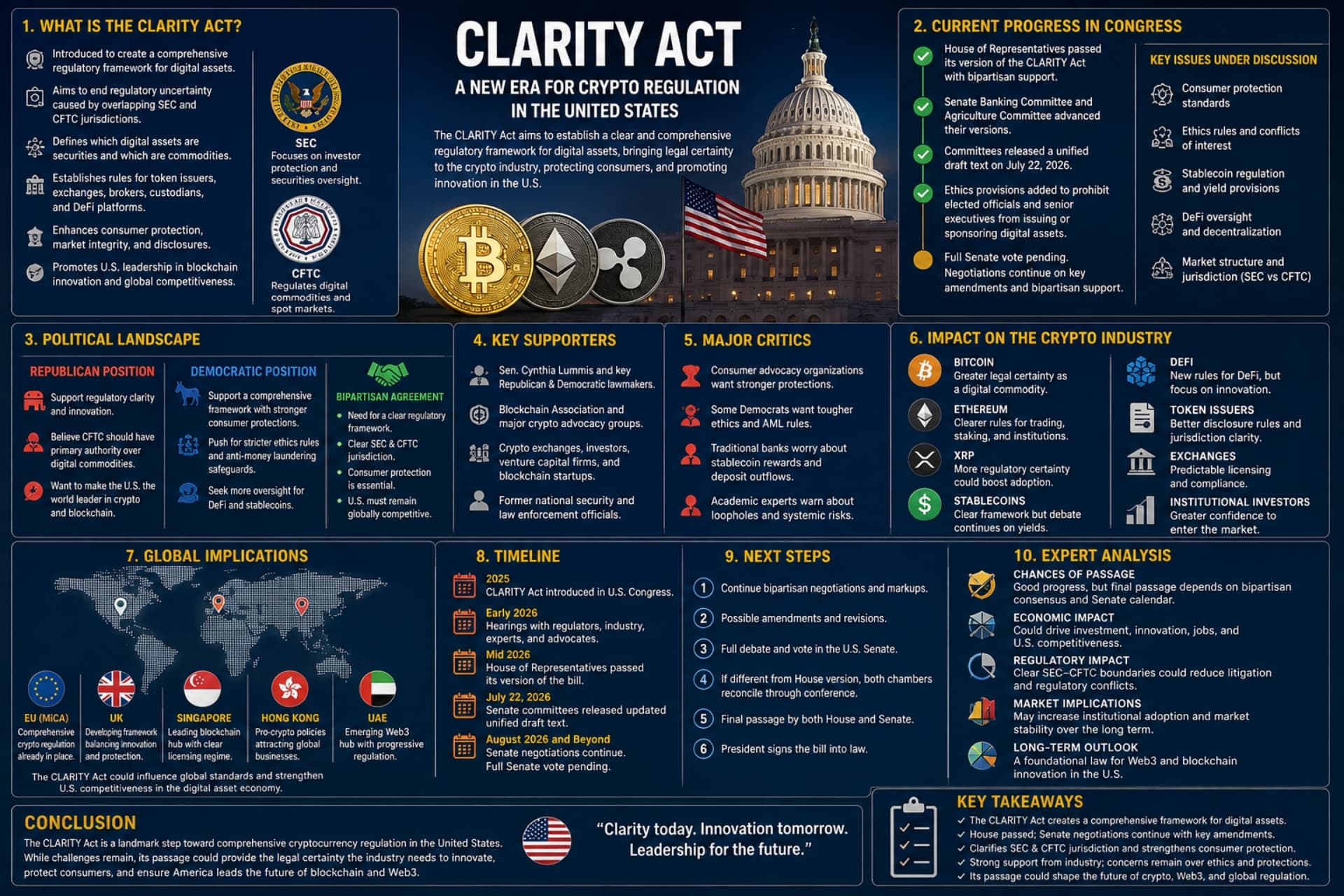
The CLARITY Act has emerged as a significant bipartisan initiative aimed at establishing clearer regulations for digital assets in the United States. As lawmakers from both parties recognize the need for a comprehensive framework, they remain divided on the specifics of implementation. This ongoing debate reflects the complexities of balancing innovation with consumer protection in the rapidly evolving cryptocurrency landscape.
Republican lawmakers have largely embraced the CLARITY Act, viewing it as a means to restore regulatory certainty and enhance the U.S.'s position in blockchain innovation. They argue that the current environment, characterized by regulation through enforcement, has stifled investment and driven blockchain startups abroad. Prominent supporters, including Senator Cynthia Lummis and members of the House Financial Services Committee, contend that the legislation would foster innovation while ensuring necessary market oversight. They advocate for the Commodity Futures Trading Commission (CFTC) to take primary authority over qualifying digital commodities, which they believe would create a more predictable regulatory framework.
In contrast, Democratic lawmakers have taken a more cautious stance. While several senators support the overarching goal of a comprehensive crypto framework, they insist that the legislation must incorporate stronger consumer protections, anti-money laundering measures, and enhanced oversight of decentralized finance (DeFi). A contentious point in negotiations has been the ethics language, with some Democrats arguing that the revisions do not adequately address potential conflicts of interest involving senior public officials.
Despite these political divisions, there are areas of bipartisan agreement. Lawmakers from both parties concur that the U.S. requires a comprehensive digital asset regulatory framework, clear jurisdictional boundaries between the SEC and CFTC, and a focus on consumer protection. Additionally, they recognize the importance of maintaining global competitiveness in blockchain technology.
However, significant disagreements persist on key issues, including the ethics rules for senior government officials, consumer protection standards, and the regulation of decentralized finance. The balance of authority between the SEC and CFTC remains a particularly contentious topic, as lawmakers strive to find common ground.
As of now, the probability of Senate approval for the CLARITY Act remains uncertain. Analysts note that the legislative calendar is becoming increasingly crowded as the August recess approaches. Without additional bipartisan support, many observers believe that passing the bill before the recess will be challenging, although negotiations may continue afterward if congressional leadership prioritizes the legislation.
The CLARITY Act has garnered support from a diverse coalition of lawmakers, blockchain organizations, and digital asset companies. Senator Cynthia Lummis has been a key figure in advocating for the bill, emphasizing its importance for preserving American leadership in financial innovation. Industry organizations, including the Blockchain Association, argue that regulatory certainty would stimulate investment, create jobs, and reduce litigation risks. In June 2026, the Blockchain Association, along with former national security and law enforcement officials, urged Senate leaders to advance the bill.
Conversely, the CLARITY Act has faced criticism from consumer advocacy groups, which argue that certain investor protections are inadequate, particularly concerning disclosure requirements and oversight of rapidly evolving crypto products. Some Senate Democrats continue to call for stronger ethics provisions before the bill can move forward, highlighting the ongoing tension between innovation and consumer safety in the cryptocurrency sector.
As discussions progress, the outcome of the CLARITY Act will significantly impact the future of cryptocurrency regulation in the United States, shaping the landscape for digital assets and their role in the economy.
Published by Banx Network. This article is part of the Banx decentralized media programme, powered by the BXE token on the XRP Ledger.