There is a particular sequence of events that transforms a routine traffic stop into a fatal encounter—a sequence that unfolds in seconds, that leaves officers with a decision they will carry forever, and that leaves a family with a loss that no investigation can restore. The details of the most recent such incident are still emerging, but the pattern is one that has repeated across jurisdictions: a driver is stopped, a weapon is found, a struggle ensues, and police fire. The result is a death that is both a tragedy and a subject of scrutiny, and a community left to ask whether it could have ended differently.
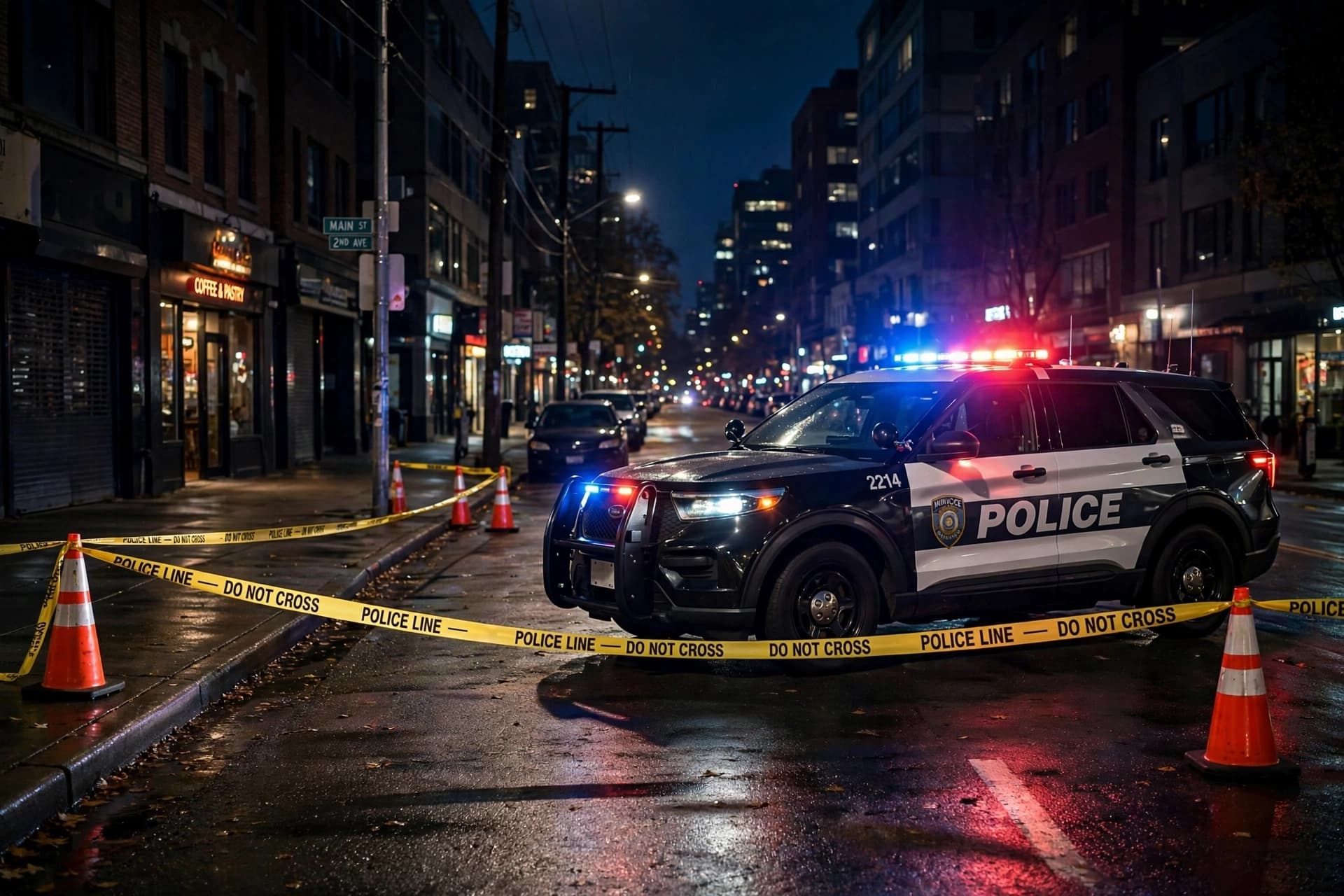
The case in question follows a familiar arc. Police conducted a traffic stop, and during the course of the stop, the driver was found to be armed. What followed was a physical struggle over the weapon. In similar incidents, the struggle is often brief and chaotic—the kind of encounter in which the margins between control and catastrophe are measured in fractions of a second. When the struggle ended, the driver was shot. He was transported to a hospital, where he was pronounced dead.
The identity of the driver has not been released pending notification of family. The officers involved have been placed on administrative leave, as is standard procedure. An investigation is underway, conducted by the relevant oversight body, and the findings will be made public in due course. The questions that will be examined are familiar: Was the stop lawful? Was the use of force reasonable under the circumstances? Was there an opportunity to de-escalate that was not taken?
What makes these cases so difficult is that they resist easy conclusions. Police are trained to respond to threats, and a struggle over a firearm is, by any measure, a deadly threat. But the person on the other end of that struggle is also a human being, with a family, a history, and a life that was ended in a matter of moments. The two facts—the threat and the loss—are not contradictory. They exist together, and they make the aftermath of such incidents a space of grief and anger, of defense and criticism, of questions that will be answered by the investigation but never fully resolved.
For the family of the driver, the death is a loss that arrives with the additional weight of public scrutiny. For the officers involved, the shooting is a moment they will relive in the weeks and months ahead. And for the community, the incident is another chapter in an ongoing conversation about policing, force, and the circumstances under which a traffic stop becomes a fatal encounter. The investigation will produce findings. It will not produce closure.
AI Image Disclaimer: All images in this article are AI-generated and are intended for illustrative purposes only.
Sources: Local police departments, CBS News, ABC News, The Guardian
Published by Banx Network. This article is part of the Banx decentralized media programme, powered by the BXE token on the XRP Ledger.