
Key Highlights
- Prime Minister Mark Carney asserts U.S. ties are now a 'weakness'.
- Carney emphasizes the need for Canada to diversify its international relationships.
- Critics argue maintaining strong U.S. ties is crucial for economic stability.
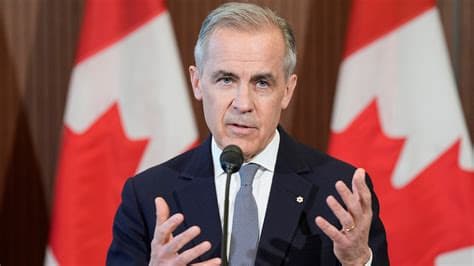
During a recent address to the Canadian public, Prime Minister Mark Carney made headlines by asserting that Canada's longstanding ties with the United States have evolved into a 'weakness.' This provocative statement reflects a critical reassessment of Canada's international relationships in the current geopolitical climate.
In his remarks, Carney emphasized that Canada has relied too heavily on the U.S. for economic and security partnerships, suggesting that this dependence may hinder Canada’s ability to forge its own path on the global stage. 'We must recognize that an overreliance on a single partner can compromise our strategic autonomy,' he stated, highlighting the need for a more independent approach to foreign policy.
The Prime Minister's discourse came amid growing concerns over U.S. policies and their implications for Canadian interests. Issues such as trade disputes, climate policies, and international agreements have highlighted potential vulnerabilities. Carney urged Canadians to consider diversifying diplomatic and economic relationships, particularly with countries in Europe and Asia, to mitigate risks associated with overdependence on the U.S.
'Canada must stand robustly on its own,' he asserted, calling for investment in domestic industries and the strengthening of ties with other nations. His comments echo sentiments expressed by various business and political leaders who advocate for a more balanced approach to international relations, emphasizing the importance of fostering connections beyond North America.
Critics of Carney’s stance argue that Canada must maintain its strong partnership with the U.S. to ensure economic stability and security. They contend that the U.S. remains Canada's largest trading partner and a key ally in matters of defense and security. However, proponents of a diversified approach see this as an opportunity for Canada to enhance its global standing and reduce risks associated with external dependencies, particularly in light of shifting global dynamics.
As Canada navigates these complexities, the government's foreign policy strategy will be pivotal in shaping the nation's future. Carney’s comments instigate an essential dialogue about national identity, autonomy, and the need for Canada to assert its interests on the global stage, independent of U.S. influence. The challenge will be to balance historical ties with innovative strategies that foster a more resilient and diversified diplomatic landscape.
Moving forward, it will be crucial for Canadian leadership to engage in meaningful discussions about how to redefine its international relationships while ensuring that economic stability and security are not compromised in the process. The path ahead will require careful consideration of both domestic priorities and global opportunities, as Canada seeks to navigate an increasingly complex international arena.
Published by Banx Network. This article is part of the Banx decentralized media programme, powered by the BXE token on the XRP Ledger.



