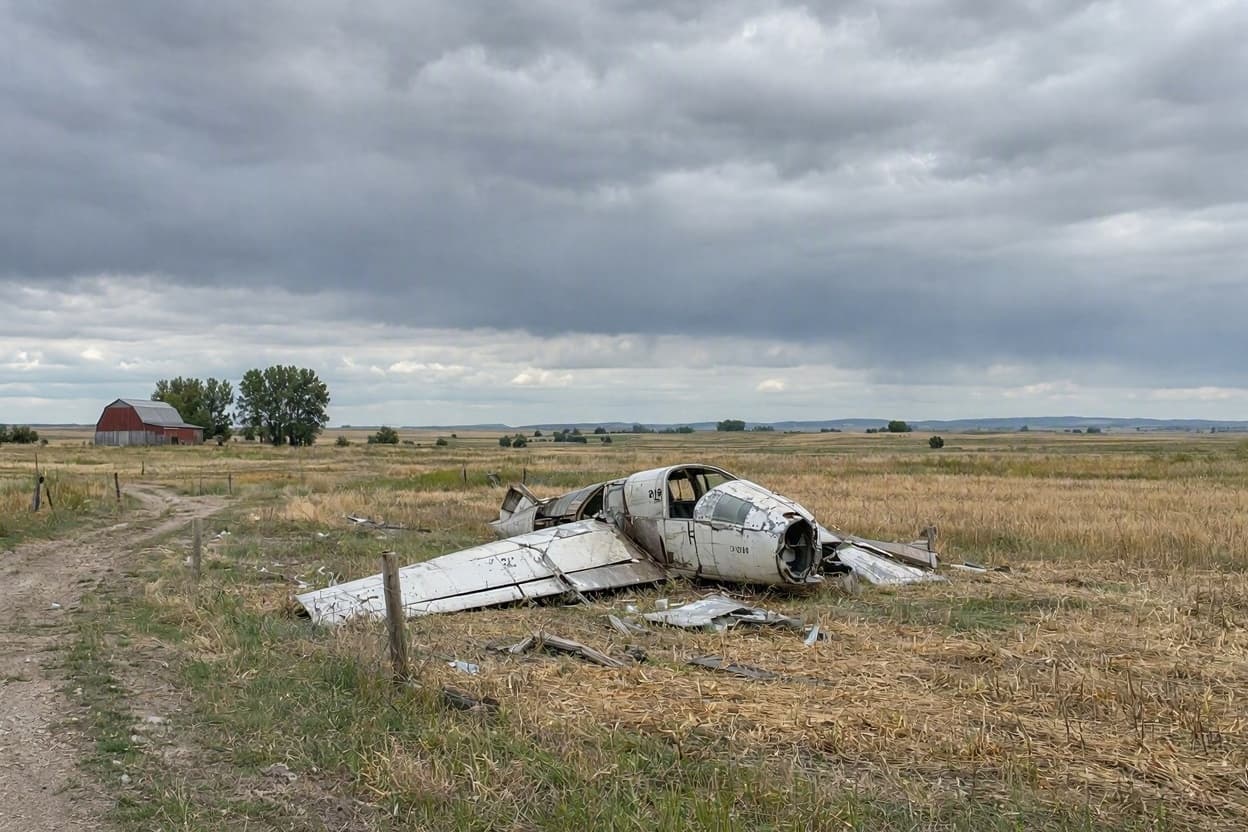
The skies over Saskatchewan are vast and often serene, a canvas for aviation enthusiasts and commercial pilots alike. Yet, the freedom of flight carries inherent risks, reminders of which arrive with sudden and tragic clarity. Near the town of Rosetown, a small aircraft crashed, resulting in the death of the pilot. The incident has cast a pall over the local community, prompting an investigation by the Royal Canadian Mounted Police (RCMP) and raising questions about the circumstances that led to this fatal outcome.
Rosetown, a small agricultural community, is accustomed to the sight and sound of aircraft, given the region’s reliance on air transport for farming and medical services. The crash, however, was an abrupt disruption to the daily rhythm. Emergency responders arrived quickly, but despite their efforts, the pilot did not survive. The loss of life is a stark reminder of the vulnerability of human beings in the face of mechanical failure or environmental challenges.
The RCMP has secured the scene and begun the preliminary investigation. Determining the cause of a plane crash is a complex task that involves examining wreckage, reviewing flight data, and interviewing witnesses. Factors such as weather conditions, mechanical issues, or pilot error are all considered. The Transportation Safety Board (TSB) will likely join the investigation, bringing specialized expertise to uncover the precise sequence of events.
For the pilot’s family and friends, the grief is immediate and profound. Aviation communities are often tight-knit, where pilots know each other personally. The loss is felt not just by the immediate family but by a wider network of colleagues and acquaintances. Support systems within the aviation industry and local community mobilize to provide comfort, sharing stories and honoring the pilot’s passion for flying.
Small aircraft accidents, while less frequent than car crashes, draw significant attention due to their dramatic nature. They serve as case studies for safety improvements, leading to better training, maintenance protocols, and regulatory updates. Each investigation contributes to the broader knowledge base that makes aviation safer for everyone. In this way, even tragic events can lead to positive changes that prevent future losses.
The local reaction in Rosetown has been one of shock and sympathy. Residents often gather to offer support to the affected family, demonstrating the strong social bonds characteristic of rural communities. Vigils or memorial gestures may follow, providing a space for collective mourning. These acts of solidarity help the community process the trauma and reaffirm their connections to one another.
Weather conditions at the time of the crash are a key focus of the inquiry. Saskatchewan’s weather can change rapidly, posing challenges for visual flight rules. If poor visibility or wind shear played a role, it would highlight the need for continued vigilance and advanced forecasting tools. Understanding these environmental factors is crucial for pilots operating in such regions.
The crash near Rosetown is a tragic event that has claimed the life of a pilot and shaken the local community. As the RCMP and TSB investigate, the focus remains on understanding the cause to prevent future incidents. In the meantime, the community comes together to mourn the loss and honor the memory of the individual who took to the skies.
AI Image Disclaimer: Please note that any accompanying visuals for this article are AI-generated representations intended for illustrative purposes only.
Sources: RCMP Saskatchewan, CBC News, Global News, Transportation Safety Board of Canada
Published by Banx Network. This article is part of the Banx decentralized media programme, powered by the BXE token on the XRP Ledger.