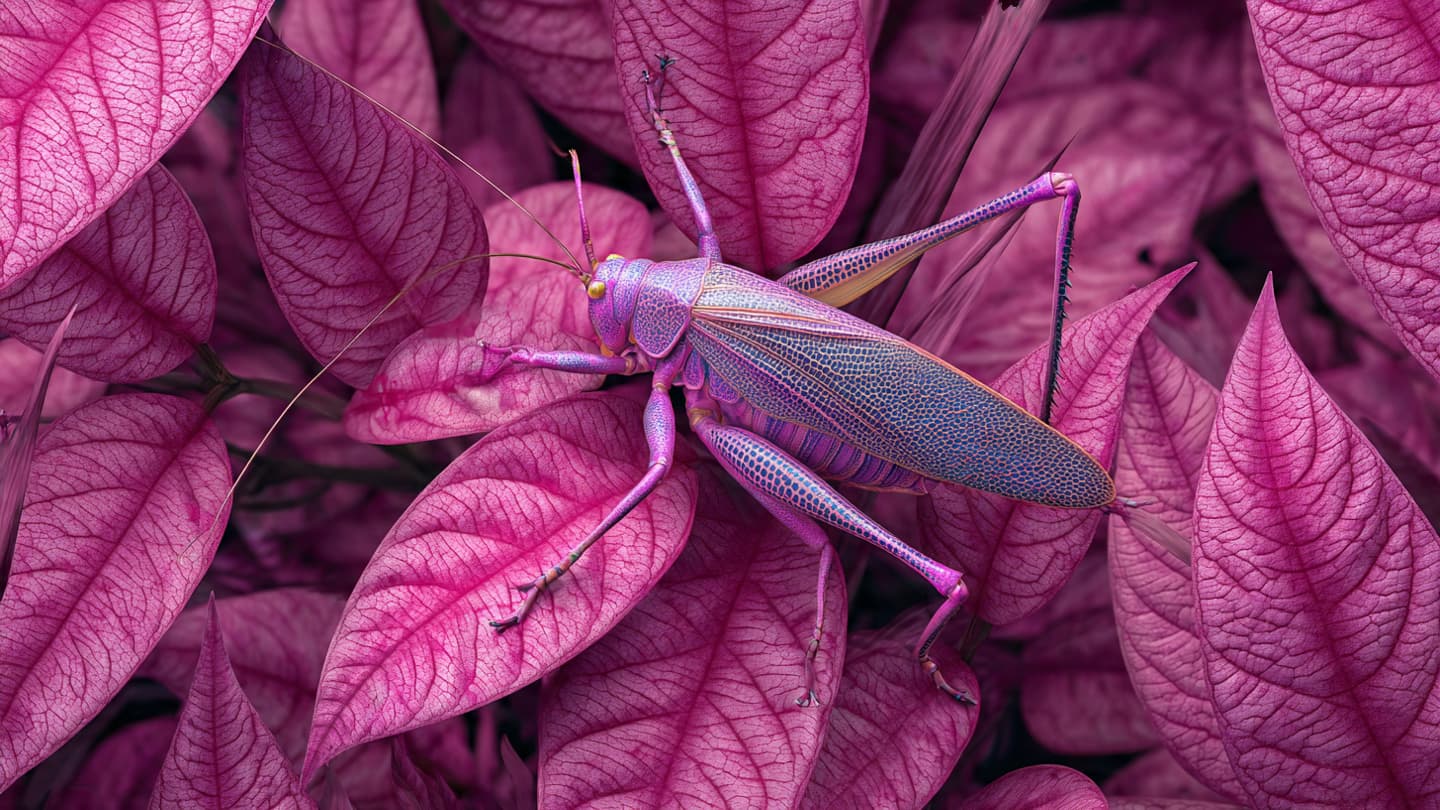
Rainforests often teach their lessons softly. What appears strange at first glance may simply be adaptation wearing unfamiliar colors. In a world of leaves, shadows, and patient predators, survival sometimes depends on matching the moment.
Scientists reported observing a katydid in Panama that began as vivid pink and gradually turned green over 11 days. The insect, identified as Arota festae, is a leaf-mimicking species found in parts of Central and South America.
Researchers first noticed the adult female under a light at the Smithsonian Tropical Research Institute field station on Barro Colorado Island. Because the coloration was unusual, they monitored the insect and photographed it daily.
The pink tone reportedly began fading after four days, becoming softer before shifting fully green by day eleven. Scientists said the change may mirror a natural process in tropical plants whose young leaves emerge pink or red before maturing to green.
If that explanation holds, the insect may gain camouflage in two phases—first blending with new foliage, then matching mature leaves later. What once seemed like a disadvantageous mutation may instead reflect a refined survival strategy.
Researchers also noted that pink katydids have been documented since the nineteenth century, but this may be the first recorded case of a full color transition within a single life stage.
As with many discoveries in biology, one remarkable observation opens more questions than it closes. Scientists will likely seek additional individuals to test whether the transformation is common or exceptional.
Nature often moves beyond the categories humans assign to it. Mutation, camouflage, coincidence, adaptation—sometimes the forest asks us to keep all possibilities open a little longer.
The study was published in the journal Ecology, adding a vivid chapter to the study of animal coloration.
AI Image Disclaimer: Images used here are AI-generated visual interpretations of the reported rainforest observation.
Sources: ScienceDaily, University of Reading, Ecology Journal
Published by Banx Network. This article is part of the Banx decentralized media programme, powered by the BXE token on the XRP Ledger.