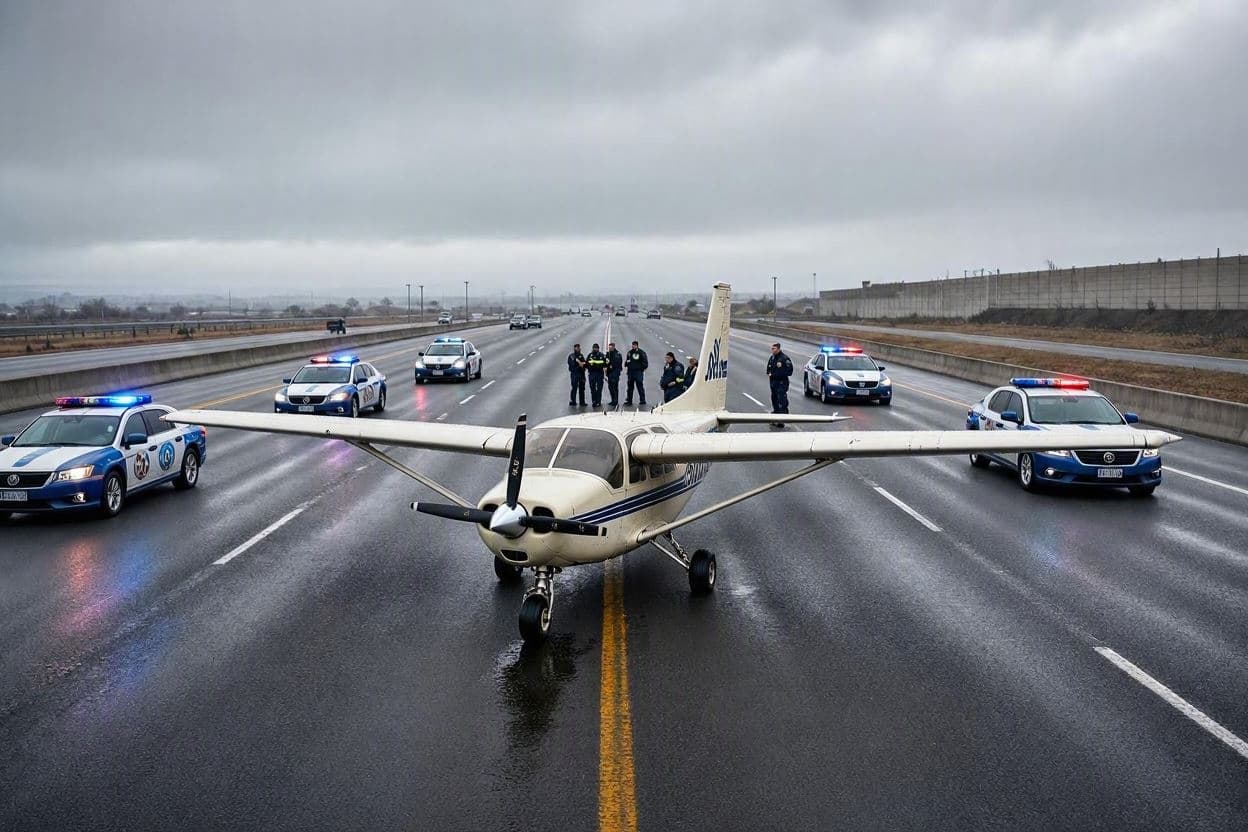
On a busy stretch of Highway 21 east of Edmonton, traffic came to a sudden halt not due to congestion or construction, but because of an unexpected visitor from the sky. A small Cessna 172 aircraft made an emergency landing on the southbound lanes, coming to rest in the middle of the road. The incident, which occurred in Strathcona County, startled drivers and closed the highway for several hours, but miraculously, no injuries were reported. It was a moment of high tension that ended with relief and gratitude.
The pilot, along with one passenger, had encountered mechanical difficulties shortly after takeoff. Facing a critical situation, the pilot made the split-second decision to land on the highway, a choice that required immense skill and composure. The aircraft touched down smoothly, avoiding other vehicles and obstacles, and came to a stop without causing a collision. Emergency responders, including RCMP and fire crews, arrived quickly to secure the scene and assist the occupants.
For the drivers on Highway 21, the sight of a plane on the road was surreal. Many pulled over to watch, capturing photos and videos that quickly spread on social media. The unusual event turned a routine commute into a memorable experience, though it also caused significant delays and frustration. The closure of the highway highlighted the vulnerability of transportation networks to unexpected events, even those as rare as an aviation incident.
Investigations by the Transportation Safety Board will determine the exact cause of the mechanical failure. Preliminary reports suggest an engine issue, but a thorough examination of the aircraft is required. Such incidents, while rare, serve as reminders of the importance of regular maintenance and pilot training. The successful landing is a testament to the pilot’s expertise and ability to remain calm under pressure.
The RCMP praised the pilot’s actions, noting that the decision to land on the highway likely prevented a more serious accident in a populated area. By choosing a clear stretch of road, the pilot minimized risk to themselves and others. This quick thinking is a crucial aspect of aviation safety, where every second counts. It is a example of professional competence in a crisis.
For the local community, the incident was a topic of conversation for days. It sparked discussions about aviation safety, emergency preparedness, and the shared spaces we occupy. While highways are designed for cars, they can sometimes serve as emergency runways when no other options exist. This dual use, though unintended, can be a lifesaver in critical moments.
The passengers were treated at the scene for minor shock but were otherwise unharmed. Their relief was palpable, as was the appreciation for the first responders who managed the situation efficiently. The event underscored the importance of coordinated emergency services in handling diverse and unpredictable incidents. It was a team effort that ensured a positive outcome.
In the end, the emergency landing on Highway 21 is a story of survival and skill. It reminds us that even in the most ordinary settings, extraordinary events can unfold. Thanks to the pilot’s courage and the swift response of emergency crews, a potential tragedy was averted. It is a reminder of the resilience and adaptability that define our communities.
AI Image Disclaimer: The visual aids included here are AI-generated illustrations depicting aviation emergencies and highway scenes, not actual photographs of the specific Cessna or the location in Strathcona County.
Sources: Edmonton City News RCMP Alberta Global News Edmonton
Published by Banx Network. This article is part of the Banx decentralized media programme, powered by the BXE token on the XRP Ledger.