
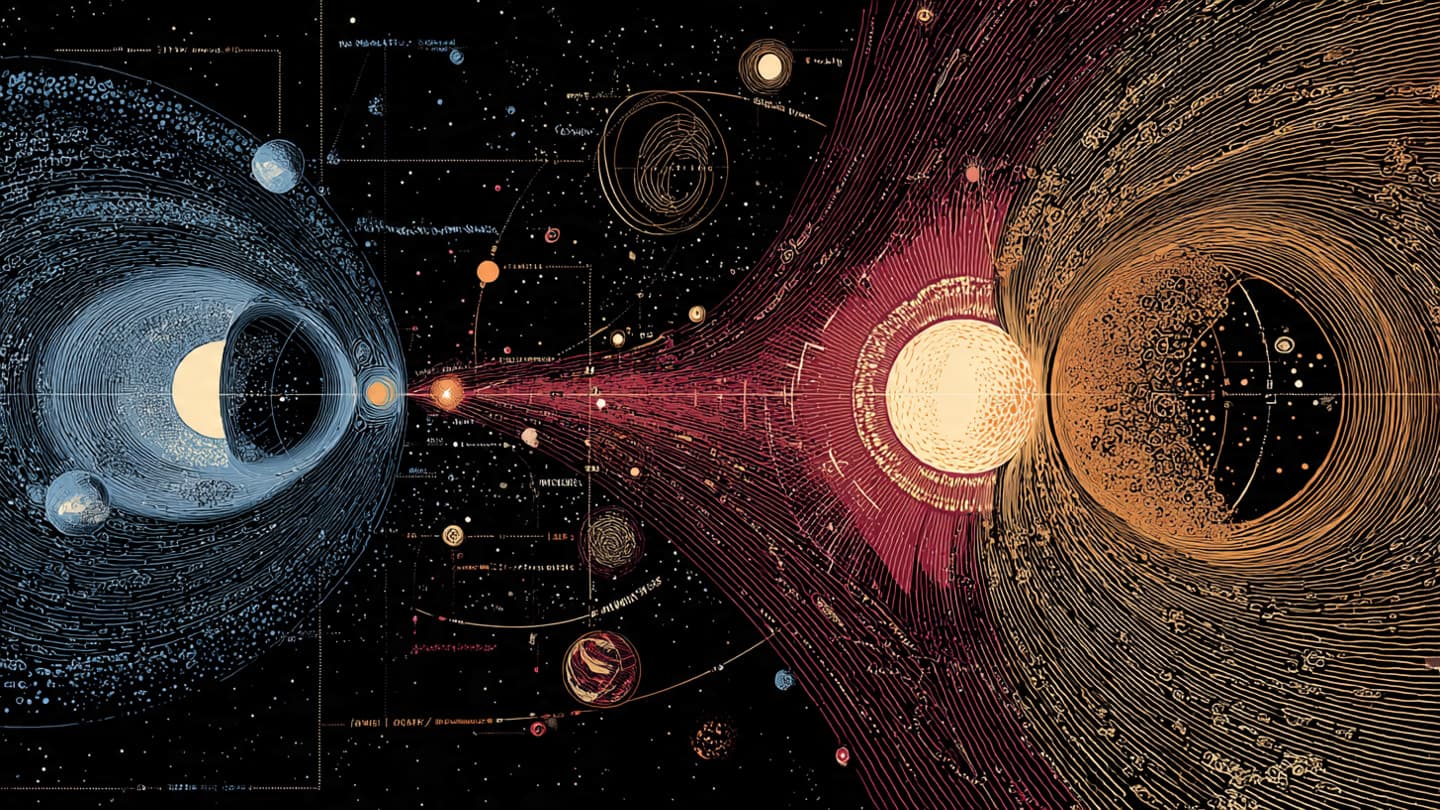
In physics, constants represent the quiet backbone of reality—values assumed to remain unchanged across space and time. Yet modern research continues to test whether these assumptions hold under extreme precision.
Scientists studying cosmological observations and high-energy physics experiments have been examining whether fundamental constants remain truly constant throughout the universe.
These constants govern essential forces such as electromagnetism and atomic interactions. Even slight deviations could have profound implications for physics and our understanding of matter.
Some observational datasets have shown minor discrepancies when comparing measurements from distant astronomical sources with those in controlled laboratory environments.
While these differences remain within statistical uncertainty, they have prompted further investigation into whether unknown variables might influence measurements across vast cosmic distances.
Researchers emphasize caution, noting that instrument sensitivity, environmental noise, and calibration differences must be ruled out before drawing conclusions.
If future evidence supports variability, it could lead to revisions in fundamental physical theories, including models of the early universe and the evolution of matter.
Advanced research facilities continue to refine measurement techniques, aiming for greater precision in both astronomical and particle physics observations.
The question of whether physical constants are truly constant remains open, reflecting the ongoing effort to better understand the structure of the universe.
AI Image Disclaimer: All visuals are AI-generated for editorial illustration purposes.
Sources (source verification check): Nature Physics, CERN, NASA, ScienceDaily Physics, Physical Review Letters
Published by Banx Network. This article is part of the Banx decentralized media programme, powered by the BXE token on the XRP Ledger.



