
Key Highlights
- First Joint Exercises:Philippines and Japan conduct their inaugural live-fire drills.
- Location:The exercises took place at Col. Ernesto Rabina Air Base in Capas, Tarlac.
- Troop Involvement:Over 200 Filipino troops and approximately 40 Japanese soldiers participated.
The Philippines and Japan marked a significant milestone in their military relationship by conducting their first joint live-fire exercises at Col. Ernesto Rabina Air Base in Capas, Tarlac. This event is part of the ongoing Salaknib military drills, which aim to enhance defense cooperation between the two nations.
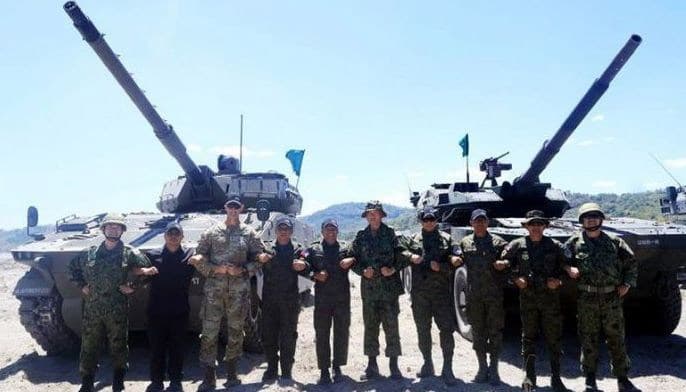
Philippine Army spokesman Col. Louie Dema-ala highlighted the importance of this year's exercises, noting the participation of the Japanese Ground Self-Defense Forces (JGSDF) for the first time. The drills involved over 200 Filipino troops from the 1st Tank Battalion, who utilized four Sabrah light tanks. The Japanese contingent included approximately 40 members from the 12th Brigade Recon Combat Battalion, equipped with four maneuver combat vehicles.
The live-fire drills focused on tactical scenarios that emphasized target identification and engagement. Safety protocols were rigorously implemented to ensure operational continuity throughout the exercises. This collaborative effort follows the signing of a Reciprocal Access Agreement (RAA) between the two countries, which took effect in September 2025, allowing for increased collaboration in military training and operations.
This enhancement in military cooperation underscores the commitment of both nations to work together in addressing regional security challenges, particularly amid heightened tensions in East Asia. The drills are expected to improve tactical interoperability and deepen defense relations, fostering a more robust strategic partnership in the Indo-Pacific region.
The Salaknib military exercises are part of a broader initiative to strengthen alliances in response to evolving security dynamics in the region. As both nations face common threats, including territorial disputes and military assertiveness from neighboring countries, these joint exercises serve as a critical platform for enhancing readiness and cooperation.
In conclusion, the successful execution of these live-fire drills not only marks a new chapter in Philippine-Japan military relations but also reflects a growing trend of defense collaboration among nations in the Indo-Pacific. As the geopolitical landscape continues to shift, such partnerships will be vital for maintaining stability and security in the region.
Published by Banx Network. This article is part of the Banx decentralized media programme, powered by the BXE token on the XRP Ledger.



