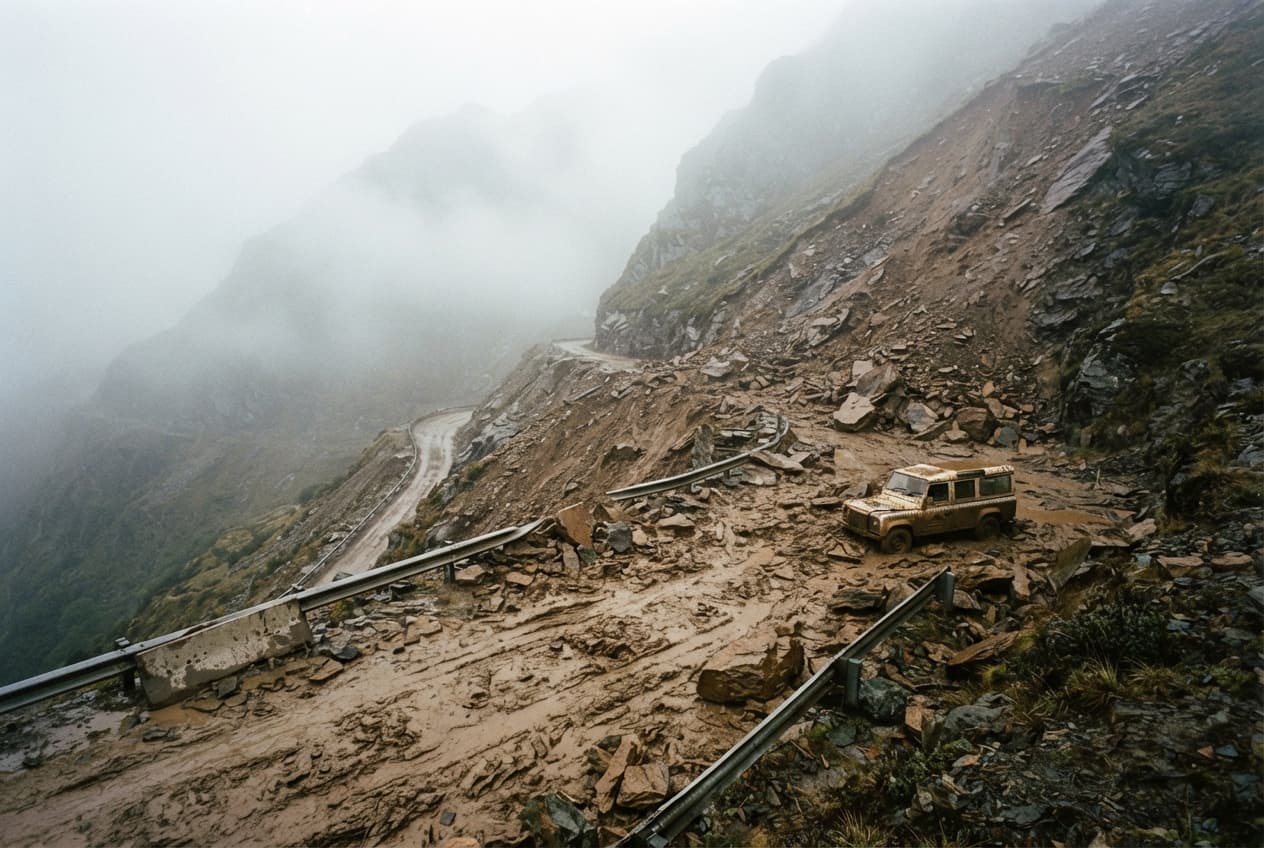
Cusco, Peru—A sudden mudslide detached from a steep mountain slope, burying a transit vehicle traveling along a narrow regional highway. Continuous seasonal rains had saturated the upper geological strata, triggering an uncontrolled cascade of earth and rock. The falling debris struck the automobile mid-span, pushing it over the edge of the cliff toward a deep ravine. Local farmers witnessed the collapse and immediately alerted provincial emergency dispatchers.
Rescue units equipped with heavy earthmoving machinery deployed to the remote Andean pass to initiate search operations. Police and civil defense volunteers descended the steep embankment using ropes to reach the crushed vehicle wedged among boulders. Medical personnel confirmed the driver perished from severe impact trauma inside the cabin. Heavy rain continued falling throughout the recovery operation, complicating the work of the extraction teams.
Transportation authorities closed the vital mountain link indefinitely while geotechnical engineers evaluated slope stability risks. Maintenance crews worked to clear tons of mud, clay, and fractured stone blocking both lanes of the strategic corridor. Regional officials warned travelers to avoid high-altitude routes as storm systems persisted across the mountain chain.
"Saturated topsoil gave way without warning, sending an overwhelming volume of mud directly across the transit corridor," a regional civil defense coordinator stated near the disaster zone. "Our heavy excavation equipment is working continuously to clear the highway, but the upper slopes remain dangerously unstable."
Provincial emergency committees coordinated food and shelter provisions for motorists stranded in long queues behind the blockade. Geologists installed monitoring stakes along the ridge to track ongoing earth movement and potential secondary slides. Postal and freight carriers suspended scheduled dispatches across the affected Andean sector.
Emergency engineering crews remain stationed at the perimeter to manage clearing operations as weather conditions permit.
Published by Banx Network. This article is part of the Banx decentralized media programme, powered by the BXE token on the XRP Ledger.