
Key Highlights
- Incident:A mudslide in Tarapoto, Peru, swept a vehicle into a ravine, killing three.
- Response:Emergency teams struggled to reach the site amid unstable conditions.
- Infrastructure:Local authorities face criticism for inadequate road safety measures.
A devastating mudslide struck a primary highway in Tarapoto, Peru, on Sunday afternoon, resulting in the tragic deaths of three individuals. The incident occurred when continuous seasonal downpours triggered a massive slope failure, sending a wall of mud and rock crashing down onto the roadway. The passenger vehicle was swept into a deep river ravine, where rescuers later confirmed the occupants had perished from severe impact trauma.
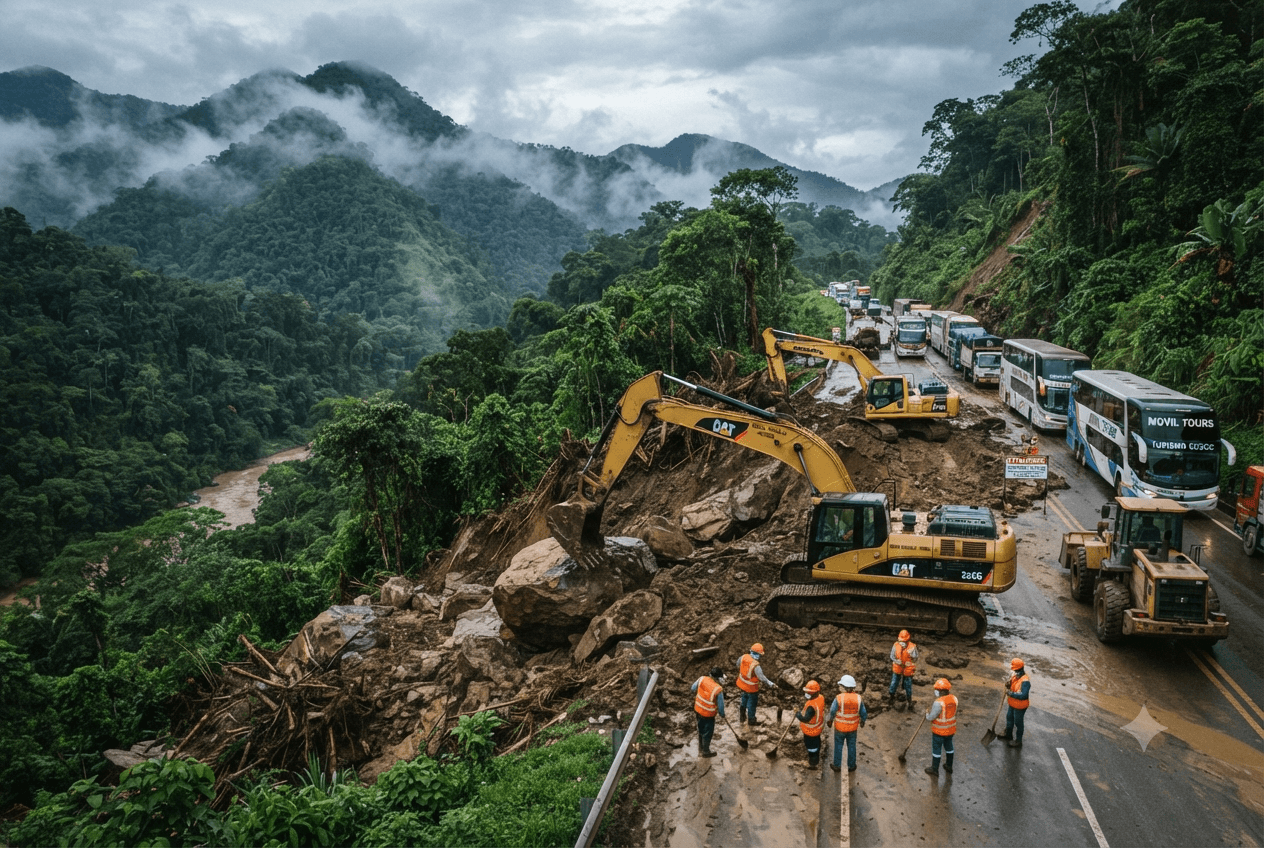
Local police and regional civil defense teams arrived at the scene within hours, facing challenging conditions as they navigated unstable mud and persistent drizzle. The mudslide buried a hundred-meter stretch of the winding mountain route under thousands of tons of debris, creating long queues of stranded heavy transport trucks and commuter buses in both directions. The situation was dire, with travelers forced to sleep in their vehicles overnight as local residents provided coffee and basic supplies to those trapped.
Transport ministry inspectors highlighted that this particular Amazonian corridor lacks adequate retaining walls and bio-engineering slope stabilization measures. Despite annual warnings during the rainy season, regional authorities have repeatedly delayed funding for comprehensive geohazard mapping along the mountainous jungle pass. Heavy earthmoving equipment was dispatched from a nearby provincial depot to begin clearing the debris, but engineers warned that operations could take up to twenty-four hours due to the risk of secondary slides from the saturated cliffside.
Provincial health officials deployed emergency trauma teams to assist drivers suffering from exposure, altitude fatigue, and stress. As the recovery efforts continued, consular and regional police units began coordinating notifications for the victims' next of kin. Local transportation unions expressed outrage over the government's slow response to recurring infrastructure blockades during heavy weather cycles. Julio Cardenas, a representative of the transport union, criticized the reliance on makeshift repairs that fail at the first sign of severe storms, emphasizing the need for long-term solutions to prevent future tragedies.
As night fell over the jungle, floodlights illuminated the scene where heavy excavators worked tirelessly to clear a single lane of the road. Traffic police maintained strict roadblocks miles away from the unstable zone to prevent curious onlookers from interfering with recovery efforts. In response to the incident, regional prosecutors opened a preliminary inquiry into the maintenance obligations of the private highway concession company responsible for the route. Commuter services between the highland hub and lowland jungle towns remain suspended indefinitely until engineers can certify the slope's structural stability.
This tragic event underscores the urgent need for improved infrastructure and safety measures in Peru's vulnerable mountainous regions, where heavy rains continue to pose significant risks to both residents and travelers alike.
Published by Banx Network. This article is part of the Banx decentralized media programme, powered by the BXE token on the XRP Ledger.



