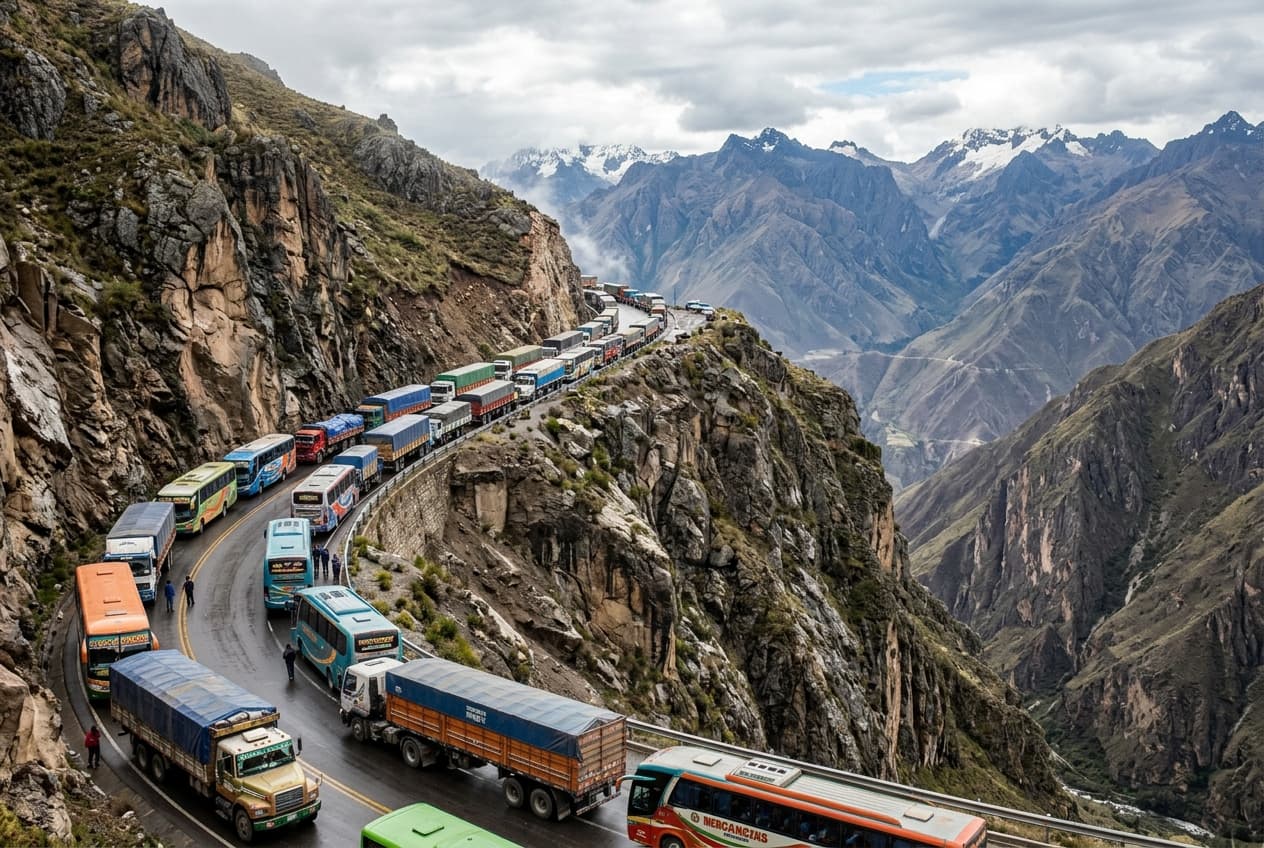
Lima, Peru—A massive mudslide buried a critical section of Peru's major mountain highway on October 16, 2026, trapping hundreds of passenger buses and cargo trucks following hours of relentless rain.
The earth movement dropped tons of rock, saturated soil, and uprooted vegetation onto the two-lane mountain pass, severing the primary transit route connecting coastal cities to interior agricultural hubs.
Emergency crews from the ministry of transport deployed bulldozers and excavators to the debris field, but falling rocks and unstable slopes delayed early clearing efforts.
Stranded motorists turned off engines and waited along mountain curves as temperatures dropped, with local authorities attempting to distribute blankets and food rations to those stranded.
The slope remains unstable due to groundwater saturation, making heavy machinery work extremely dangerous, reported a civil defense coordinator stationed near the blockage.
Commercial shipping firms reported major supply chain disruptions as perishables bound for market centers remained stuck behind the debris barrier.
Police units set up diversion checkpoints miles back from the slide zone, directing light vehicles onto unpaved secondary mountain roads unsuited for heavy commercial transport.
Geological survey teams arrived to evaluate mountain wall stability before allowing heavy machinery operators to clear the central lane.
Clearance crews remain halted on site due to continuing rockfalls from the upper slope, leaving the highway closed indefinitely as rain continues to fall across the ridge.
Published by Banx Network. This article is part of the Banx decentralized media programme, powered by the BXE token on the XRP Ledger.