
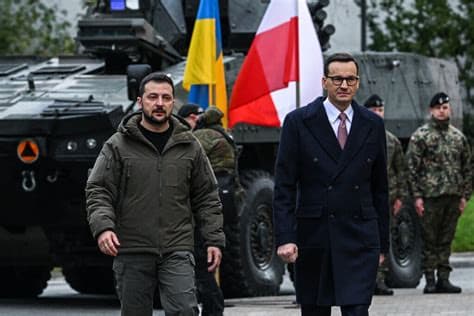
Key Highlights
- Polish PM Donald Tusk expresses skepticism about imminent peace in Ukraine.
- Russia's rigid stance is identified as a major barrier to negotiations.
- NATO military exercises planned to bolster regional security amid rising tensions.
Polish Prime Minister Donald Tusk has voiced strong doubts regarding the possibility of achieving peace in Ukraine in the near future. Following discussions in Paris with NATO Secretary-General Mark Rutte and Ukrainian President Volodymyr Zelenskiy, Tusk stated that it seems “very unlikely” that a resolution will be reached soon. He emphasized that the ongoing conflict is expected to extend into the winter months, primarily due to Russia's inflexible position on negotiations.
During the meeting, Tusk highlighted the necessity for NATO allies to brace for potential escalation in the conflict. He pointed out that Russia's unwillingness to compromise is a significant obstacle to any near-term ceasefire or peace agreement. The Polish Prime Minister's remarks come at a time when the geopolitical landscape is increasingly fraught, with military actions and diplomatic efforts continuing to unfold.
In response to the escalating situation, Tusk announced that Poland, in collaboration with French and British forces, will conduct military exercises this autumn. These exercises are aimed at enhancing regional security planning and readiness in the face of the ongoing conflict. The decision underscores the commitment of NATO allies to support Ukraine and deter further aggression from Russia.
The discussions in Paris also reflect a broader concern among NATO members regarding the stability of Eastern Europe. As the conflict in Ukraine persists, the alliance is faced with the challenge of balancing military support for Ukraine while managing the risks of escalation with Russia. Tusk's comments serve as a reminder of the complexities involved in navigating this delicate situation.
As winter approaches, the humanitarian implications of the conflict are becoming increasingly severe. The ongoing fighting has led to significant displacement and suffering among the Ukrainian population, raising urgent questions about the international community's response and support for those affected.
In conclusion, Tusk's statements highlight the grim outlook for peace in Ukraine, as the conflict shows no signs of abating. The Polish Prime Minister's call for preparedness among NATO allies reflects the seriousness of the situation and the need for a coordinated response to the challenges posed by Russia's actions.
Published by Banx Network. This article is part of the Banx decentralized media programme, powered by the BXE token on the XRP Ledger.



