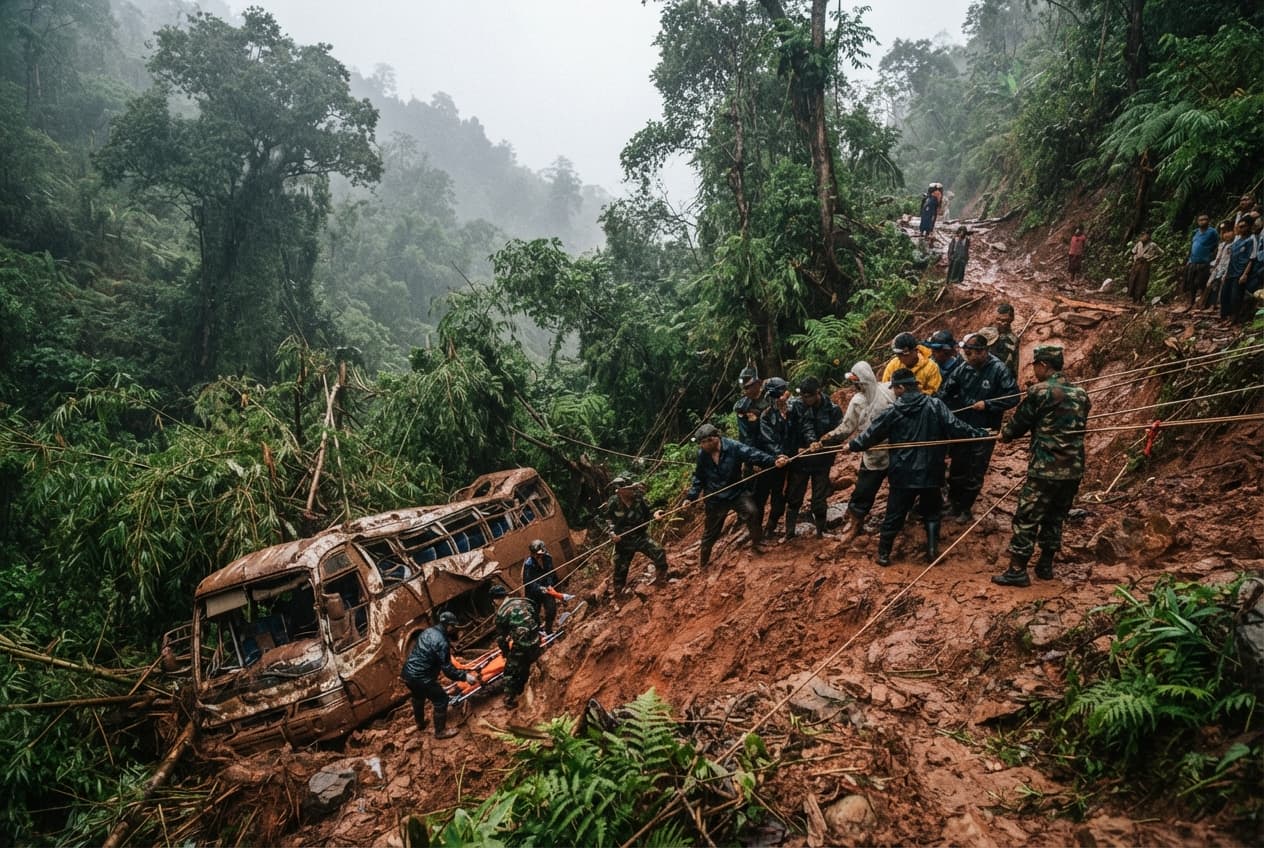
Naypyidaw, Myanmar—A long-distance passenger bus skidded off a slick mountain pass and plunged hundreds of meters into a deep ravine, killing eight passengers and injuring over a dozen others. The vehicle was navigating a notoriously dangerous highland curve during heavy monsoon downpours when the driver lost traction on the muddy asphalt. The bus broke through a flimsy roadside barrier and tumbled down the steep forested slope before coming to rest against large boulders.
Local villagers and mobile rescue units rushed to the wreckage using ropes and makeshift stretchers to reach survivors trapped inside the crushed hull. Rescuers pulled eight bodies from the ravine floor alongside multiple passengers suffering from broken limbs and severe head trauma. Military medical teams deployed field triage tents along the roadside to stabilize the wounded before transporting them to regional clinics.
Transport administrators reported that the bus was operating above its standard passenger capacity and carrying excessive luggage weight on its roof rack. Survivors stated that the vehicle had experienced mechanical braking issues earlier in the journey but continued operating due to tight scheduling demands. Heavy rain and thick fog severely restricted visibility along the mountain corridor at the time of the crash.
Regional authorities dispatched heavy recovery cranes to hoist the wreckage out of the ravine, though unstable soil conditions threatened further slope collapses. Police opened a criminal negligence inquiry against the transport company operating the inter-state route. Family members gathered at the district hospital to claim the bodies of their deceased relatives amidst scenes of intense grief.
Government disaster management agencies issued fresh safety warnings for all public transport operators navigating highland and mountainous terrain during the rainy season. Road maintenance departments pledged to install reinforced concrete crash barriers along high-risk curves across the pass.
Emergency medical teams remain stationed near the accident site while local authorities coordinate body repatriation and survivor support logistics.
Published by Banx Network. This article is part of the Banx decentralized media programme, powered by the BXE token on the XRP Ledger.