Key Highlights
- Collision Time:The accident occurred at 6:00 a.m. local time.
- Casualties:Numerous passengers were injured, with severe cases transported to Ghazni Provincial Hospital.
- Road Conditions:The Ghazni mountain pass is known for its hazardous driving conditions.
Ghazni, Afghanistan—A passenger bus carrying dozens of travelers collided head-on with a heavy fuel tanker along a narrow mountain pass in Ghazni province early Thursday morning, destroying both vehicles and blocking regional highway transit. The collision occurred around 6:00 a.m. local time as the northbound passenger coach attempted to negotiate a sharp incline, hitting the oncoming commercial tanker near a blind curve.
Emergency responders and local mountain villagers rushed to the scene with crowbars and manual equipment to pull trapped passengers from the crushed forward sections of the bus. High-impact forces crumpled the driver's cabin of the passenger coach into the tanker's steel framing, leaking diesel fuel onto the gravel roadway and forcing emergency crews to cut battery connections to prevent ignition.
Eyewitness Gul Mohammad, who was driving behind the convoy, described the moment of impact: "The bus entered the turn at high speed just as the heavy truck came around the ridge. The crunch was massive, and the front of the passenger bus folded completely beneath the chassis of the truck before anyone could steer clear."
Surviving passengers and injured commuters were loaded into private vehicles and military ambulances for emergency transport to the Ghazni Provincial Hospital. Medical directors confirmed that trauma units were immediately mobilized to treat severe head injuries, broken limbs, and internal hemorrhaging among victims brought in from the mountain pass. The hospital is currently working to stabilize critical casualties as the number of injured continues to rise.
Highway patrol units blocked access to the pass from both provincial checkpoints, stranding hundreds of commercial trucks and private cars along the steep mountain approaches. The lack of heavy rescue machinery in the immediate district delayed initial efforts to separate the entangled vehicles, forcing rescue teams to rely on manual winches anchored to roadside rock faces. This situation has exacerbated the traffic congestion, leaving many travelers in limbo.
Provincial transport authorities have repeatedly flagged the Ghazni mountain pass as a high-risk corridor due to narrow lanes, degraded asphalt surfaces, and widespread speeding by long-distance commercial drivers. Maintenance crews confirmed that warning signs and guardrails along the specific crash curve had broken during prior seasonal mudslides and were never restored, raising concerns about road safety in the area.
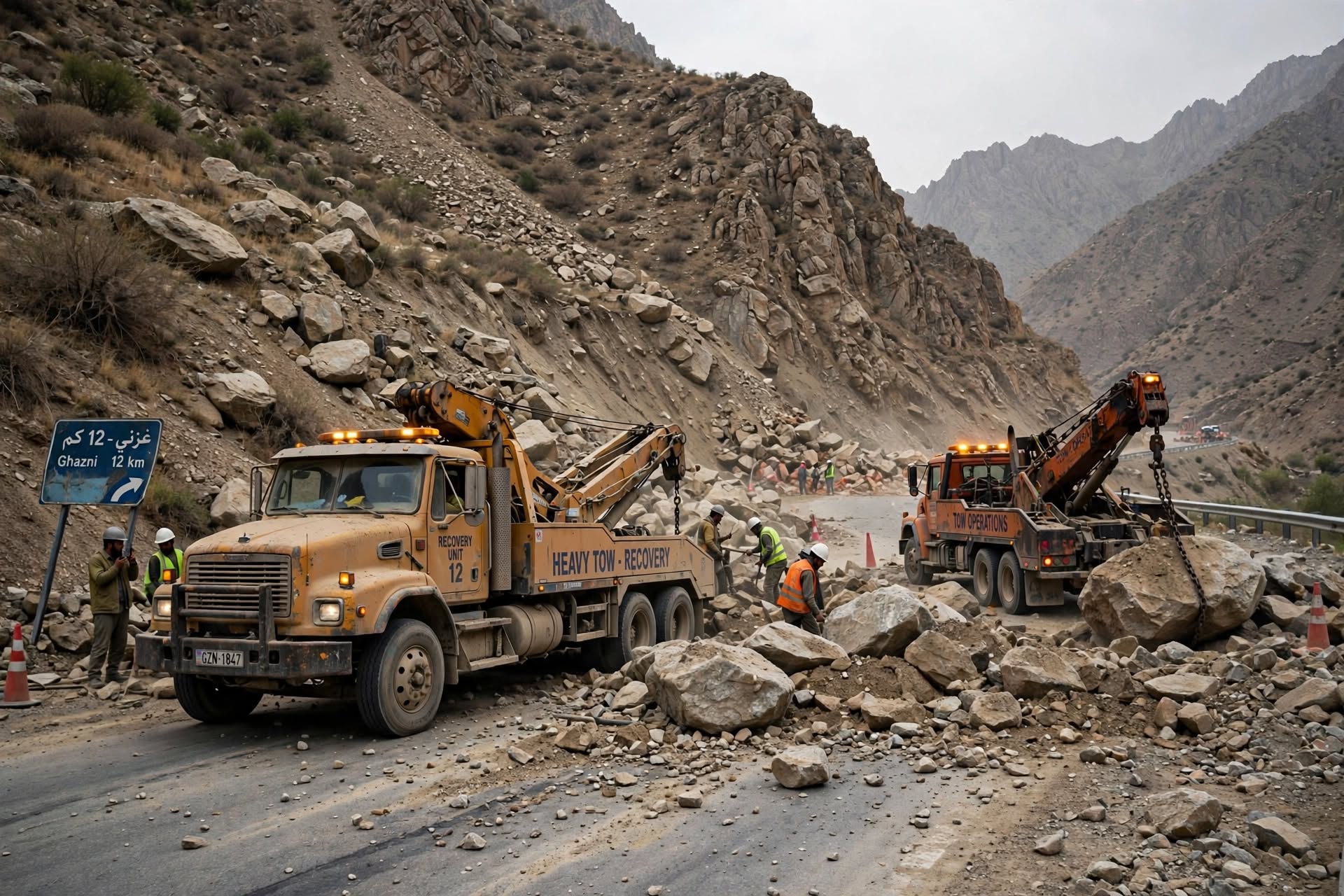
During an afternoon briefing, Provincial Traffic Department Lead Official Abdul Mateen stated, "Our highway units are focusing on clearing the wreckage to restore movement while hospital teams work to stabilize critical casualties. We have initiated a formal technical review to establish whether brake failure contributed to the driver losing control." Heavy tow equipment arrived on scene late in the afternoon to pry apart the vehicle frames, while provincial police units remained stationed along the mountain approach roads to manage backed-up traffic.
This tragic incident highlights the ongoing challenges of road safety in Afghanistan, particularly in mountainous regions where infrastructure is often inadequate and traffic regulations are poorly enforced. As investigations continue, local authorities are under pressure to address these safety concerns to prevent future accidents.
Published by Banx Network. This article is part of the Banx decentralized media programme, powered by the BXE token on the XRP Ledger.