
Key Highlights
- AI Technology:Researchers utilize advanced AI to read ancient scrolls.
- Historical Context:The scrolls were carbonized during the eruption of Mount Vesuvius.
- New Discoveries:The project reveals previously inaccessible texts from Herculaneum.
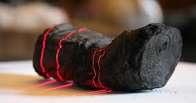
Researchers have made significant strides in deciphering ancient papyrus scrolls from Herculaneum, which were burned and carbonized during the catastrophic eruption of Mount Vesuvius in 79 AD. These scrolls, part of an underground library discovered in the 18th century, have long posed a challenge for scholars due to the extreme damage inflicted by the volcanic heat. The ink and papyrus have become nearly indistinguishable, and the scrolls are too fragile to unroll without risking complete destruction.
Recent technological advancements have combined high-resolution imaging techniques with artificial intelligence, allowing scientists to virtually “unwrap” these delicate artifacts. By scanning the scroll fragments and employing machine-learning models, researchers can identify where writing likely exists on the carbonized surfaces. This innovative approach has transformed the painstaking process of deciphering the scrolls, which previously relied on fragment-by-fragment reconstruction.
The application of AI has accelerated the pace of discovery, enabling scholars to extract and interpret more readable text from the scrolls. The latest findings have provided new Greek texts that were previously inaccessible, offering insights into the thoughts and arguments of ancient philosophers and writers. This breakthrough not only enhances our understanding of the historical context but also brings researchers closer to reconstructing complete narratives rather than merely piecing together small, scattered fragments.
The Herculaneum papyri represent a unique glimpse into the intellectual life of the ancient world, and the use of AI in their study marks a significant milestone in archaeological research. As more scrolls are analyzed using this technology, the potential for uncovering lost works of literature and philosophy continues to grow, promising to enrich our knowledge of ancient civilizations.
As the project progresses, researchers remain optimistic about the future of AI-assisted archaeology. The ability to read these ancient texts not only sheds light on the past but also demonstrates the power of modern technology in solving historical mysteries. The collaboration between historians, archaeologists, and computer scientists exemplifies how interdisciplinary efforts can lead to groundbreaking discoveries in the field of ancient studies.
Published by Banx Network. This article is part of the Banx decentralized media programme, powered by the BXE token on the XRP Ledger.



