For centuries, humanity has gazed at the stars, wondering if we are alone in the vast cosmic theater. Today, that question is no longer purely philosophical but scientific, as new eyes turn toward distant worlds. The Pandora space telescope, a compact yet powerful instrument, has begun its mission to analyze the atmospheres of exoplanets. This endeavor marks a subtle but significant shift in astronomy, moving from merely detecting planets to understanding their chemical souls.
Unlike its larger predecessors, Pandora is designed with a specific focus: precision photometry and spectroscopy of transiting exoplanets. By observing the slight dimming of starlight as a planet passes in front of its host star, the telescope can detect the fingerprint of atmospheric gases. This method allows scientists to identify water vapor, methane, carbon dioxide, and other compounds that may hint at the potential for life or geological activity.
The significance of this mission lies in its efficiency. Traditional large-scale observatories are often oversubscribed, with waiting lists for observation time stretching into years. Pandora’s dedicated approach allows for continuous monitoring of specific targets, providing a depth of data that intermittent observations cannot match. It is akin to listening to a single instrument in an orchestra rather than trying to hear the entire symphony at once, allowing for a clearer understanding of individual components.
One of the primary targets for Pandora includes rocky planets in the habitable zones of their stars. These are worlds where temperatures might allow liquid water to exist, a key ingredient for life as we know it. By studying their atmospheres, researchers hope to distinguish between those that are barren rocks and those that might harbor oceans or clouds. Each spectrum collected is a piece of a larger puzzle, helping to build a profile of these distant neighbors.
The technology behind Pandora also represents a triumph of miniaturization. Advances in detector sensitivity and data processing have allowed engineers to pack significant capability into a smaller frame. This reduces launch costs and increases the feasibility of future constellation missions. It suggests a future where swarms of small telescopes work in concert, covering more sky and providing redundant data to ensure accuracy.
Beyond the search for life, Pandora’s data will help refine our models of planetary formation. By comparing the atmospheric compositions of different types of planets, scientists can better understand how solar systems evolve over billions of years. It provides context for our own solar system, placing Earth in a broader cosmic narrative. We learn not just about them, but about ourselves through comparison.
As the first data streams begin to arrive, the scientific community watches with anticipation. Early results are expected to validate the telescope’s design and calibrate its instruments. While breakthroughs may take time, the steady accumulation of knowledge is itself a victory. Each observation adds to the library of human understanding, expanding the boundaries of what we know about the universe.
The commencement of Pandora’s mission is a quiet milestone in the ongoing exploration of the cosmos. It reminds us that curiosity drives innovation, leading to tools that allow us to see the invisible. As we peer into the atmospheres of distant worlds, we continue our ancient quest for connection, seeking signs that we are part of a larger, living universe.
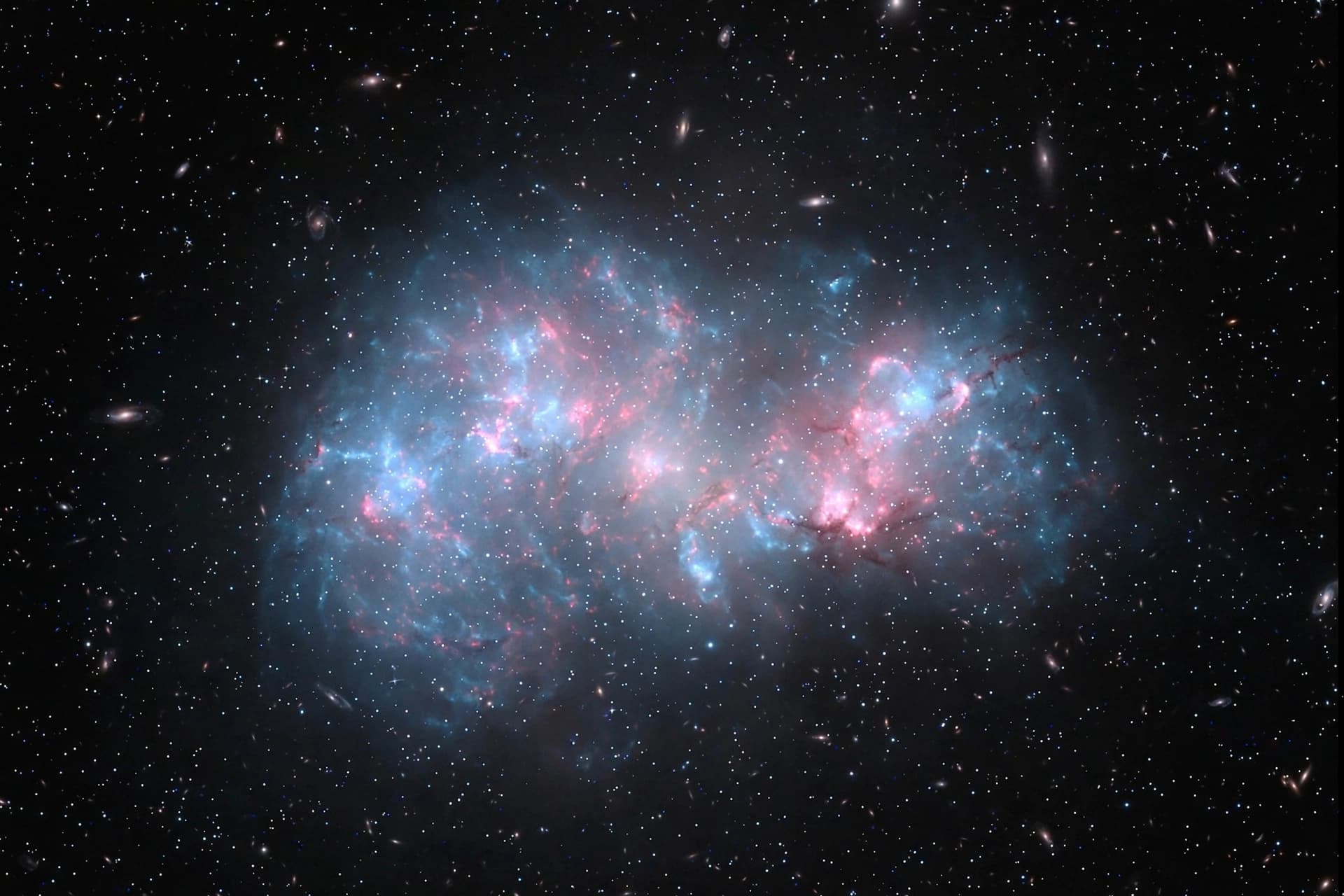
AI Image Disclaimer: Please note that any accompanying visuals for this article are AI-generated representations intended for illustrative purposes only.
Sources: NASA, Space.com, The Planetary Society, Scientific American
Published by Banx Network. This article is part of the Banx decentralized media programme, powered by the BXE token on the XRP Ledger.