
Key Highlights
- Travelers at U.S. airports are wearing pajamas as a form of protest against dress code suggestions.
- The trend follows comments from Transportation Secretary Sean Duffy advocating for more formal attire.
- Supporters argue that comfort should take precedence over convention in air travel.
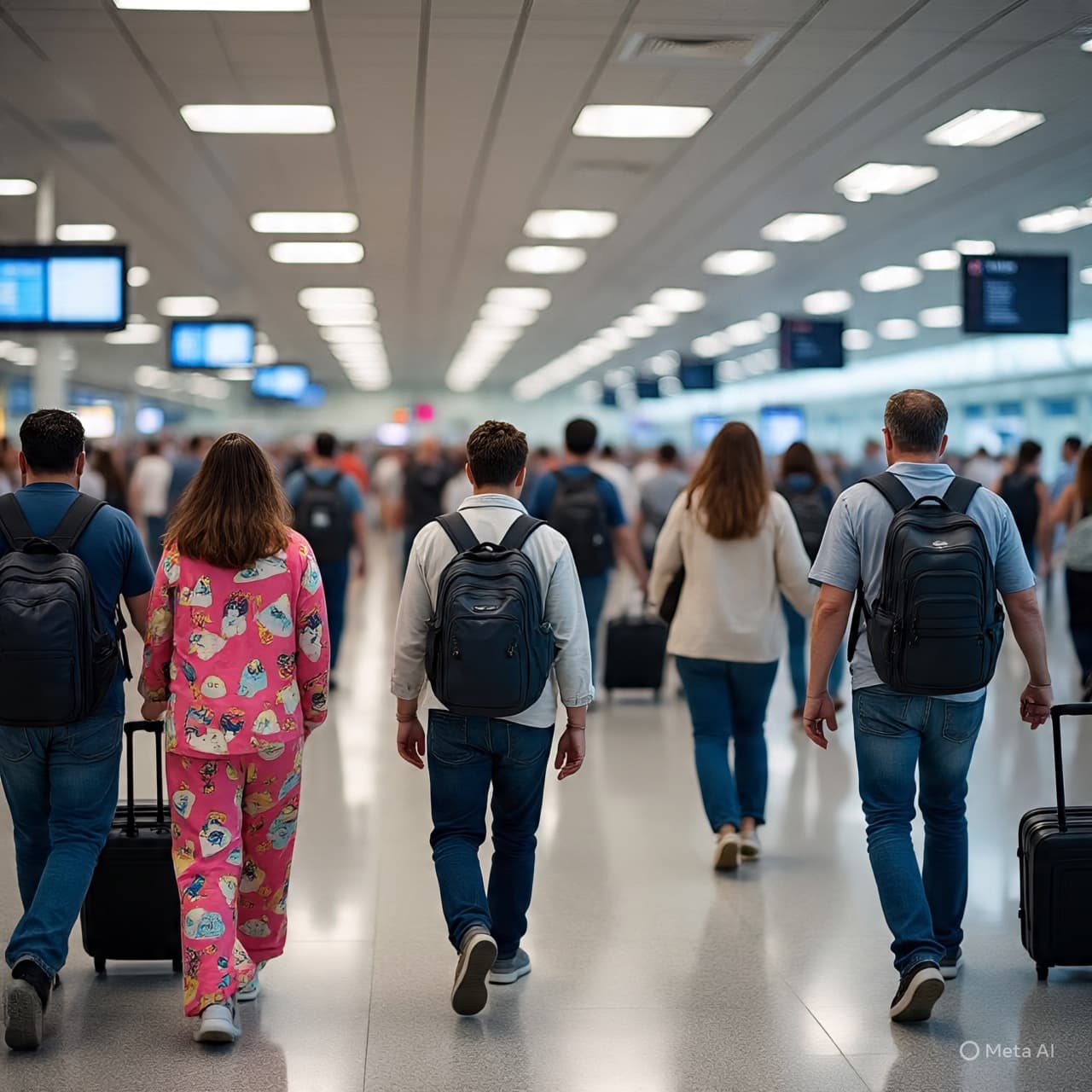
In recent weeks, a noticeable trend has emerged at airports across the United States: travelers are opting for pajamas instead of traditional travel attire. This shift is not merely a fashion statement but a form of quiet protest against comments made by U.S. Transportation Secretary Sean Duffy, who urged passengers to 'dress with respect' while traveling. His remarks have sparked a wave of 'malicious compliance,' with many passengers responding by donning their most comfortable sleepwear as a way to express their discontent.
Duffy's suggestion that travelers should wear jeans and decent shirts instead of pajamas or slippers was intended to restore a sense of civility in airports and on flights. However, the reaction has been overwhelmingly in favor of comfort. Social media platforms have been flooded with videos of passengers arriving at check-in and boarding gates in full pajamas, often paired with slippers. This trend has become a subtle yet powerful message: if officials want to dictate how we dress, we will respond in kind — with pajamas.
For many, the choice to wear pajamas while traveling is rooted in practicality. With the ongoing challenges of air travel, including delays, cramped seating, and rising costs, comfort has become a priority. One traveler on TikTok succinctly stated, 'I will be wearing my slippers,' highlighting a growing sentiment among passengers that comfort should take precedence over outdated notions of decorum. Another traveler emphasized that civility is more about attitude than attire, suggesting that the focus on clothing is misplaced.
Supporters of this pajama protest argue that the government's emphasis on dress codes is tone-deaf, diverting attention from the real issues plaguing air travel today. These include significant delays, exorbitant fees, minimal amenities, and a decline in service quality. Critics, however, contend that wearing pajamas in public spaces like airports is disrespectful and undermines the decorum expected in such environments. This divide raises larger questions about entitlement, civility, and who gets to define what respect looks like in public spaces.
As the holiday travel season approaches, the sight of flannel and fleece in airports is not just about personal comfort; it reflects a broader demand for dignity and agency in the travel experience. The soft silhouettes of travelers in pajamas may convey more than a tailored suit ever could, signaling a shift in priorities among air travelers.
In conclusion, the pajama protest at airports serves as a reminder that comfort and personal expression can coexist with the demands of modern air travel. As more travelers choose to prioritize their comfort over conventional expectations, the conversation around dress codes and civility in public spaces is likely to continue.
Published by Banx Network. This article is part of the Banx decentralized media programme, powered by the BXE token on the XRP Ledger.



