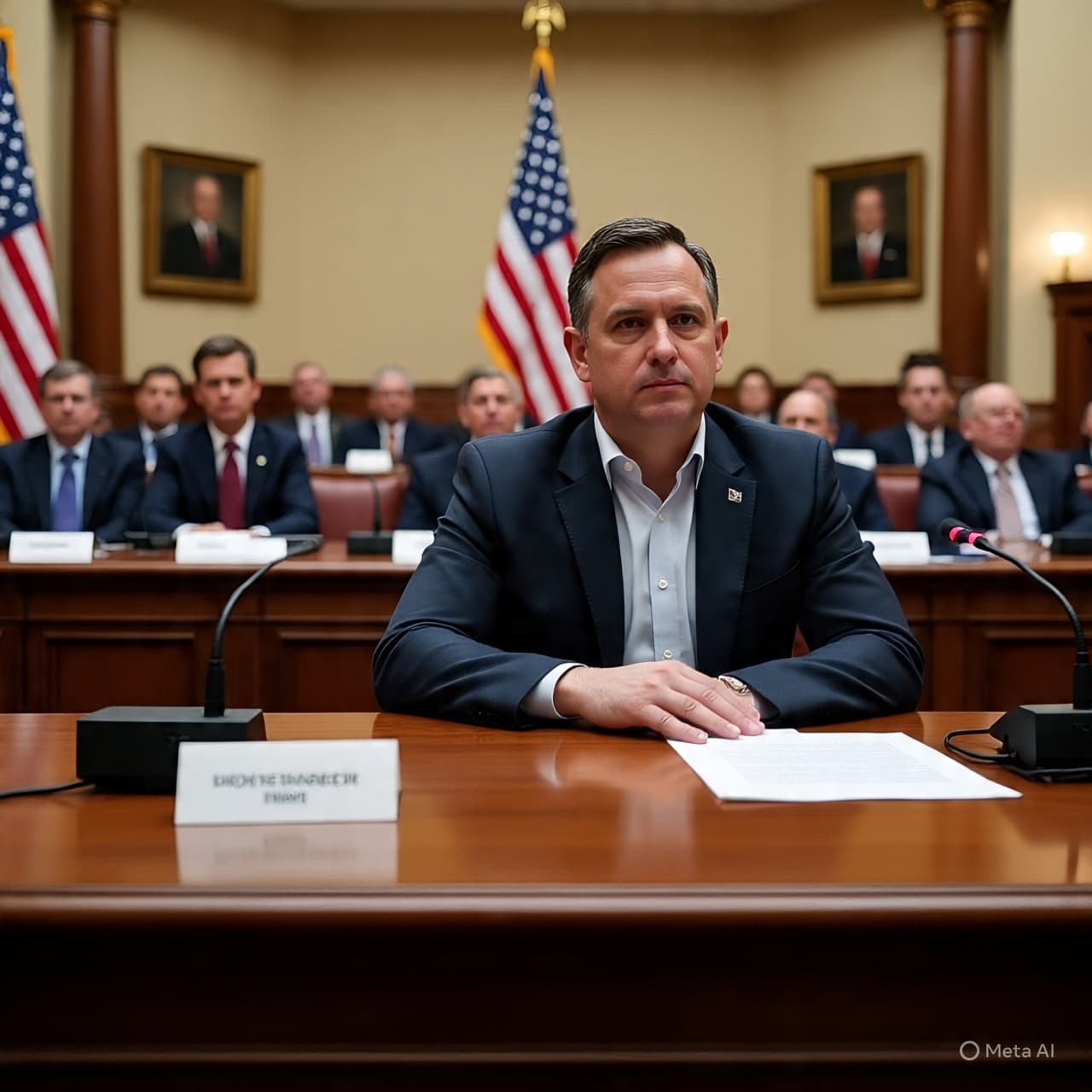
There are rooms in Washington where the air seems to hold memory—paneled walls, soft lamps, the low murmur of testimony folding into the steady rhythm of record-keeping. In such rooms, past associations return not as headlines but as echoes, summoned by oath and microphone. It was in this measured atmosphere that former president Bill Clinton spoke to a congressional committee about a name that has come to carry a heavy shadow: Jeffrey Epstein.
Clinton told lawmakers he had “no idea” about Epstein’s criminal activities, a statement delivered with the careful cadence of someone revisiting a chapter long closed. The testimony came as part of ongoing congressional inquiries into the circumstances surrounding Epstein’s crimes and the networks that once orbited him. Clinton acknowledged that he had met Epstein and had traveled on his plane on several occasions in the early 2000s, primarily in connection with work linked to the Clinton Foundation and global philanthropic initiatives. But, he said, he was unaware of the abuse and trafficking for which Epstein was later charged and convicted.
Epstein, who was first convicted in 2008 in Florida for soliciting prostitution from a minor and later arrested in 2019 on federal sex trafficking charges, became a focal point of public scrutiny after his death in a New York jail cell. His associations with prominent figures across politics, finance, academia, and entertainment have since drawn sustained attention. Clinton has previously stated that he severed contact with Epstein years before the financier’s second arrest and that he was not aware of the extent of his misconduct.
In his remarks to the committee, Clinton described interactions that he characterized as limited and largely professional. Committee members, for their part, pressed for clarity about timelines, travel records, and the broader social circles in which Epstein operated. The exchange unfolded without spectacle, shaped more by procedural inquiry than by confrontation. The room seemed less like a stage and more like an archive in progress, each question another page turned.
For many Americans, the Epstein case has lingered as a symbol of unanswered questions and institutional unease. It has prompted investigations not only into individual accountability but into the systems that allowed abuse to persist in proximity to power. Congressional hearings, depositions, and document releases have become part of a long effort to map the terrain of influence and silence.
Clinton’s appearance before the committee adds another layer to that mapping. His presidency, which ended more than two decades ago, remains part of the country’s political memory—its triumphs and controversies intertwined. Now, in the quieter years beyond office, his name reenters the public record in connection with a case that has unsettled many institutions.
As proceedings continue, lawmakers have indicated that additional witnesses may be called and further documents reviewed. The committee’s work, officials say, aims to clarify the scope of relationships and any potential gaps in oversight. For Clinton, the statement that he had “no idea” about Epstein’s crimes stands as a clear line drawn between acquaintance and awareness.
Outside the hearing room, the city moves with its usual tempo—sirens in the distance, aides crossing marble corridors, reporters filing stories under the hum of fluorescent lights. Yet within the record now lies another testimony, another attempt to reconcile proximity with ignorance.
In time, the committee will issue findings, and the legal chapters surrounding Epstein’s network may close more definitively. But for now, the questions continue in the subdued light of inquiry. In Washington, memory is rarely static; it is revised, examined, and entered again into the ledger. And in that ledger, Clinton’s words—measured, declarative—have found their place.
AI Image Disclaimer These illustrations were generated using AI and are intended as conceptual visuals rather than authentic photographs.
Sources Reuters Associated Press The New York Times The Washington Post BBC News
Published by Banx Network. This article is part of the Banx decentralized media programme, powered by the BXE token on the XRP Ledger.