There is a certain stillness that settles around machines long at rest. Time gathers quietly over them, softening edges, dimming surfaces, and turning what was once movement into memory. Yet within that stillness, something remains—an intention, perhaps, or a possibility—waiting for the moment when motion might return.
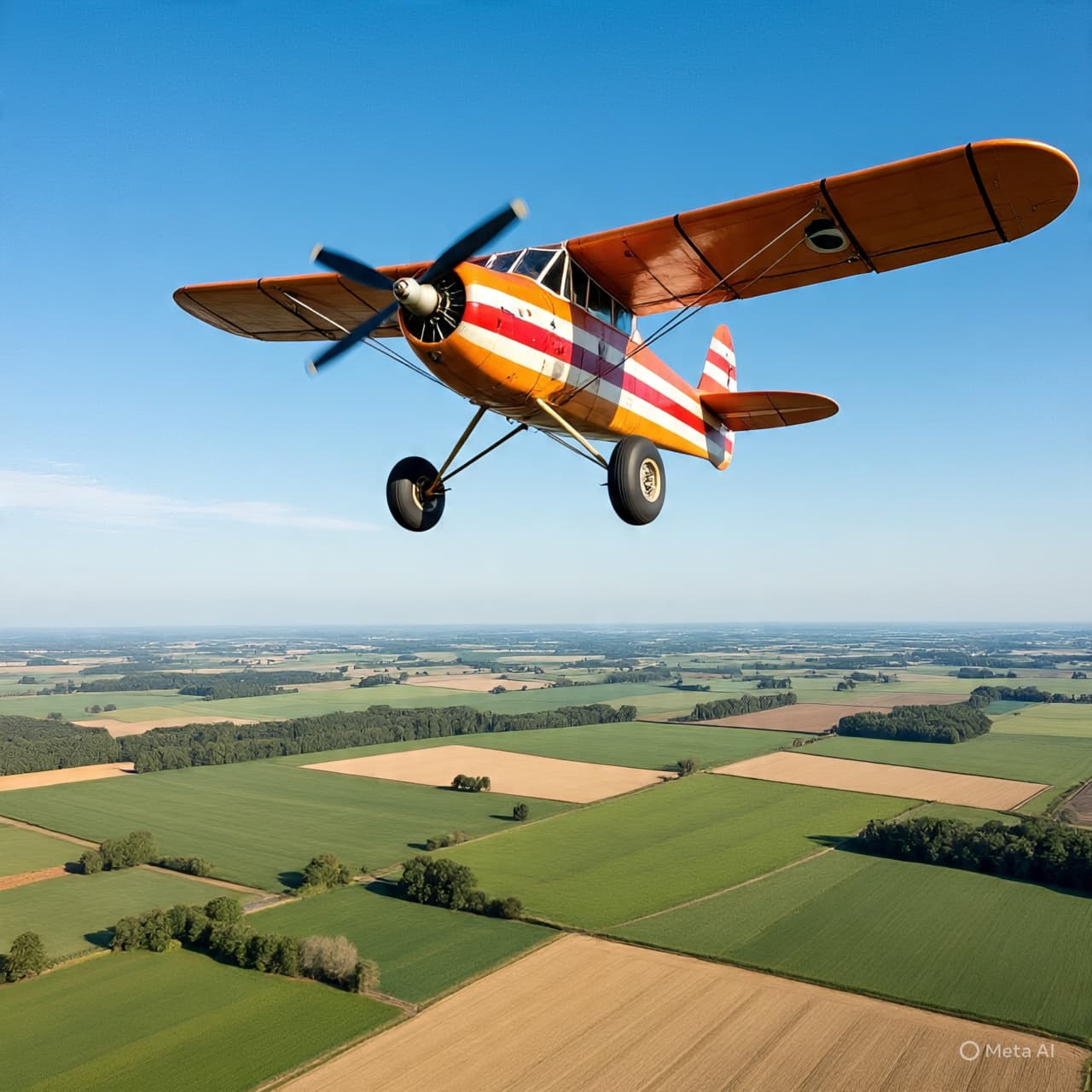
On the wide, open plains of Taieri, that moment has arrived for a small aircraft whose shape belongs to another era. A restored de Havilland Tiger Moth has taken to the sky once more, its wings carrying it gently above the landscape it once would have known well.
The Tiger Moth, with its open cockpit and fabric-covered wings, moves through the air with a different kind of presence than modern aircraft. It does not rush. Its flight feels measured, almost deliberate, as though aware of the years that have passed since it first flew. To see it airborne again is to witness not only motion, but the careful work that made that motion possible.
Restoration is a process that unfolds over time. It asks for patience, precision, and a respect for what came before. Each part must be considered, repaired, or remade, guided by an understanding of how the whole once functioned. The result is not a new object, but a continuation—something that carries its history forward while becoming capable of movement again.
As the aircraft rose above Taieri, it traced a line between past and present. The same air, the same horizon, yet seen through a different moment in time. Below, the land remained steady, fields stretching outward, unchanged in their broad outlines. Above, the aircraft moved lightly, its presence both familiar and rare.
For those involved, the flight marks more than a technical achievement. It is a form of preservation, not only of the aircraft itself, but of the experience it represents—the sound, the movement, the way it occupies the sky. These elements cannot be stored or displayed in quite the same way as an object at rest; they exist fully only when the aircraft is in motion.
There is also something quietly shared in such moments. Even those watching from a distance can feel the significance, the sense of something returned to its proper element. The sky, after all, is where such machines were always meant to be.
And yet, the flight does not linger indefinitely. It rises, circles, and returns, as all flights must. What remains is the impression of it—the image of wings against open air, the knowledge that what was once still has found movement again.
A restored Tiger Moth aircraft has taken flight over Taieri in Otago, marking a milestone after extensive restoration work. The vintage biplane is now airworthy and has successfully returned to the skies.
AI Image Disclaimer These visuals are AI-generated and serve as illustrative representations.
Sources RNZ Stuff The New Zealand Herald 1News Otago Daily Times
Published by Banx Network. This article is part of the Banx decentralized media programme, powered by the BXE token on the XRP Ledger.