
Key Highlights
- Over 900 arrests made during anti-migrant protests in South Africa.
- 120 marches occurred, with 12 resulting in violence and police intervention.
- Protests linked to groups demanding undocumented migrants leave the country.
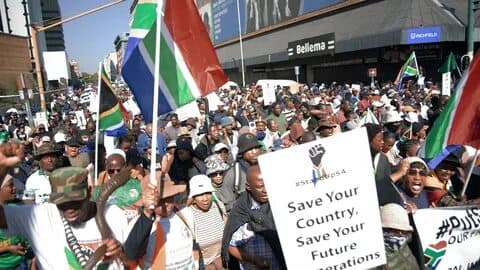
South African police reported that they arrested over 900 individuals during nationwide anti-migrant protests that took place on Tuesday. The protests were characterized by a mix of peaceful demonstrations and instances of unrest, with authorities noting that out of 120 marches, 108 remained peaceful while 12 required law enforcement intervention due to incidents of looting and violence.
Among those arrested, some were undocumented migrants detained for violating immigration laws, while others faced charges including public violence, harboring illegal immigrants, and robbery. The police indicated that reinforcements were deployed overnight to manage isolated incidents across various provinces, and soldiers were sent to assist law enforcement in the Hillbrow area of Johannesburg, which has been a focal point of unrest.
The protests were organized around an unofficial deadline set by demonstrators, calling for undocumented migrants to leave South Africa. This movement has emerged amid months of escalating tensions, which have drawn international criticism as foreigners in the country have faced harassment and violence. Reports indicate that some migrants have had their homes and businesses targeted during these protests.
The demonstrations have been linked to several groups, including March and March, Operation Dudula, and Progressive Forces. These organizations have been vocal in their demands for stricter immigration controls and have garnered significant attention in the media. In response to the unrest, South African President Cyril Ramaphosa met with leaders of some protest groups, urging them to conduct their demonstrations peacefully.
However, the protests have not been without controversy. Human rights organizations have criticized the movement for scapegoating migrants, arguing that it fosters an environment of xenophobia. Migrants' rights groups have also warned that the spread of misinformation could lead to further violence against foreign nationals in South Africa. The situation remains tense as authorities continue to monitor the protests and respond to incidents of unrest.
As the protests unfold, the South African government faces the challenge of addressing the underlying issues of immigration and public sentiment while ensuring the safety of all residents, both local and foreign. The outcome of these demonstrations could have lasting implications for the country's social fabric and its approach to immigration policy.
Published by Banx Network. This article is part of the Banx decentralized media programme, powered by the BXE token on the XRP Ledger.



