Spacecraft returning to Earth often carry visible reminders of the journeys they endured. Heat, friction, and atmospheric reentry leave marks that resemble scars across metal surfaces, silent evidence of passage through extreme conditions. To engineers and astronauts alike, those marks are rarely signs of damage alone. They are records of survival, performance, and preparation for the missions still waiting ahead.
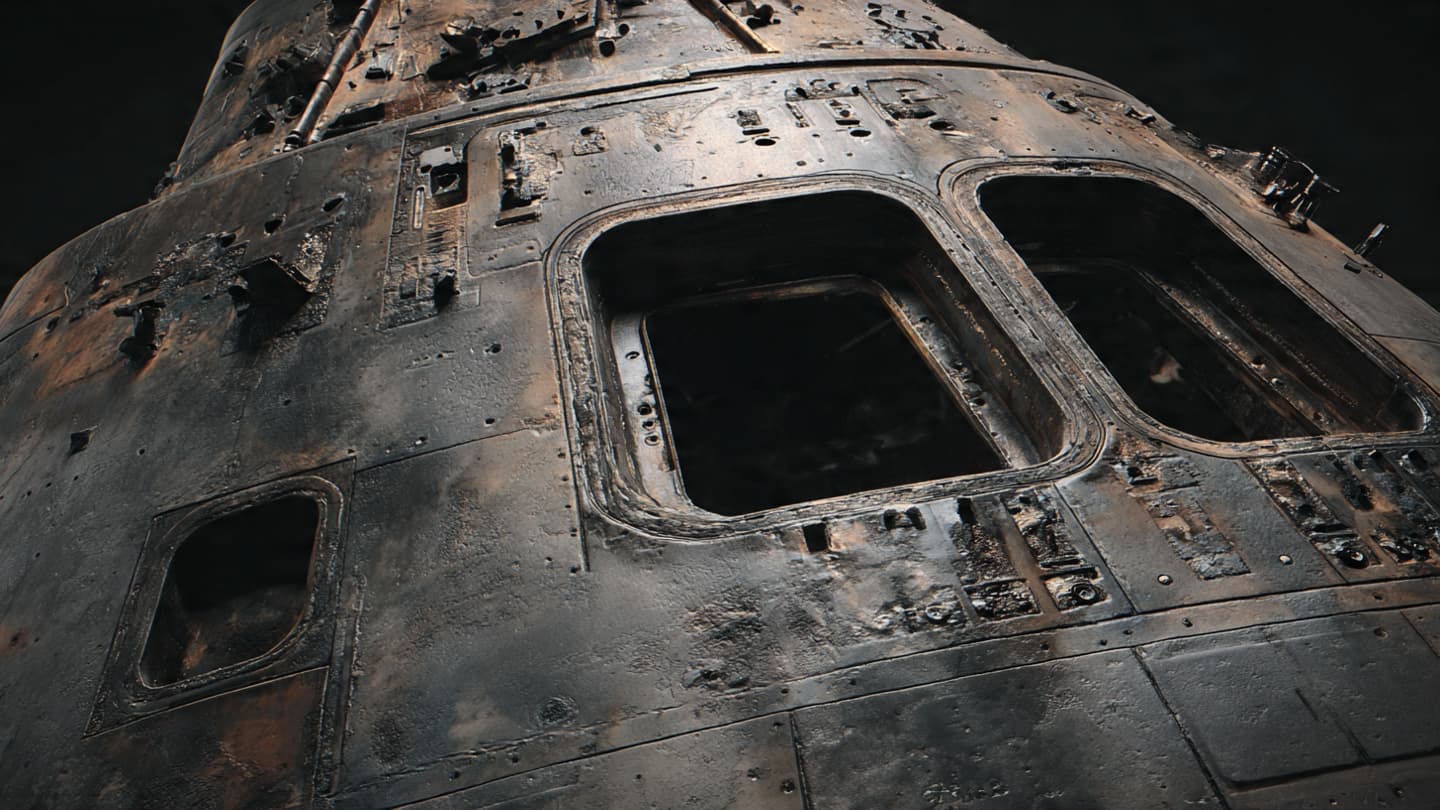
A recently released image highlighting the charred exterior of NASA’s Orion spacecraft from the Artemis 2 program has drawn attention for its dramatic visual detail and symbolic connection to humanity’s return to deep-space exploration. The photograph was featured as a notable “space photo of the day” on May 8, 2026.
The Orion spacecraft is central to NASA’s Artemis program, which aims to return astronauts to the moon and establish long-term lunar exploration capabilities. Artemis 2 is expected to become the first crewed mission in the program, carrying astronauts around the moon before future lunar landing missions take place.
The blackened appearance of the spacecraft’s hull results from the intense heat generated during atmospheric reentry testing. Spacecraft returning from lunar distances travel at extremely high speeds, creating temperatures capable of reaching several thousand degrees Fahrenheit as protective heat shields absorb and disperse thermal energy.
Engineers study these heat effects carefully because reentry safety remains one of the most technically demanding stages of spaceflight. Materials protecting spacecraft must endure extraordinary stress while preserving structural integrity and maintaining safe conditions for astronauts inside.
The image has also resonated publicly because of its symbolic quality. Many observers viewed the scorched spacecraft exterior as a visual reminder that exploration often leaves physical traces, even within machines designed for precision and endurance.
NASA’s Artemis program represents part of a wider international effort to expand human activity beyond low Earth orbit. Alongside lunar missions, the technologies developed through Artemis are expected to contribute to future deep-space exploration, including possible crewed missions to Mars.
Photographs released from modern space programs increasingly serve both scientific and cultural purposes. Beyond documenting engineering achievements, they often shape how the public imagines exploration, risk, and humanity’s evolving relationship with space.
NASA officials said preparations for Artemis missions continue progressing as Orion testing and mission planning move toward future crewed lunar operations.
AI Image Disclaimer: Some illustrative visuals related to this article may incorporate AI-generated enhancements for presentation purposes.
Sources: NASA, Space.com, European Space Agency, Ars Technica
Published by Banx Network. This article is part of the Banx decentralized media programme, powered by the BXE token on the XRP Ledger.