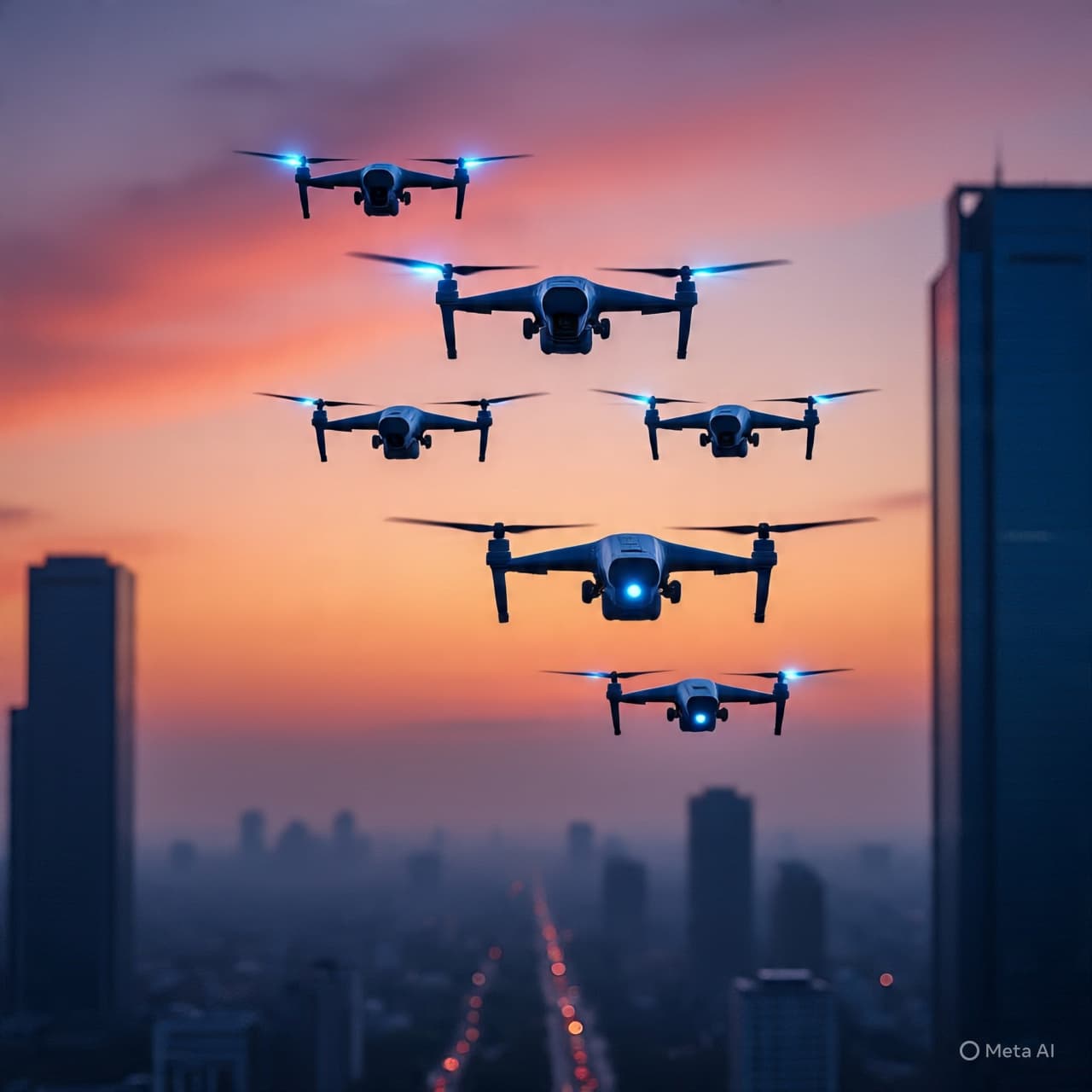
OpenAI’s quiet entry into a US military drone swarm contest is turning heads—not because of the hardware, but because of what controls it. Voice.
The AI firm, best known for its consumer chatbot, has been tapped to provide voice interface technology for a Pentagon-linked drone coordination competition, according to defense and technology reporting. The shift is subtle on the surface. But it speaks to a much bigger repositioning underway.
For the defense sector, speed and clarity of control matter. Managing swarms of drones has traditionally required layered interfaces—screens, manual inputs, and careful sequencing. Voice changes that equation. It compresses decision time. Operators speak, machines respond. The friction disappears, or at least that’s the ambition.
From a business standpoint, OpenAI’s involvement signals something equally important: expansion into operational infrastructure. This isn’t just about software people interact with casually. It’s software that directly influences physical systems.
That carries weight.
Among competitors, the race to become the “control layer” for robotics and autonomous platforms is intensifying. Traditional defense contractors still dominate hardware. But increasingly, AI firms are competing to own the interface—the translation point between human intent and machine execution.
That layer could become the most valuable piece of the stack.
For OpenAI, participation in a contest connected to initiatives around DARPA and the US Department of Defense signals growing credibility beyond Silicon Valley’s commercial ecosystem. Defense adoption, even experimental, tends to validate technology durability in ways consumer markets cannot.
Still, this is early-stage. Competitions are testing grounds, not procurement guarantees.
In tech markets more broadly, voice is quietly emerging as a serious interface contender again. It’s no longer about smart speakers or novelty assistants. It’s about operational command—factories, logistics, robotics, and now military systems.
The implications stretch well beyond defense. If voice can reliably coordinate drone swarms, it can likely coordinate warehouse fleets, delivery robots, or industrial automation networks.
The pattern is familiar. Technologies proven in defense environments often migrate outward into commercial adoption.
OpenAI appears intent on being there early.
Published by Banx Network. This article is part of the Banx decentralized media programme, powered by the BXE token on the XRP Ledger.