The ocean depths have long served as a silent repository for humanity’s unwanted remnants. Between 1949 and 1982, over 150,000 tons of radioactive waste were dumped into the Atlantic Ocean, sealed in barrels and consigned to the dark. For decades, these containers lay undisturbed, hidden beneath miles of water. Now, recent expeditions have revealed a troubling reality: many of these barrels are corroding, visibly oozing their hazardous contents onto the seafloor. This discovery serves as a somber reminder of the long-term consequences of past environmental decisions.
The waste, which includes isotopes like cesium-137 and plutonium, was disposed of in designated areas off the coasts of Europe and North America. At the time, the practice was considered a safe solution, based on the assumption that the ocean’s vastness would dilute any potential leaks. However, the durability of the containers was underestimated. Steel barrels, subjected to high pressure and corrosive saltwater, have begun to fail, releasing radioactive material into the surrounding sediment and water.
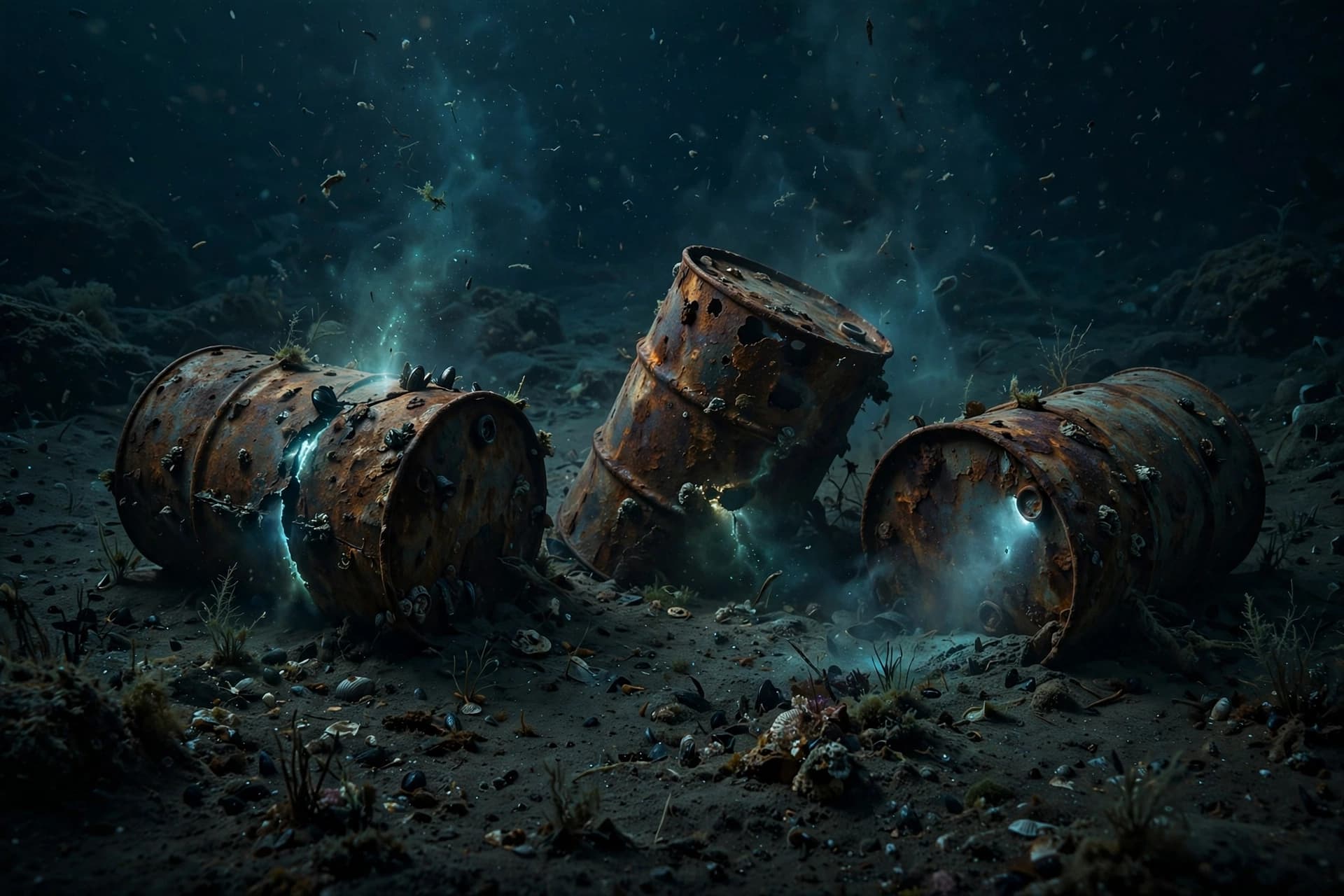
Recent dives by research teams have captured images of rusted drums leaking dark fluids, a stark visual testament to the degradation. These findings challenge the notion that "out of sight" means "out of mind." The leakage raises concerns about the impact on marine ecosystems, particularly in deep-sea environments that are slowly being understood. While current radiation levels in the wider ocean remain low, local concentrations near the dump sites could pose risks to bottom-dwelling organisms.
The discovery has reignited debates about accountability and remediation. Retrieving thousands of barrels from depths of over 15,000 feet is technically challenging and prohibitively expensive. Moreover, disturbing the site could potentially spread contamination further. Scientists and policymakers are now tasked with finding a balance between monitoring the situation and intervening, weighing the risks of action against inaction.
This incident also highlights the importance of international cooperation in managing transboundary environmental issues. The dump sites are located in international waters, requiring coordinated efforts among multiple nations to assess and address the problem. Organizations such as the International Atomic Energy Agency (IAEA) are involved in tracking the situation, providing data and guidance for future actions. It is a complex diplomatic and scientific challenge.
For the public, the news evokes a sense of unease about the legacy of nuclear energy and industrial waste. It underscores the need for responsible disposal methods that consider centuries, not just decades. The oozing barrels serve as a cautionary tale, reminding us that environmental stewardship requires long-term vision and rigorous standards. The mistakes of the past offer valuable lessons for the present.
Research continues to monitor the extent of the leakage and its ecological impact. Advanced sensors and remote-operated vehicles are being used to gather data without disturbing the site. This information is crucial for developing models that predict how the contamination might spread over time. It is a slow and meticulous process, driven by the need for accurate understanding.
The visible oozing of radioactive waste in the Atlantic is a poignant reminder of the enduring impact of human activity. It calls for continued vigilance, scientific inquiry, and international cooperation. As we face the challenges of managing nuclear waste today, the lessons from these sunken barrels urge us to prioritize safety and sustainability for future generations.
AI Image Disclaimer: The images accompanying this article are AI-generated artistic interpretations of deep-sea environments and corroded barrels, not actual photographs from the expedition.
Sources: ScienceAlert Earth.com The Inertia
Published by Banx Network. This article is part of the Banx decentralized media programme, powered by the BXE token on the XRP Ledger.