
Key Highlights
- Death Toll:15 confirmed fatalities due to flooding and house collapses.
- Emergency Response:Government activates relief efforts amid rising water levels.
- Displacement:Thousands of families shelter on elevated areas as flooding continues.
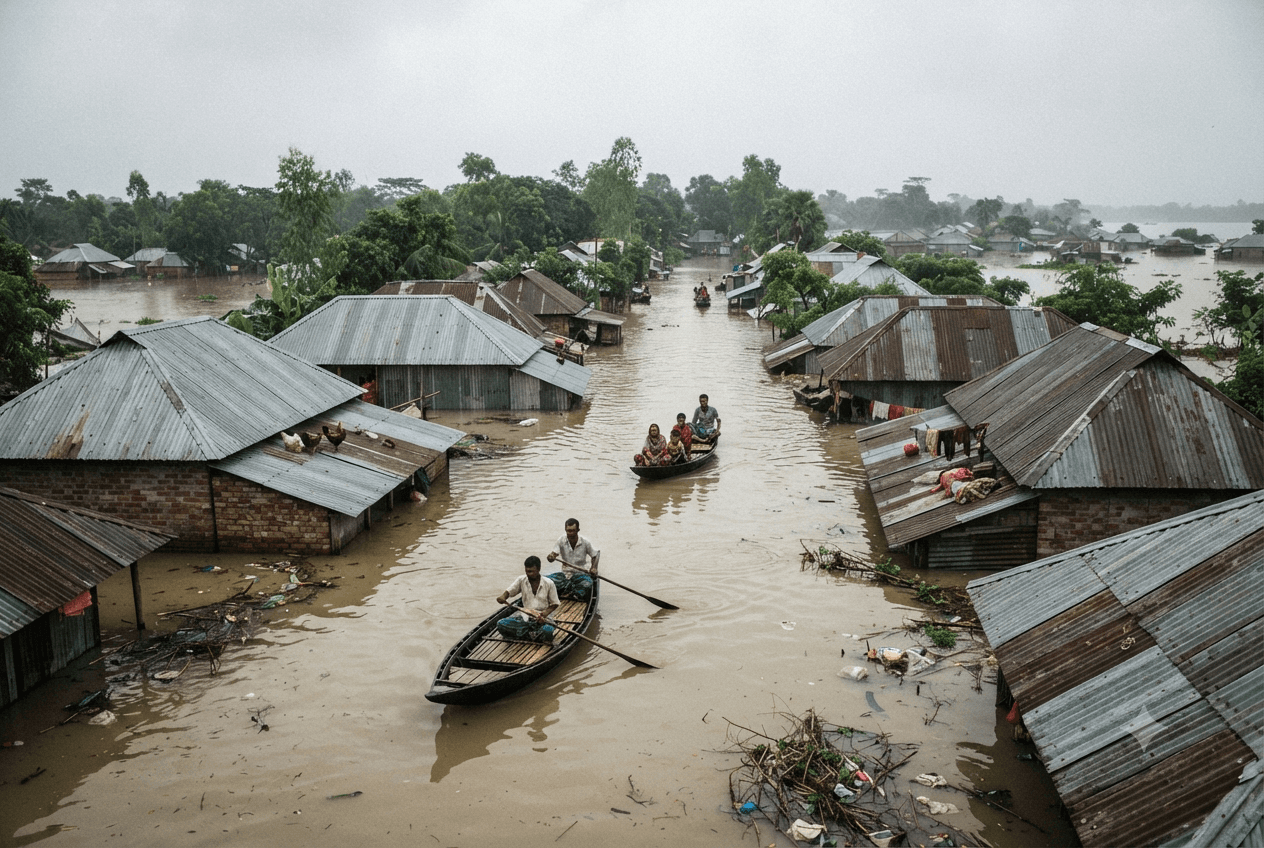
Dhaka, Bangladesh—Continuous monsoon rains have triggered severe flooding across multiple low-lying districts this week. The water levels in major river systems breached containment walls late Tuesday, leading to widespread inundation. Officials confirmed fifteen deaths on Wednesday linked to drowning and house collapses, highlighting the immediate dangers faced by residents in affected areas. Thousands of families are currently sheltering on elevated embankments and rooftops, seeking refuge from the rising waters.
Small boat operations have become the only viable method for delivering food and medicine to submerged villages. The government has activated its emergency response network to scale up relief efforts, deploying resources to assist those in dire need. Field hospitals are struggling to provide basic care to individuals trapped by the rising currents, as the situation remains fluid with water continuing to surge from upstream regions.
In response to the crisis, schools and public buildings have been converted into emergency housing for the displaced. Thousands remain in limbo, unsure if their homes will be standing when the water eventually recedes. Local volunteer groups have organized teams to distribute clean water and dry rations, as public health experts warn of a potential spike in diarrhea and skin infections due to sanitation failures in the flooded areas.
Transportation links remain severed in several northern districts, with major highways submerged, preventing the movement of essential commercial goods. Authorities have prioritized the safety of power grids to prevent widespread electrocution risks in flooded areas. Grid operators have initiated temporary shut-offs in the most saturated neighborhoods to mitigate these dangers.
Meteorological data indicates that the rainfall will remain intense for at least another forty-eight hours, placing extreme pressure on existing levees. Engineers are working around the clock to reinforce weak sections, as there is significant anxiety among residents regarding the potential for further structural failures. No area of the affected district remains untouched by the encroaching water, complicating rescue and relief efforts.
The loss of life is tied to residents attempting to secure their property or move cattle during the rising tide. Search and rescue patrols are scouring the banks for any signs of missing individuals, while survivors are being processed at collection points where officials document the scale of individual property loss. Official reports emphasize the unpredictable nature of the current surge, complicating recovery efforts.
The economic cost of the flooding is mounting as crop cycles are washed away. Agricultural officials are preparing assessments to determine the long-term impact on the harvest, with the focus remaining strictly on the immediate survival and evacuation of the rural population. Security patrols are monitoring vacated zones to prevent looting, ensuring that the humanitarian response can proceed without further complications.
The environment remains dangerous, with high currents and hidden debris presenting constant risks to rescue boats. The work continues through the night with limited lighting and communication tools, as authorities have yet to provide a projected date for the return of water levels to normal. The situation in Bangladesh remains critical as communities grapple with the aftermath of this devastating monsoon season.
Published by Banx Network. This article is part of the Banx decentralized media programme, powered by the BXE token on the XRP Ledger.



