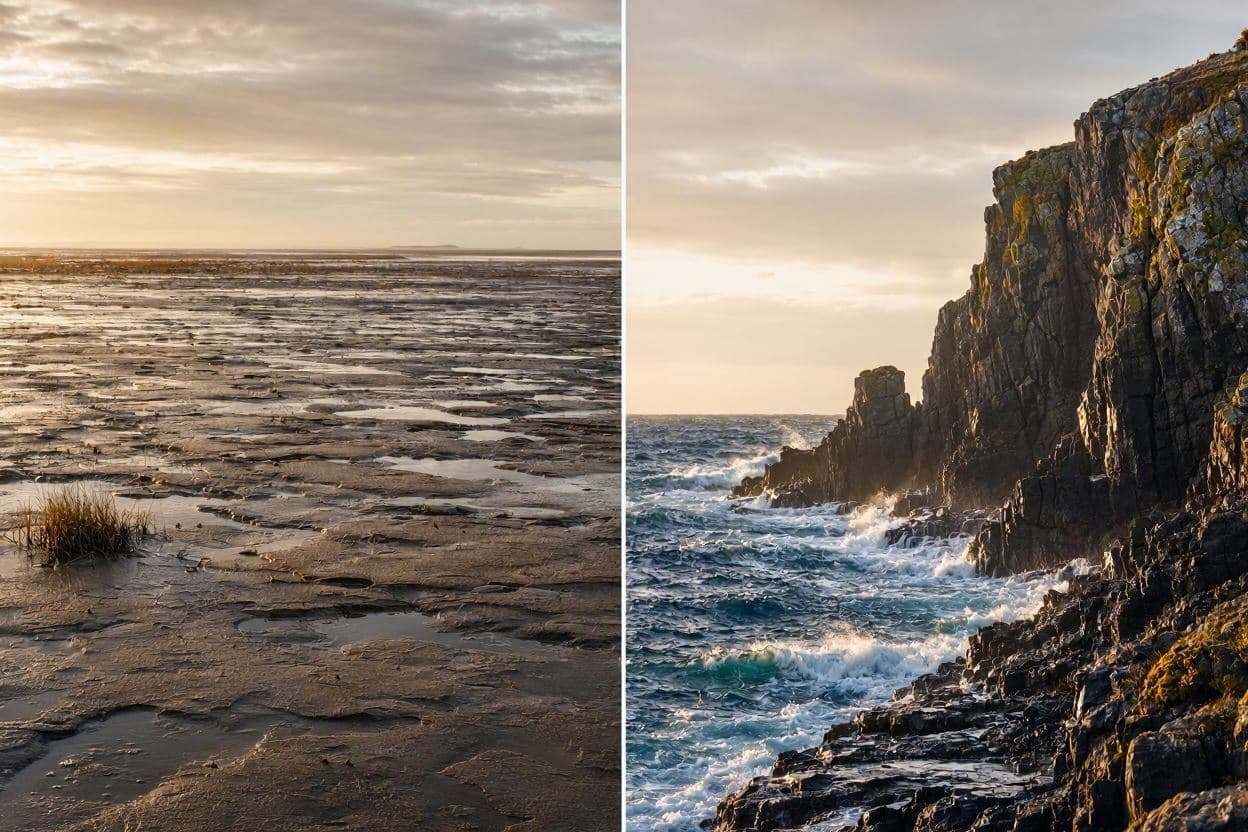
The ocean is a single, connected body of water, yet its behavior at the shore is remarkably diverse. To the casual observer, the tide might seem like a uniform rhythm, rising and falling with predictable regularity. However, those who walk the coastline know that each beach has its own unique character, shaped by local geography and underwater topography. Recent discussions highlight just how dramatically tidal ranges can vary from one location to another, sometimes within just a few miles. This variability invites us to reflect on the complex interplay of forces that shape our shores and the importance of local knowledge in navigating the marine environment.
Tides are primarily driven by the gravitational pull of the moon and the sun, creating bulges in the ocean’s surface. However, the way these bulges interact with the coastline is influenced by a multitude of local factors. The shape of the continental shelf, the depth of the water, and the configuration of bays and inlets all play crucial roles. In some areas, such as narrow bays, the funneling effect can amplify tides, creating extreme high and low waters. In others, open coastlines may experience much smaller fluctuations.
For example, the Bay of Fundy in Canada experiences some of the highest tides in the world, with differences of over 16 meters between high and low tide. In contrast, nearby coastal areas may see variations of only a meter or two. This disparity is due to the bay’s unique shape and resonance with the tidal frequency. Such extremes create distinct ecosystems, requiring specialized adaptations from the plants and animals that live there.
Understanding these local variations is essential for safety and recreation. Beachgoers, fishermen, and boaters must be aware of the specific tidal patterns of their location. A beach that is safe for swimming at high tide might expose dangerous rocks or strong currents at low tide. Local tide tables and signage provide critical information, but personal observation and experience are also valuable tools for staying safe.
Climate change is adding another layer of complexity to tidal behavior. Rising sea levels are altering the baseline from which tides rise and fall, potentially exacerbating flooding in low-lying areas. Additionally, changes in storm patterns can lead to more frequent and severe storm surges, which compound the effects of high tides. Coastal communities must adapt to these shifting dynamics to protect infrastructure and residents.
Ecologically, the tidal range defines the intertidal zone, a rich habitat teeming with life. Species such as crabs, mussels, and seaweeds have evolved to withstand the alternating conditions of submersion and exposure. A change in tidal patterns can disrupt these delicate balances, affecting biodiversity and ecosystem health. Conservation efforts must consider these local nuances to be effective.
Educational initiatives often focus on the global causes of tides, but emphasizing local effects can make the science more relevant and tangible. When people understand why their local beach behaves the way it does, they are more likely to engage with environmental stewardship. It transforms abstract astronomical concepts into concrete, observable realities.
As we continue to study our oceans, the diversity of tidal behavior serves as a reminder of nature’s complexity. No two beaches are exactly alike, and each offers a unique window into the forces that shape our planet. Appreciating this diversity enhances our connection to the coast and encourages respectful interaction with the marine world.
Tidal variations from one beach to another highlight the influence of local geography on ocean dynamics. Understanding these differences is key to safety and ecological preservation. Let us respect the unique rhythm of each shore.
AI Image Disclaimer: The visuals accompanying this piece are AI-generated interpretations intended for illustrative purposes only.
Sources: NOAA Tides and Currents National Geographic Oceanography Journals
Published by Banx Network. This article is part of the Banx decentralized media programme, powered by the BXE token on the XRP Ledger.