In the silent vacuum of space, where every movement requires precision and every breath is recycled, two NASA astronauts recently completed a critical mission. For six and a half hours, they floated outside the International Space Station (ISS), installing hardware that will pave the way for future power upgrades. This spacewalk, described by officials as "one more step" toward modernizing the station, highlights the ongoing effort to maintain and enhance humanity’s outpost in low Earth orbit. It is a testament to the skill and courage of those who work in the most extreme environment imaginable.
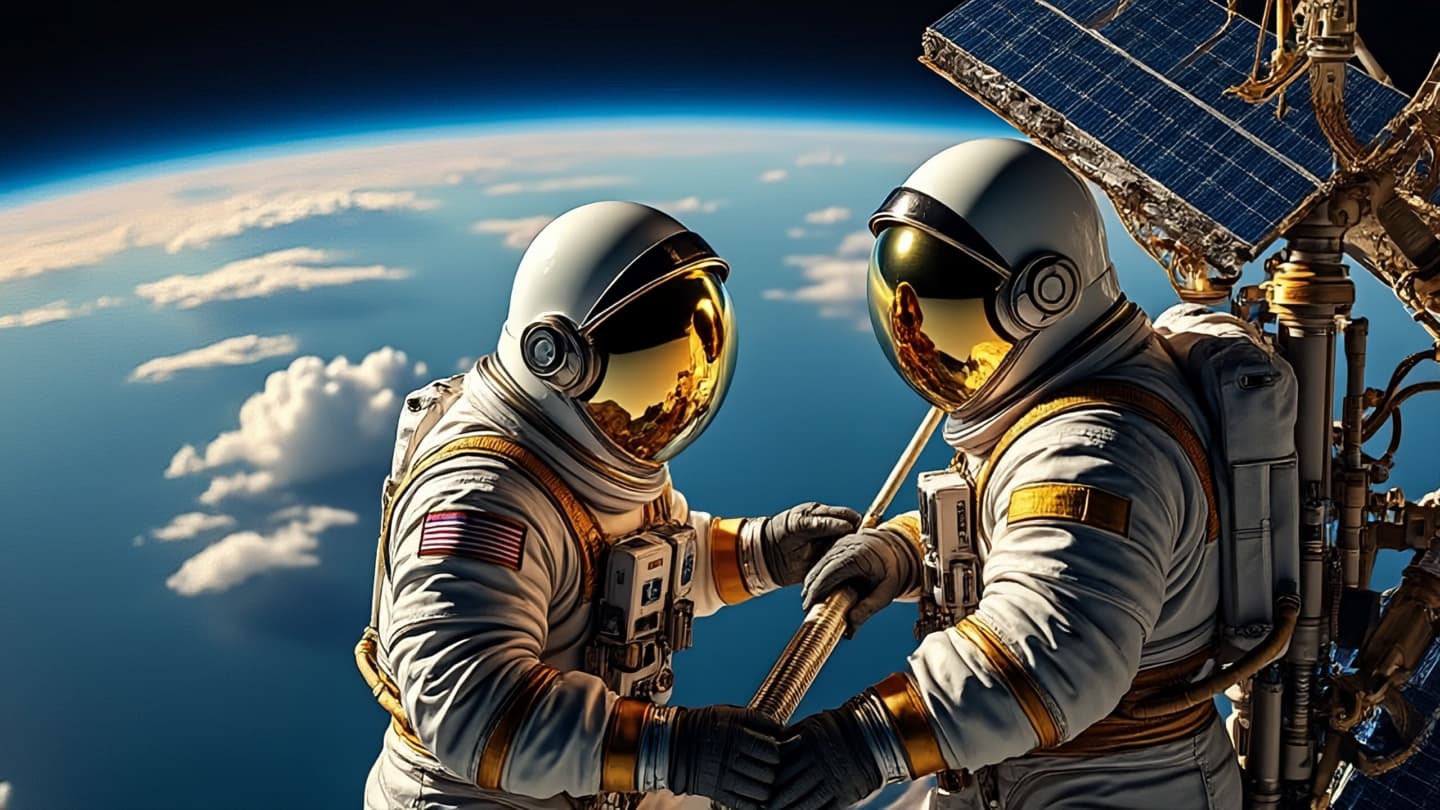
The astronauts, part of Expedition 75, focused on installing mounting brackets for the next set of roll-out solar arrays, known as IROSA. These new arrays are designed to supplement the station’s existing power system, which has degraded over time due to radiation and micrometeoroid impacts. The installation process is complex, requiring careful coordination with ground control and precise manipulation of tools in zero gravity. Each bolt tightened and each bracket secured brings the ISS closer to full operational capacity.
The spacewalk began early Thursday morning, with the astronauts exiting the airlock and translating along the station’s exterior. They worked in tandem, communicating constantly to ensure safety and efficiency. The view from their helmets included the curved horizon of Earth, a breathtaking backdrop to their technical labor. Despite the beauty, the task demanded intense focus, as any error could have serious consequences.
Ground teams monitored the progress closely, providing real-time support and troubleshooting. The success of the mission relied on this collaboration between space and Earth, a partnership that has defined the ISS program for decades. The astronauts reported no major issues, completing all planned objectives within the allotted time. Their performance was praised by NASA officials as exemplary.
The new solar arrays will provide additional power for scientific experiments and life support systems, extending the station’s operational life. This upgrade is part of a broader strategy to keep the ISS functional until commercial successors are ready. It ensures that research in microgravity can continue, benefiting fields ranging from medicine to materials science. The investment in the station reflects its value as a platform for international cooperation.
For the astronauts, the spacewalk was both a professional achievement and a personal milestone. They trained for months in simulation tanks and virtual reality environments, preparing for every contingency. Their dedication underscores the human element of space exploration, where technology serves human ambition. The experience of floating in space, working on a structure that orbits the planet every 90 minutes, is unique and profound.
The successful completion of the 6.5-hour spacewalk is a significant step for the ISS program. It demonstrates the resilience and adaptability of the station’s infrastructure. As the new solar arrays are installed in future missions, the ISS will continue to serve as a beacon of scientific discovery and international partnership.
AI Image Disclaimer: The images provided are AI-generated to visually represent the space exploration and technical aspects of the story.
Sources: NASA Space.com ABC News
Published by Banx Network. This article is part of the Banx decentralized media programme, powered by the BXE token on the XRP Ledger.